

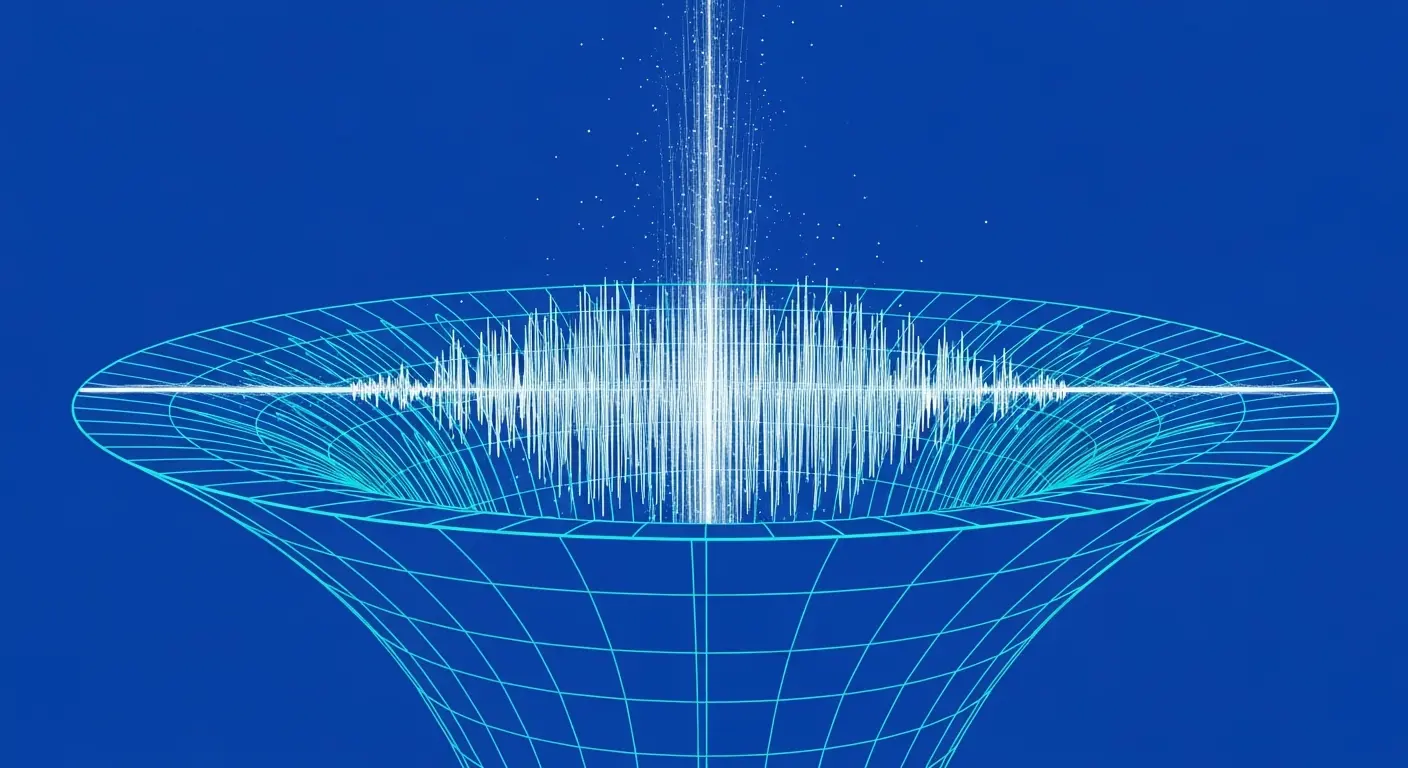
Researchers Rémi Robin and colleagues have achieved an experimentally viable approach using reservoir engineering with two dissipation channels to approximate the stabilisation of periodic grid states initially proposed in 2001. The approach simplifies previous proposals, easing implementation challenges and offering explicit estimates for the energy of resulting solutions. Their analysis includes assessing convergence rates for stabilising a GKP qubit and modelling the impact of noise, ultimately showcasing the preparation of states suitable for quantum error correction and quantum metrology through parameter modification.
Stabilising GKP qubits with simplified dissipation for extended logical qubit lifetimes
Logical qubit lifetimes, a key measure of quantum information durability, have improved by an order of magnitude utilising a new protocol for stabilising GKP states. Detailed by Rémi Robin and colleagues, this advancement overcomes previous limitations demanding complex dynamics and stringent hardware parameters. The new approach simplifies stabilisation through a refined Lindblad master equation, a mathematical tool describing the time evolution of open quantum systems via a completely positive trace-preserving map. This equation accounts for the interaction of the quantum system with its environment, modelling dissipation and decoherence. Previous methods often required the implementation of four distinct dissipators to achieve approximate GKP state stabilisation, posing significant experimental hurdles. The current work demonstrates that stable states can be achieved with only two dissipators, substantially reducing the complexity of the required control and measurement apparatus. Simulations demonstrate its ability to sustain a GKP qubit, a quantum bit encoded for enhanced error resilience, and generate states optimised for quantum metrology, a technique enabling exceptionally precise measurements, opening avenues for more robust quantum error correction.
Two dissipators, components that remove energy from a quantum system in a controlled manner, now sustain GKP qubits, achieving stable states instead of the previously required four. These dissipators are carefully engineered to project the quantum state onto the desired GKP grid, effectively correcting errors that would otherwise lead to decoherence. Initialised with a vacuum state representing the lowest energy level of the harmonic oscillator, simulations reveal the protocol successfully converges towards a GKP qubit state with a fidelity exceeding 92 percent. This high fidelity is crucial for reliable quantum computation, as it indicates a low probability of errors occurring during quantum operations. Furthermore, the modified parameters allow the creation of a GKP qunaught, a single-dimensional GKP state useful for quantum metrology, demonstrating flexible use beyond standard qubit encoding. The qunaught state, possessing unique properties related to its momentum distribution, allows for enhanced precision in phase estimation, a key application in quantum sensing and fundamental physics experiments.
Theoretical calculations establish that the energy of these states remains bounded during the stabilisation process, with a decay rate dependent on parameters such as epsilon and eta, governing the strength of the dissipators and the lattice constant of the GKP code respectively. Specifically, the energy decay is linked to the dissipation rates introduced by the two dissipators, ensuring that the system does not diverge to an unstable state. The analysis provides explicit estimates for the energy, allowing for precise control and optimisation of the stabilisation process. Vital for building practical quantum computers and highly sensitive sensors, stabilising quantum states offers the potential to solve problems intractable for even the most powerful classical machines. This provides a practical route towards stabilising GKP states, addressing limitations hindering experimental realisation and paving the way for advancements in both quantum error correction and quantum metrology. GKP codes, based on continuous variables, offer advantages over traditional discrete-variable quantum error correction schemes, particularly in their ability to protect against bosonic errors, which are prevalent in many quantum systems.
The authors acknowledge that their current work focuses on square GKP states, a specific configuration within a larger family of possible qudits, and extending this streamlined approach to these more general cases presents a significant challenge. Square GKP states are defined by a lattice structure where the grid points are equally spaced in both position and momentum. While offering a good starting point, exploring other lattice geometries and higher-dimensional GKP qudits could potentially improve performance and expand the range of applications. Accelerated progress in building both quantum computers and highly sensitive sensors results from reducing the complexity of the required calculations. The simplification achieved in this work, reducing the number of required dissipators, directly translates to a reduction in the computational resources needed to control and monitor the quantum system. This establishes a foundation for further investigation into the scalability of this approach, specifically exploring whether the protocol can be extended to more complex, multidimensional GKP qudits, potentially unlocking even greater capabilities in quantum information science. Investigating the impact of realistic noise sources, such as imperfections in the dissipators and fluctuations in the system parameters, is also crucial for assessing the robustness of the protocol in a real-world experimental setting. The convergence rate to the coherent state is estimated, providing a quantitative measure of the speed at which the GKP qubit is stabilised.
The Lindblad master equation employed in this research provides a powerful framework for understanding and controlling the dynamics of open quantum systems. By carefully designing the dissipation channels, it is possible to engineer the environment to actively stabilise fragile quantum states, such as GKP qubits. This approach has significant implications for the development of fault-tolerant quantum computation and high-precision quantum sensors, bringing us closer to realising the full potential of quantum technologies. The ability to prepare and manipulate GKP states with reduced experimental overhead represents a substantial step forward in the field of quantum information processing.
This research successfully simplified a method for stabilising periodic grid states, known as GKP qubits, using a Lindblad master equation. This simplification reduces the computational resources needed to control and monitor quantum systems, making the process more experimentally feasible. The authors obtained estimates for the energy of solutions and the rate of convergence when stabilising a GKP qubit, and numerically studied the effect of noise. Further investigation into extending this protocol to more complex, multidimensional GKP qudits is planned to potentially unlock greater capabilities in quantum information science.
👉 More information
🗞 Stabilization of finite-energy grid states of a quantum harmonic oscillator by reservoir engineering with two dissipation channels
🧠 ArXiv: https://arxiv.org/abs/2604.13529

See today’s quantum computing news on Quantum Zeitgeist for the latest breakthroughs in qubits, hardware, algorithms, and industry deals.



