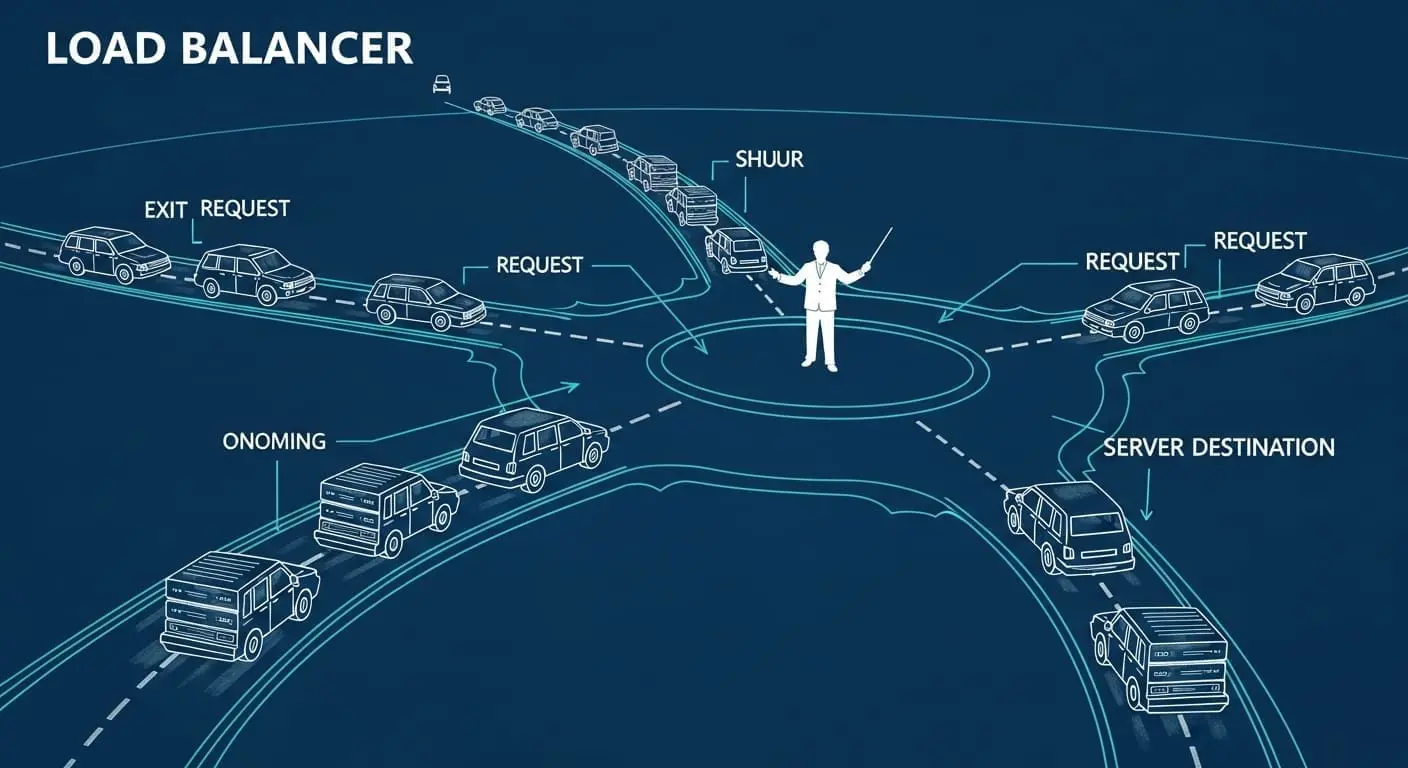
Scientists Siddhartha Visveswara Jayanti and Anand Natarajan at MIT present a new approach to asynchronous quantum distributed computing, enabling atomic quantum global operations across a network. Their work formalises this type of computing and demonstrates that principles of computational causality, crucial for coordinating distributed systems, extend to the quantum realm despite the challenges posed by entanglement. The research offers a significant step towards scalable quantum computation by providing a framework for performing complex operations decomposed into local actions, exemplified by a quantum snapshot capability.
Quantum algorithm achieves deterministic operation through enforced causality
A demonstrably equicausal execution rate of 100%, mirroring the specification, is now possible, a feat previously unattainable with quantum systems lacking a formal causality framework. This achievement signifies a crucial advancement in controlling the flow of information within a distributed quantum system, ensuring that operations occur in a predictable and logically consistent order. It establishes that classical arguments regarding computational causality extend seamlessly into the quantum realm, despite the complexities introduced by quantum entanglement and superposition. Traditionally, maintaining causality in distributed systems relies on well-defined message passing and timing; however, the inherent probabilistic nature of quantum mechanics and the non-local correlations of entanglement present unique challenges to this concept. The researchers have successfully demonstrated that, with a carefully designed protocol, these challenges can be overcome.
The Quantum Global Operations (QGO) Algorithm, a quantum analogue of the Chandy and Lamport snapshot algorithm, enables atomic quantum global operations decomposed into local actions, offering a new model for scalable quantum computation. The Chandy and Lamport algorithm, developed in 1985, is a distributed snapshot algorithm that allows a system to capture a consistent state across multiple processes. Adapting this to the quantum domain requires careful consideration of how quantum states are measured and communicated without disrupting the overall computation. The QGO Algorithm achieves this by leveraging local operations and classical communication to coordinate the execution of the global operation. Analysis of the algorithm indicates that arguments based on Lamport’s computational causality remain valid in the quantum world, even though entanglement does not manifest causality from a standard quantum state description. This is because the algorithm enforces causality through the controlled exchange of classical information, effectively masking the non-causal aspects of entanglement. A formal model of quantum distributed computing and a specification for global operation behaviour are also presented, potentially useful even in classical randomised algorithms. This decomposition into local actions aids scalability and provides a foundation for more complex implementations, reducing the need for long-range quantum communication which is currently a significant technological hurdle.
The significance of achieving 100% equicausality lies in its implications for fault tolerance and reliability. In a distributed quantum system, errors can occur in any of the individual processors or during the communication of quantum information. A formal causality framework allows for the detection and correction of these errors, ensuring that the overall computation remains accurate. Furthermore, the ability to decompose global operations into local actions simplifies the design and implementation of complex quantum algorithms, making it easier to scale up the size of the quantum network. The researchers’ work provides a theoretical blueprint for building robust and scalable distributed quantum computers.
Achieving atomic operations across quantum processors via a classical snapshot protocol
Distributed quantum computing promises to unlock computational power beyond the reach of today’s machines, but realising this potential demands a robust method for coordinating operations across multiple quantum processors. Current quantum computers are limited in size and complexity, but by connecting multiple quantum processors together, it may be possible to create a quantum computer with significantly greater capabilities. This establishes a key theoretical foundation for coordinating quantum processors, proving that concepts from classical distributed computing, like snapshots, a consistent recording of a system’s state, can be adapted for quantum systems. The challenge lies in ensuring that the snapshot is taken atomically, meaning that all processors record their state at the same instant in time, without introducing any inconsistencies. The QGO Algorithm addresses this challenge by using a carefully designed protocol that guarantees atomicity even in the presence of entanglement and quantum noise.
A quantum snapshot, a method for recording the state of multiple quantum processors simultaneously, has been demonstrated, building upon these classical distributed computing concepts for use in complex quantum systems. This allows researchers to analyse the behaviour of the quantum network and debug any errors that may occur. The process involves initiating a snapshot request, propagating it across the network, and collecting the local states of each processor. The collected data can then be used to reconstruct the global state of the system at the time the snapshot was taken. Performing atomic quantum global operations, indivisible instructions executed simultaneously across a quantum network, was achieved by designing the QGO Algorithm to coordinate computations across multiple quantum processors without a central controller, confirming that established principles of ‘computational causality’ hold true even within the quantum realm despite the complexities of entanglement. The absence of a central controller is crucial for scalability, as it avoids the bottleneck that would be created by a single point of failure. Further development will begin to unlock genuinely scalable and durable distributed quantum networks. This includes exploring different communication protocols, improving the robustness of the algorithm to noise, and developing techniques for managing the complexity of large-scale quantum networks. The team anticipates that this work will pave the way for a new generation of quantum computers capable of tackling problems that are currently intractable for even the most powerful classical computers.
The current model assumes predetermined message timing, a constraint that fails to account for the inherent uncertainties of quantum systems and the complexities of real-world networks, though this initial demonstration does not diminish its importance. Future research will focus on relaxing this assumption and developing a fully asynchronous version of the algorithm. This will require addressing the challenges of synchronising operations in the absence of a global clock, potentially through the use of quantum entanglement or other advanced techniques. The ultimate goal is to create a distributed quantum system that is both scalable and resilient, capable of operating reliably in a noisy and unpredictable environment.
The researchers successfully demonstrated an algorithm, the QGO Algorithm, for performing atomic quantum global operations across a distributed network of quantum processors. This means they have shown how to coordinate computations on multiple quantum systems simultaneously without needing a central controller, which is important for building larger, more robust quantum computers. The work confirms that principles of computational causality apply even in quantum systems where entanglement adds complexity. The authors intend to extend this research by developing a version of the algorithm that functions without predetermined message timing, paving the way for scalable and durable distributed quantum networks.
👉 More information
🗞 Asynchronous Quantum Distributed Computing: Causality, Snapshots, and Global Operations
🧠 ArXiv: https://arxiv.org/abs/2604.08298



See today’s quantum computing news on Quantum Zeitgeist for the latest breakthroughs in qubits, hardware, algorithms, and industry deals.