SEALSQ Corp has filed a patent for a technique protecting polynomial cryptographic algorithms against side-channel attacks, a development coinciding with Google’s 2029 deadline for full post-quantum cryptography migration across its ecosystem, including Android 17 secure boot and Widevine license requests. The company’s intellectual property portfolio now comprises 126 active patents, positioning it to address the growing demand for hardware-based security solutions as software-only approaches prove insufficient. This latest filing focuses on hardening implementations of NIST-standardized algorithms like ML-KEM/Kyber at the message encoding stage, targeting vulnerabilities even within mathematically robust systems. “Google’s 2029 deadline is a strong signal to the entire industry that software-only solutions will not provide long-term security,” said Jean-Pierre Enguent, Chief Technology Officer of SEALSQ, highlighting the need for comprehensive security measures.
SEALSQ’s 126-Patent Portfolio Targets 2029 PQC Migration
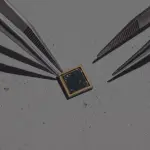
The scope of Google’s transition extends beyond software updates, encompassing critical systems like Android 17 secure boot, Chromecast authentication, Widevine license requests, currently reliant on RSA-2048, and cloud bootstrap processes, immediately establishing the scale of the required shift. SEALSQ is proactively building a comprehensive quantum-resistant ecosystem combining PQC-secure semiconductors, a PKI platform, and cryptographic agility services designed to facilitate a smooth transition for original equipment manufacturers. This development is distinct from, yet complementary to, the company’s QS7001 program, demonstrating a broader commitment to advancing PQC hardware security for both current and future products. The QS7001 secure element, now in its sampling phase, already integrates ML-KEM/Kyber and ML-DSA/Dilithium directly into silicon, establishing a tamper-resistant hardware root of trust for essential security functions.
QS7001 Secure Element Samples NIST-Approved PQC Algorithms
This work is not merely theoretical; it’s a proactive measure against exploits leveraging power consumption, electromagnetic emissions, or timing variations, vulnerabilities that persist even with robust algorithms. This patent represents a separate research path developed alongside the company’s QS7001 Quantum Shield secure element, demonstrating a commitment to layered security. The QS7001, now in the sampling phase, directly embeds NIST-approved algorithms, ML-KEM/Kyber and ML-DSA/Dilithium, into silicon, creating a tamper-resistant foundation for critical functions.
SEALSQ’s intellectual property portfolio currently comprises 126 active patents, a substantial investment positioning the company to capitalize on the escalating demand for post-quantum solutions. Enguent further emphasized the need for physical implementation security, stating, “At the same time, even the best mathematical algorithms remain vulnerable if their physical implementation is not properly protected.” This new patent addresses one of the most subtle and underappreciated challenges in post-quantum cryptography, protecting polynomial algorithms like Kyber against side-channel attacks at the message encoding stage. Developed in parallel with the QS7001, this invention demonstrates our dual focus on delivering strong products today while continuously building the intellectual property foundation for future generations of even more secure hardware.
Google’s 2029 deadline is a strong wake-up call for the entire industry: software-only solutions will not suffice for long-term security. At the same time, even the best mathematical algorithms remain vulnerable if their physical implementation is not properly protected. This new patent addresses one of the most subtle and underappreciated challenges in post-quantum cryptography, protecting polynomial algorithms like Kyber against side-channel attacks at the message encoding stage. Developed in parallel with the QS7001, this invention demonstrates our dual focus on delivering strong products today while continuously building the intellectual property foundation for future generations of even more secure hardware.
Jean-Pierre Enguent, Chief Technology Officer of SEALSQ
Side-Channel Attack Protection for Polynomial-Based PQC Algorithms
SEALSQ is actively addressing a critical, often overlooked vulnerability in post-quantum cryptography (PQC) with a newly filed patent focused on side-channel attack protection. The company’s innovation targets polynomial-based algorithms, specifically NIST-standardized ML-KEM/Kyber, at the message encoding stage, a point where implementations can leak information through subtle physical characteristics. This is not merely theoretical research; it represents a distinct, yet complementary, line of inquiry developed alongside the QS7001 program, demonstrating SEALSQ’s commitment to layered security. This, combined with the new patent, positions SEALSQ with a portfolio of 126 active patents to support manufacturers aiming for certifications like Common Criteria EAL5+ before the 2029 deadline.



See today’s quantum computing news on Quantum Zeitgeist for the latest breakthroughs in qubits, hardware, algorithms, and industry deals.