
Researchers at ETH Zurich have achieved an advance in quantum computing by realizing highly stable quantum operations on 17,000 qubits constructed from neutral atoms. The team, led by Professor Tilman Esslinger at the Institute for Quantum Electronics, developed a novel swap gate, a crucial component for routing information within a quantum computer, based on geometric phases, a physical effect rendering the system remarkably resistant to experimental noise. Unlike previous methods relying on effects like tunneling, which depends strongly on laser intensity, this approach utilizes a state switch dependent on particle path, independent of external disturbances. “A few years ago, researchers managed to realize such gates using neutral atoms in their lowest energy state, by exploiting dynamical phases due to tunnelling and collisions,” says postdoc Yann Kiefer; this new method surpasses those earlier iterations with 99.91 percent precision and scalability, potentially unlocking progress in neutral atom quantum computers.
Neutral Atom Qubits Offer Stability Over Superconductors
A precision of 99.91 percent has been demonstrated in quantum swap gates utilizing neutral atom qubits, a development addressing longstanding stability challenges in quantum computing hardware. This contrasts sharply with earlier approaches relying on phenomena like tunneling, which depends strongly on laser intensity fluctuations. By bringing pairs of atoms so close together that their wavefunctions overlapped in space, they induced a geometric phase shift; “this geometric phase causes the state of the particles to switch depending on the path they take, and not because of external disturbances,” explained Esslinger. This method is significant because it allows for the simultaneous application of the gate to 17,000 qubit pairs, a scale more difficult to achieve with superconducting circuits or trapped ions. The results, recently published in Nature, suggest a viable path toward building larger, more reliable quantum computers with neutral atoms, and Esslinger anticipates combining these swap gates with a quantum gas microscope to make individual qubit pairs visible and selectively manipulate them.
99.91% Precision Swap Gates Utilizing Geometric Phases
The pursuit of stable quantum computation increasingly focuses on minimizing the impact of environmental noise, a challenge that has driven innovation in qubit design and gate implementation. While superconducting circuits and trapped ions have garnered significant attention, neutral atoms confined by laser light present a compelling alternative, potentially enabling systems with thousands of qubits. Realizing high-fidelity operations with these atoms has proven challenging, however. Researchers led by Tilman Esslinger have demonstrated a swap gate, essential for routing quantum information, achieving 99.91% precision, a substantial leap forward in control.
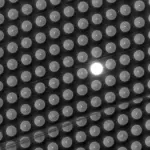
This advance stems from leveraging geometric phases, a physical effect where a particle’s state switches depending on the path it takes, independent of external disturbances. “Unlike dynamical phases, this geometric phase is largely independent of the speed with which we manipulate the atoms, or how strongly the laser intensity fluctuates during the process,” explains Konrad Viebahn, a junior group leader involved in the experiment. The team trapped extremely cold potassium atoms within an artificial crystal of light, bringing pairs of atoms so close together that their wavefunctions overlapped in space, inducing this geometric phase.
This high-precision gate wasn’t limited to a few qubits; the researchers successfully applied it simultaneously to 17,000 qubit pairs. “We can now make many swap gates with neutral atoms,” said Esslinger, “but we still need a few other ingredients to build a working quantum computer.” The results, recently published in Nature, suggest a promising future for neutral atom-based quantum computers, offering a robust foundation for more complex quantum algorithms and computations.
A few years ago, researchers managed to realise such gates using neutral atoms in their lowest energy state, albeit by exploiting dynamical phases due to tunnelling and collisions
Optical Lattice Trapping Enables 17,000 Qubit Operations
The pursuit of stable quantum computation took a step forward as researchers at ETH Zurich demonstrated a swap gate operating on an unprecedented scale; the team successfully implemented the gate across 17,000 qubits simultaneously. This achievement builds upon recent advances in neutral atom qubit technology, offering a potentially more scalable alternative to superconducting circuits and trapped ions, which is more difficult to achieve. Professor Tilman Esslinger and his team utilized extremely cold potassium atoms held within artificial crystals created by laser light, known as optical lattices, to realize the swap gate. The resulting gate boasts a precision of 99.91 percent, exchanging qubit states in less than a millisecond.
Unlike dynamical phases, this geometric phase is largely independent of the speed with which we manipulate the atoms, or how strongly the laser intensity fluctuates during the process
Konrad Viebahn, junior group leader for the experiment
The development of stable quantum gates is critical for scaling quantum computing beyond a handful of qubits, and a recent advance from ETH Zurich offers a promising pathway toward that goal. This approach allows for robust exchange of quantum states between qubits, a process known as a swap gate, where the states of qubit A and qubit B are exchanged after gate execution.
We can now make lots of swap gates with neutral atoms


See today’s quantum computing news on Quantum Zeitgeist for the latest breakthroughs in qubits, hardware, algorithms, and industry deals.