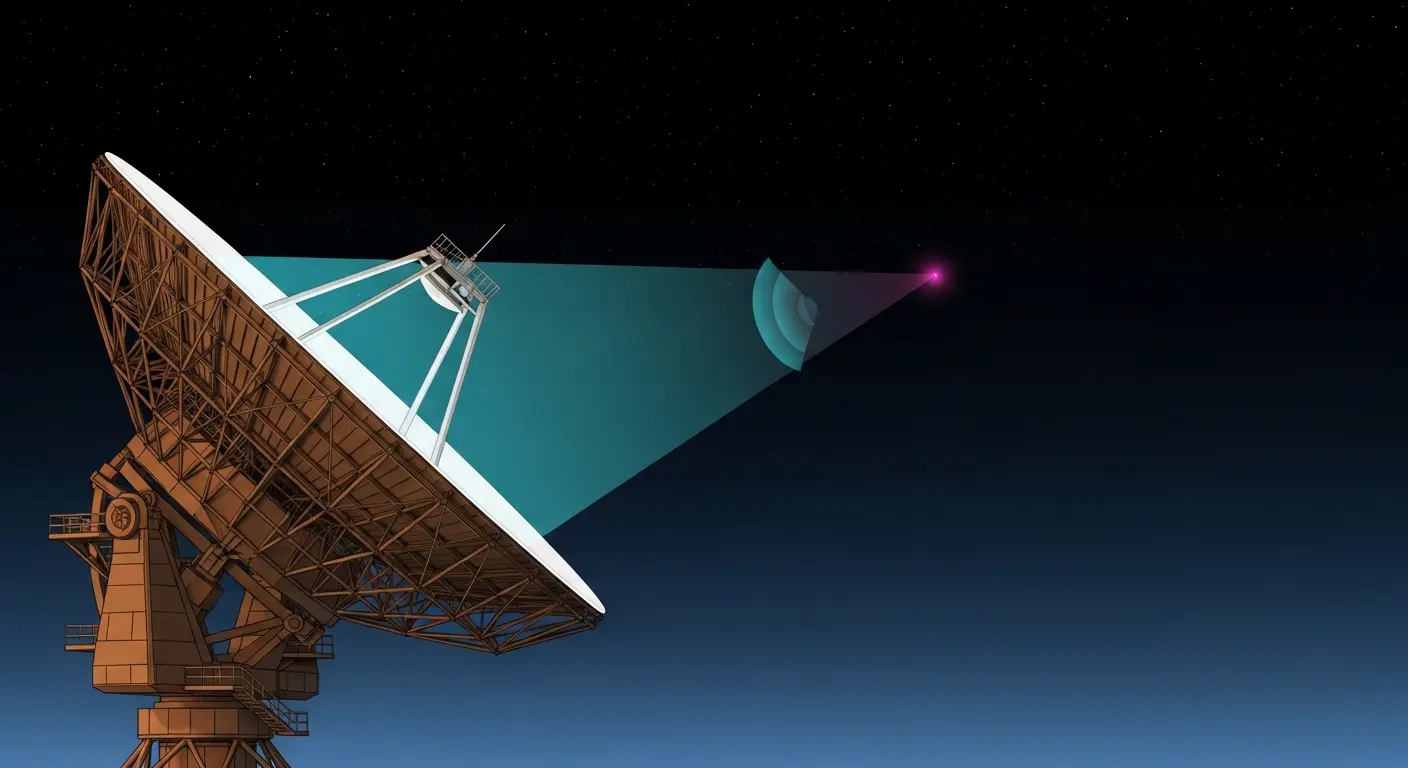
NASA has deployed its Prithvi AI model to orbit, marking the first time a geospatial foundation model has been demonstrated on in-orbit platforms. Trained on 13 years of global geospatial data from NASA’s Landsat and ESA’s Sentinel-2 satellites, Prithvi successfully performed advanced analyses, including predicting burn scars from the Gifford Fire, which occurred northwest of Los Angeles on August 17. It did so while aboard both the South Australian government’s Kanyini satellite and the International Space Station’s IMAGIN-e payload. “If Prithvi weren’t open source, I would have to train my own foundation model,” said Dr. Andrew Du, postdoctoral researcher at Adelaide University and AI engineer at the SmartSat Cooperative Research Center. According to Kevin Murphy, NASA Chief Science Data Officer, “By sharing these tools with anyone who wants to use them, we accelerate scientific and technological development.”
Prithvi Model Deployed: First In-Orbit Geospatial AI
Trained on 13 years of Earth observation data, NASA’s Prithvi AI model has become the first geospatial foundation model successfully deployed and operated in orbit, extending the possibilities for real-time environmental analysis. This deployment allows for advanced data analysis to occur before information is even downloaded to Earth, a significant improvement in responsiveness for critical applications. Prithvi’s prediction of burn scars from the Gifford Fire, which occurred northwest of Los Angeles on August 17, while actively operating in orbit, highlights the model’s predictive power and utility in disaster assessment. The selection of Prithvi was based on its strong generalization across diverse Earth observation tasks and its open-source availability, which are central to NASA’s strategy. Kevin Murphy, chief science data officer at NASA Headquarters, stated, “Prithvi is the first model of its kind to be deployed in orbit, and that demonstrates why we make our AI models open source.”
Years of Landsat & Sentinel-2 Data Fuels Prithvi Training
The current era of Earth observation increasingly relies on artificial intelligence to extract meaningful insights from the large amount of data generated by orbiting sensors; however, the potential of these systems depends on the availability of robust, pre-trained models. NASA’s deployment of Prithvi, the first geospatial AI foundation model in orbit, represents a step toward realizing that potential, fueled by a comprehensive dataset spanning thirteen years. This dual-platform testing highlights the adaptability of Prithvi across diverse computing environments and orbital configurations. Its strength lies in its ability to generalize across various Earth observation tasks, a characteristic amplified by its open-source nature, as emphasized by Andrew Du, the project’s lead researcher.
Prithvi is the first model of its kind to be deployed in orbit, and that demonstrates exactly why we make our AI models open source.
Kevin Murphy, chief science data officer at NASA Headquarters in Washington
In-Orbit Testing Validates Flood & Cloud Detection
The model’s performance extended beyond fire detection; researchers also validated its ability to identify flood extent, as demonstrated with a prediction of flooding around Lake Norman in North Carolina caused by Hurricane Helene. This in-orbit validation is valuable given the bandwidth limitations of active satellites, which often restrict the size of software updates. Prithvi’s foundation model architecture allows for adaptation to new tasks with minimal data transfer, requiring only a small decoder package for specific applications. Andrew Du, the project’s lead researcher, highlighted the importance of collaborative, accessible AI development.
A large language model is also a type of foundation model.
Open-Source Prithvi Accelerates Earth Observation Advancements
This capability signifies a shift towards proactive analysis, allowing insights to be generated before substantial data reaches ground stations for processing. This accessibility reduced development time and effort, allowing the team to focus on in-orbit deployment and validation. NASA views this open-source strategy as fundamental to accelerating scientific progress. The architecture of a foundation model also offers practical advantages for satellite operations, requiring only small decoder packages to be uploaded for new tasks, conserving valuable bandwidth compared to deploying entirely new models. This approach positions Prithvi as a pivotal component in the future of responsive, in-orbit Earth observation.
If Prithvi weren’t open source, I would have to train my own foundation model.



See today’s quantum computing news on Quantum Zeitgeist for the latest breakthroughs in qubits, hardware, algorithms, and industry deals.