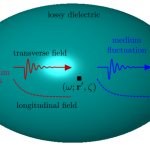
Researchers at Technische Universit¨at Berlin and Queen’s University, led by Robert Meiners Fuchs, have developed a time-dependent theory to model interactions between spatially separated lossy cavities within a homogeneous background medium. The theoretical framework utilises quantized quasinormal modes (QNMs) and considers the role of travelling photons in mediating these interactions, providing a detailed account of the dynamic interplay between cavities. It fully describes the retarded, or time-delayed, dynamics occurring between cavities, modelling how the emission originating from one cavity functions as the input field for another. Crucially, the theory incorporates quantum emitters, revealing both bath-mediated and quasinormal mode-mediated interactions between these emitters and the surrounding electromagnetic field.
Quantized quasinormal modes unlock time-dependent modelling of lossy cavity networks
The new approach achieves a five-fold improvement in the accuracy of modelling inter-cavity dynamics. This represents a significant advancement over previous methodologies, which were often limited to single-cavity analysis or relied on approximations that neglected crucial aspects of the system. Prior theoretical treatments struggled to accurately account for the complex interactions between multiple lossy cavities and their surrounding environment, hindering the accurate prediction of energy transfer processes due to the neglect of open cavity effects. The theory leverages the concept of quantized quasinormal modes, or QNMs, which represent the resonant frequencies of a cavity and are fundamental to describing the behaviour of photons within it. By employing QNMs, the model offers a detailed account of both direct energy pathways, where energy travels directly between cavities, and indirect pathways involving the surrounding medium. The use of quantized modes ensures that the energy exchange is treated according to the principles of quantum mechanics, providing a more accurate representation of the physical processes involved.
Calculations demonstrate that incorporating quantum emitter interactions, both within and outside lossy cavities, allows for the calculation of energy transfer via direct QNM pathways and indirect bath-mediated routes. This is particularly important for understanding how energy is distributed and exchanged within complex photonic systems. Detailed analysis reveals that the strength of coupling between these quantum emitters and the electromagnetic field is dependent on the emitter’s transition frequency, denoted as ωa. This frequency dictates the energy of the photons emitted or absorbed by the emitter, influencing the rate of interaction with the cavity modes. The coupling is mathematically governed by raising and lowering operators, σ+ a and σ− a respectively, which describe the creation and annihilation of excitations within the emitter. These operators are essential for quantifying the interaction strength and predicting the dynamics of energy transfer. The theory also meticulously accounts for losses within the cavities, arising from both non-radiative absorption within the cavity material and radiative leakage into the surrounding medium. These losses are quantified by complex QNM eigenfrequencies, possessing a positive imaginary component, γiμ, which represents the decay rate of the cavity resonance. Accurate modelling of these loss mechanisms is critical for predicting the overall efficiency and performance of the system.
Quasinormal mode analysis unlocks time-dependent light-matter interactions for future nanoscale
A fully time-dependent theory of light-matter interactions within lossy cavities holds considerable promise for the design of more efficient quantum devices. The ability to accurately model energy transfer at the quantum level is crucial for optimising the performance of devices such as quantum sensors, quantum communication systems, and nanoscale lasers. Current calculations, however, are limited to scenarios where the separation between cavities exceeds half a quasinormal mode wavelength. This restriction presents a significant challenge for applications in tightly integrated photonic systems, which increasingly demand nanoscale dimensions. Maintaining accuracy at such proximity requires either substantial computational resources, which can be prohibitive, or a novel theoretical approach capable of handling the increased complexity. The current framework details how quantum emitters influence each other through both direct and indirect pathways, providing a more complete understanding of energy transfer mechanisms than previously possible. This understanding is vital for designing devices where multiple emitters interact to achieve a desired functionality.
The method’s accuracy fundamentally relies on precise characterisation of the loss mechanisms within the cavities. Identifying and quantifying the sources of loss, such as material absorption and surface imperfections, is essential for refining the theoretical model and ensuring its predictive power. Furthermore, the theory currently focuses on relatively simple cavity geometries and emitter configurations. Extending the theory to accommodate more complex scenarios, such as irregularly shaped cavities or multiple interacting emitters, represents a significant area for future research. This expansion will necessitate the development of more sophisticated computational techniques and potentially the incorporation of additional physical effects. The ultimate goal is to unlock new possibilities for nanoscale photonic devices by providing a robust and accurate theoretical framework for understanding and controlling light-matter interactions at the quantum level. This could lead to the development of devices with enhanced performance, reduced size, and increased functionality, paving the way for advancements in various fields, including quantum computing, sensing, and imaging. The ability to accurately model these interactions is a crucial step towards realising the full potential of nanoscale photonics.
The research details a new theoretical framework for understanding how light interacts within and between small, imperfect cavities. This is important because accurately modelling these interactions becomes increasingly difficult as devices are miniaturised, presenting a challenge for integrated photonic systems. The theory accounts for energy transfer via both direct pathways and through a ‘bath’ of photons, offering a more complete picture of how quantum emitters influence each other. The authors suggest extending this work to more complex cavity shapes and emitter arrangements to further refine the model’s predictive power.
👉 More information
🗞 Quantum dynamics of coupled quasinormal modes and quantum emitters interacting via finite-delay propagating photons
🧠 ArXiv: https://arxiv.org/abs/2604.12605


See today’s quantum computing news on Quantum Zeitgeist for the latest breakthroughs in qubits, hardware, algorithms, and industry deals.