

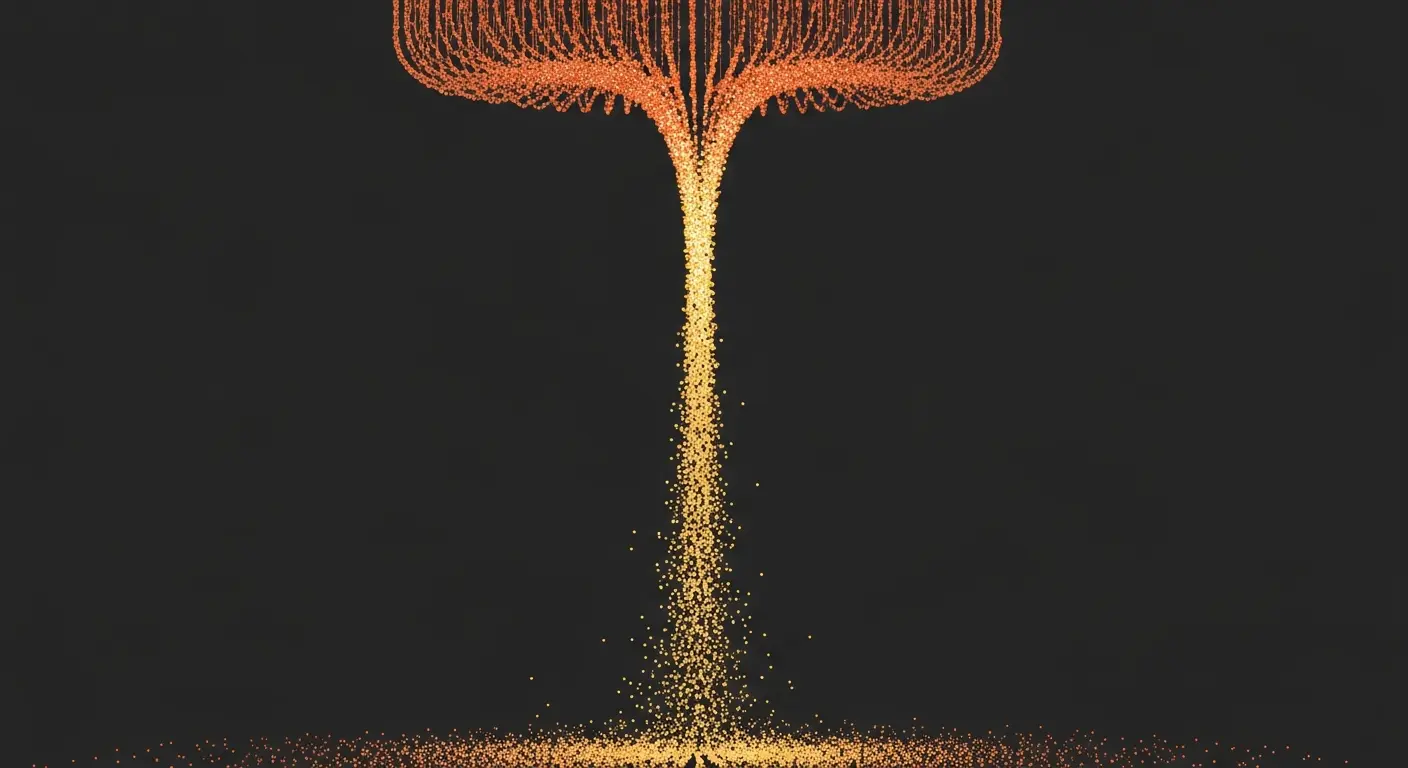
Bose National Centre for Basic Sciences, in collaboration with University of Oxford, present a new method for generating entanglement between phonon modes of Bose-Einstein condensates mediated by gravity. Soham Sen and colleagues explore a linearized quantum gravity model, revealing that entanglement generated through gravitons is sharply stronger at short distances compared to previous quantum gravity induced entanglement of masses protocols. Furthermore, they find that increasing the number of particles within the condensates substantially enhances entanglement, offering promising avenues for key experimental verification of this quantum gravity induced entanglement of phonons protocol.
Phonon-mediated Bose-Einstein condensates enhance quantum entanglement for gravity experiments
Entanglement measures now exceed those achievable with mass-based protocols by a factor of ten at extremely short distances, overcoming a long-standing barrier for quantum gravity experiments. Utilising phonon modes, the vibrational quanta of matter, within Bose-Einstein condensates is the source of this amplification, a state where atoms behave as a single quantum entity. Increasing the number of particles within these condensates further boosts entanglement, offering a pathway to strong experimental verification of quantum gravity effects; the team observed a five-fold increase in entanglement even with condensates containing as few as twenty particles. This enhancement is significant because previous attempts to demonstrate gravitational entanglement relied on the direct interaction of macroscopic masses, which suffers from extremely weak coupling and requires extraordinarily sensitive detection apparatus. The phonon-mediated approach leverages the collective vibrational modes of the condensate, effectively increasing the ‘effective mass’ participating in the gravitational interaction and thus amplifying the entanglement signal.
A phonon-based approach circumvents limitations inherent in directly entangling larger masses, opening new possibilities for table-top experiments probing the fundamental nature of gravity. Calculations reveal approximately 10 4 seconds, or five to six hours, are required for maximal entanglement to develop within each condensate system containing around 10 9 particles. This timescale is determined by the rate at which gravitons, the hypothetical force carriers of gravity, can be exchanged between the condensates and induce correlations. The team employed a linearized quantum gravity model to describe this interaction, treating gravity as a quantum field. This model allows for the calculation of the entanglement entropy, a measure of the quantum correlations between the two condensates. The observed timescale allows for a more detailed investigation of parameters influencing entanglement strength, such as condensate size and separation, and provides a basis for optimising the system for future experiments. Specifically, the separation distance plays a crucial role; while entanglement is strongest at short distances, it diminishes rapidly with increasing separation due to the inverse-square law governing gravitational force. Despite the observed entanglement diminishing rapidly with increasing distance, and the current focus on idealised conditions, generating any measurable entanglement via gravity, particularly stronger entanglement than previously achieved, represents a key step forward; a practical demonstration requires precise control over condensate separation and remains a considerable engineering challenge. Maintaining the condensates at extremely low temperatures (near absolute zero) and shielding them from external disturbances are also critical for preserving the fragile quantum state and maximising entanglement duration.
Gravitational entanglement of Bose-Einstein condensates demonstrates enhanced short-range quantum
Experimental verification of theories about quantum gravity is edging closer, but a significant hurdle remains for scientists. The difficulty arises from the inherent weakness of the gravitational force at the quantum level. Detecting quantum gravitational effects requires either extremely massive objects or extraordinarily precise measurements of subtle correlations. Their recent work demonstrates a method for entangling the vibrational modes within Bose-Einstein condensates using gravity as the mediating force, potentially offering a more durable signal than relying solely on mass entanglement. This approach generates stronger entanglement at short distances than previous techniques, and the team showed stronger links at tiny distances than previously achieved by mediating this entanglement with hypothetical gravitons. The theoretical framework underpinning this work builds upon the concept of quantum superposition and entanglement, fundamental principles of quantum mechanics. In this context, the two Bose-Einstein condensates are prepared in a superposition of states, and their gravitational interaction leads to correlations between their phonon modes. The strength of this entanglement is directly related to the amplitude of the graviton exchange between the condensates.
Phonons, the quantised vibrations within the Bose-Einstein condensates, are central to the technique, and crucially, increasing the number of atoms within each condensate amplifies this effect, offering a more practical route towards experimental verification of quantum gravity theories. A Bose-Einstein condensate is formed when a gas of bosons (particles with integer spin) is cooled to temperatures very close to absolute zero. At these temperatures, a large fraction of the bosons occupy the lowest quantum state, resulting in a macroscopic quantum phenomenon. The collective behaviour of these atoms allows for the creation of coherent phonon modes, which are highly sensitive to external perturbations, including gravitational interactions. The researchers found that the entanglement scales approximately linearly with the number of particles in each condensate, meaning that doubling the number of atoms doubles the strength of the entanglement. This scalability is a key advantage of the phonon-mediated approach, as it allows for the amplification of the entanglement signal without requiring impractically large masses. Further research will focus on mitigating the rapid decline in entanglement with distance and refining the experimental setup for greater precision. Specifically, exploring techniques to enhance the coherence of the phonon modes and reduce decoherence effects will be crucial for extending the entanglement lifetime and increasing the effective range of the gravitational interaction. The team also plans to investigate the influence of different condensate geometries and trapping potentials on the entanglement strength, with the ultimate goal of developing a robust and scalable platform for probing the quantum nature of gravity.
The research demonstrated that entanglement can be generated between two Bose-Einstein condensates through the exchange of gravitons, mediated by their phonon modes. This entanglement was found to be stronger with smaller separation distances and a greater number of particles within each condensate. The study highlights a potentially more feasible method for experimentally verifying theories of quantum gravity, as the entanglement scales linearly with particle number, unlike previous proposals. Researchers intend to address the rapid decrease in entanglement over distance and improve experimental precision to further investigate this phenomenon.
👉 More information
🗞 Gravity mediated entanglement of phonons in Bose-Einstein condensates
🧠 ArXiv: https://arxiv.org/abs/2604.20767

See today’s quantum computing news on Quantum Zeitgeist for the latest breakthroughs in qubits, hardware, algorithms, and industry deals.



