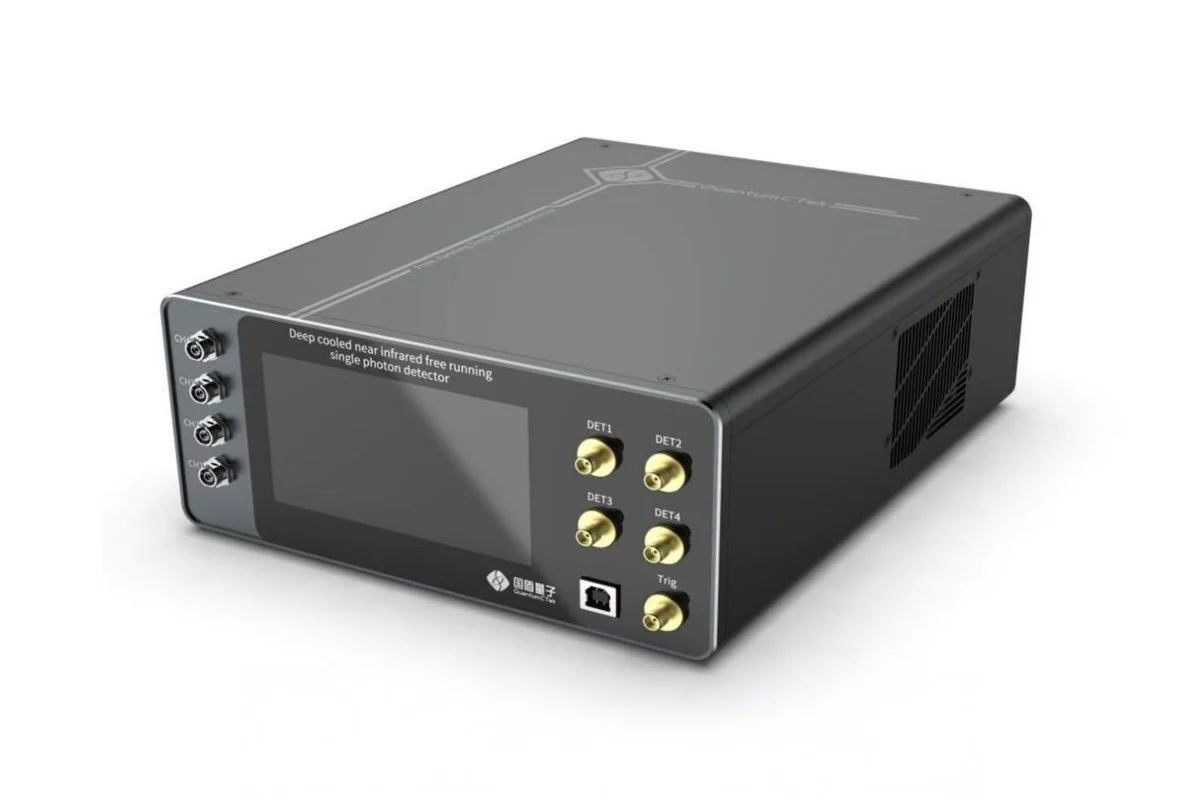
China has begun mass producing the world’s first four-channel photon detector, a groundbreaking device capable of detecting single photons, the smallest unit of energy, making it crucial for quantum communication and stealth aircraft tracking. This achievement by
Technical Innovation
China has taken a significant step forward in quantum technology by mass producing the world’s first four-channel photon detector, dubbed the “photon catcher.” According to Zhang Tong from Beijing, a leading science journalist, this breakthrough marks a crucial milestone in China’s efforts to achieve self-sufficiency and international leadership in core components for quantum information technology. The device can detect individual photons, making it an essential component in advanced technologies like quantum communication and radar systems designed to track stealth aircraft.
Building on this achievement, researchers at the Quantum Information Engineering Technology Research Centre in Anhui province have developed a single-photon detector that operates with ultra-low noise. This innovation allows for highly sensitive tracking of stealth aircraft, such as the F-22 Raptor fighter jet, which are notoriously difficult to detect due to their signature suppression technologies. The ability to track these aircraft is critical
Industry Implications
China’s mass production of the world’s first four-channel photon detector represents a significant leap in quantum technology, with far-reaching industry implications. According to Zhang Tong from Beijing, the “photon catcher” can detect individual photons, enabling advancements in areas such as quantum communication networks and stealth aircraft tracking. This breakthrough positions China at the forefront of international leadership in core components for quantum information technology, reducing reliance on foreign suppliers.
Building on this technological milestone, industry analysts predict increased adoption of quantum radar systems, which could revolutionize surveillance technologies. The detector’s capability to track even the smallest units of energy makes it invaluable for national defense and security applications, enhancing military readiness. Meanwhile, advancements in quantum communication networks could lead to more secure and efficient data transmission methods, pivotal for global information infrastructure.
The development also stimulates innovation within China’s tech ecosystem, fostering collaboration between research institutions
This development could enable China to become a global leader in quantum information technology, potentially revolutionizing industries such as communication and defense. Within five years, the technology may see
From a purely physical standpoint, the efficacy of these detectors hinges on highly specialized materials, often involving Superconducting Nanowire Single-Photon Detectors (SNSPDs). These devices operate by utilizing superconductors cooled to cryogenic temperatures, allowing them to measure the minute electrical signal generated when a single photon passes through the material. This process drastically minimizes the system’s detection threshold, enabling the reliable discrimination between ambient electronic noise and the actual quantum signal, a feat unattainable with conventional photodetectors.
Despite the monumental breakthrough in mass production, the operational integration of these detectors faces persistent technical challenges. Operating SNSPDs requires liquid helium cooling, adding complexity and cost to real-world deployment. Furthermore, optimizing the detector’s sensitivity across various wavelengths, particularly in the telecom band where quantum signals are often transmitted, requires precise spectral tuning. Researchers must concurrently develop more stable, room-temperature detection methods to facilitate the technology’s transition from specialized laboratory equipment to broadly deployable commercial hardware.
In the context of quantum communication, the four-channel detector’s capability is integral to implementing Quantum Key Distribution (QKD) protocols. Unlike traditional encryption, which relies on computational difficulty, QKD uses the fundamental laws of physics, specifically the uncertainty principle, to ensure security. Any attempt by an eavesdropper to measure the transmitted quantum state inevitably introduces detectable perturbations, safeguarding the key exchange and providing an intrinsically provably secure communication channel.
Beyond military and communications applications, the refinement of these photon detectors accelerates research into quantum networking components. Scaling the technology necessitates pairing the detectors with robust, on-chip single-photon sources and advanced photonic integrated circuits. Successful commercialization hinges on mastering the entire quantum signal chain, from generation to detection, allowing for the creation of scalable quantum repeaters required to build transcontinental quantum internet infrastructure.




See today’s quantum computing news on Quantum Zeitgeist for the latest breakthroughs in qubits, hardware, algorithms, and industry deals.