Auburn University mathematics and physics major Will McCurley has earned two of Auburn’s most distinguished undergraduate honors, recognizing his dedication to both fields. McCurley is the inaugural recipient of the Dean Schneller Award, the highest recognition within the College of Sciences and Mathematics, and also received the Comer Medal for Excellence in Physical Sciences, the university’s longest continuously awarded student honor. His achievements were supported by both the Department of Mathematics and Statistics and the Department of Physics, reflecting his engagement across disciplines. “I’ve tried my best to be an active part in both departments,” McCurley said. “It’s been a lot of work, and I’m glad people have appreciated what I’ve put in.” The awards recognize McCurley’s undergraduate research focused on the computational challenges within condensed matter physics and quantum mechanics.
Will McCurley Receives Dean Schneller and Comer Medals
The Comer Medal is particularly noteworthy as the university’s longest continuously awarded student honor, signifying a longstanding tradition of recognizing exceptional undergraduate work. McCurley’s research focuses on condensed matter physics, utilizing computational methods to explore the relationship between material structure and physical properties; at its core, his work involves solving for wave functions, as he explains, to determine particle location and characteristics. Faculty advisor Yinong Zhou praised McCurley’s abilities, stating, “Will is an exceptionally talented student,” and emphasizing his capacity for self-learning and perseverance. Beyond research, McCurley actively contributed to the Auburn community as treasurer of the Society of Physics Students, a mathematics tutor, and a member of the Quiz Bowl team, reinforcing his belief that working with other people and learning to articulate your ideas is the biggest way you can grow. He will continue his research at Auburn this fall, beginning a doctorate in physics, motivated by a desire to foster a strong scientific community that can provide a basis of truth.
Condensed Matter Physics Research with Computational Methods
Auburn University’s recent recognition of Will McCurley highlights his work in condensed matter physics, a field that studies how the structure of materials shapes their physical properties. His research, focused on understanding how material structure dictates physical properties, utilizes code and extensive datasets as primary tools. This approach addresses a core challenge in quantum physics, as McCurley explains: “All of quantum physics is about solving for wave functions… It comes down to finding where particles are in a system and their properties.” Working with faculty advisor Yinong Zhou, McCurley was given the unusual opportunity to take ownership of an independent research project early in his undergraduate career. The inaugural Dean Schneller Award and the Comer Medal for Excellence in Physical Sciences, the university’s longest continuously awarded student honor, underscore Auburn’s commitment to fostering interdisciplinary research; his work bridges the Departments of Mathematics and Statistics and Physics, with support from faculty in both departments.
A culture of apathy about science has consequences. Having a strong scientific community that can provide a basis of truth is important.
Yinong Zhou, Assistant Professor in the Department of Physics
Auburn University is actively cultivating an environment where interdisciplinary collaboration thrives, as evidenced by the achievements of mathematics and physics major Will McCurley. The Dean Schneller Award, named for a former college dean, specifically acknowledges contributions to continuing his legacy; “COSAM would not be COSAM without him,” McCurley noted, expressing gratitude for the honor. McCurley’s research, focused on condensed matter physics, benefited from early independence under the guidance of Yinong Zhou, assistant professor.
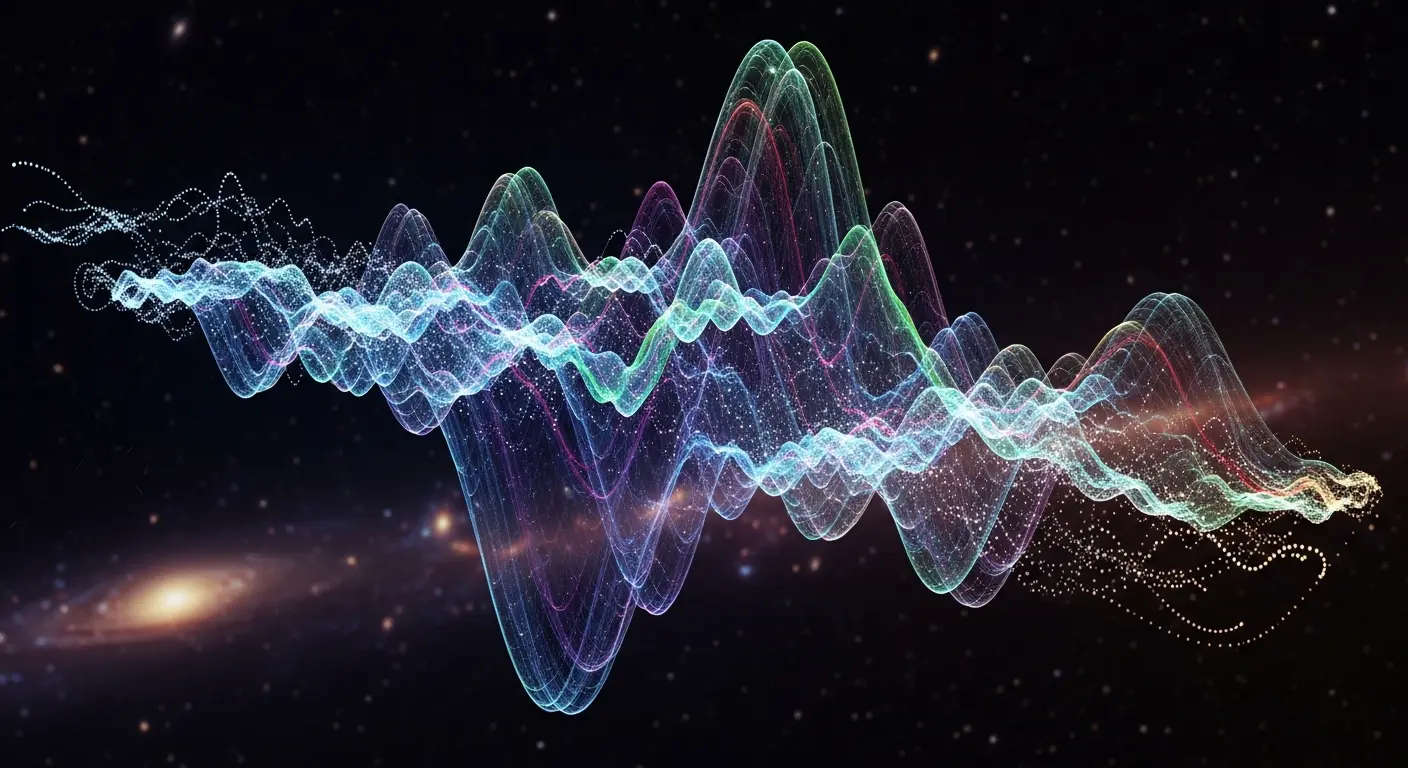
All of quantum physics is about solving for wave functions,” McCurley said.

See today’s quantum computing news on Quantum Zeitgeist for the latest breakthroughs in qubits, hardware, algorithms, and industry deals.