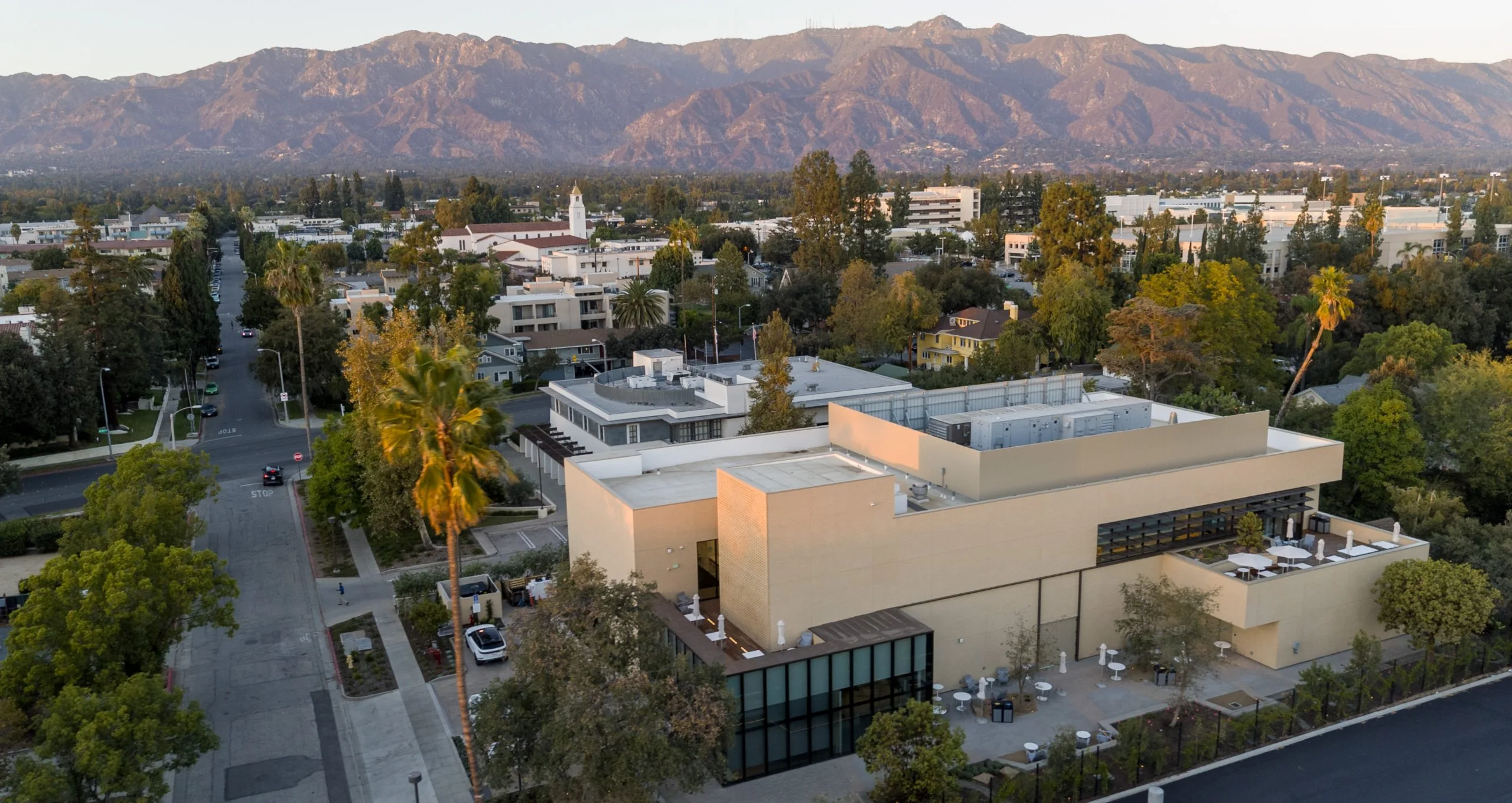
Amazon has been no slouch when it comes down to quantum computing. Their AWS division launched BraKet which allows users to run on a variety of Quantum Hardware from multiple providers, much like their AWS service enables cloud services. Recent news of a new Quantum Hub on the Caltech campus will certainly give Quantum Computing a boost. The collaboration will accelerate quantum computers and related technologies that have the potential to revolutionize areas such as data security, machine learning, medicine development, sustainability practices, and much more.
“Amazon Web Services is the biggest cloud provider on Earth today. They are thinking about how they can make computing simpler and better for people who use AWS. And they’re also thinking about the next step, and how to do computing and cloud computing in the next five or 10 years.”
Fernando Brandão, Bren Professor of Theoretical Physics at Caltech
“It’s not just about making our current computers a little bit faster or a little bit better as we have been seeing in the last 50 years at least. It’s about building a completely new kind of computer. Quantum computing is very early days, but I think it’s also very exciting.”
Fernando Brandão, Bren Professor of Theoretical Physics at Caltech


“AWS will benefit from the ideas percolating here on campus,”
Oskar Painter (MS ’95, PhD ’01), John G. Braun Professor of Applied Physics and Physics at Caltech and head of quantum hardware at AWS
Quantum Computing Comes full circle
Caltech is an apt choice for a quantum hub seeing that the late great Richard Feynman was a longtime Caltech professor who set the world ablaze with his demonstrations of physics to undergraduates as well as his insight into the quantum world. He infact proposed Quantum Computers and he famously stated how nature is not classical – it is quantum mechancal. Innovation didn’t end with Feynman and another great of the quantum world, Peter Shor is a Caltech alumnus. Shor’s algorithm is one of those algorithms that could have profound implications for the security schemes that the world uses but has also developed quantum error-correction codes, to enable devices to manage the difficulties of noise in our NISQ based devices. Additionally Caltech’s Jeff Kimble, was among the first, in 1998, to achieve quantum teleportation.
“nature isn’t classical, dammit, and if you want to make a simulation of nature, you’d better make it quantum mechanical, and by golly, it’s a wonderful problem because it doesn’t look so easy.”
Richard Feynman
Read more from AWS