Scientists from South Korea have successfully synthesized a room-temperature superconductor, LK-99, that works at ambient pressure. This is a significant breakthrough, as previous room temperature superconductors required high pressure to function. The superconductivity of LK-99 is due to minute structural distortion caused by substituting Cu2+ ions in the insulating network of Pb(2)-phosphate, not by external factors such as temperature and pressure. This discovery could open up new possibilities for various applications such as magnets, motors, power cables, and, of course, quantum computing.
“For the first time in the world, we succeeded in synthesizing the room temperature superconductor (Tc ≥ 400 K, 127 oC) working at ambient pressure with a modified lead-apatite (LK-99) structure.”
Authors of the Article
The development will be exciting to those working on superconducting quantum devices where the qubits typically have to be cooled or refrigerated to a very low temperature. Devices such as those from IBM and Rigetti work using superconducting qubits. While the news from the South Korean team still needs to be digested, the world’s scientists are excited as the innovation could be transformative in so many fundamental areas. What is also apparent is that the materials used are not that exotic. Hence, if the results can be corroborated, the materials could be widespread and embedded into many applications.
Discovery of a Room Temperature Superconductor
This apparent room temperature superconductor, LK-99, has a modified lead-apatite structure. The superconductivity of LK-99 is proven with the Critical temperature (Tc), Zero-resistivity, Critical current (Ic), Critical magnetic field (Hc), and the Meissner effect. The superconductivity of LK-99 originates from minute structural distortion by a slight volume shrinkage (0.48 %), not from external factors such as temperature and pressure.
Overcoming the High-Pressure Problem of Room Temperature Super Conductors
The recent success of developing room-temperature superconductors with hydrogen sulfide and yttrium super-hydride has garnered worldwide attention. However, these superconductors are challenging to apply to actual application devices in daily life because of the tremendously high pressure required. To overcome this high-pressure problem, scientists have taken a chemical approach to synthesize a room-temperature and ambient-pressure superconductor, LK-99.
The Unique Structure of LK-99
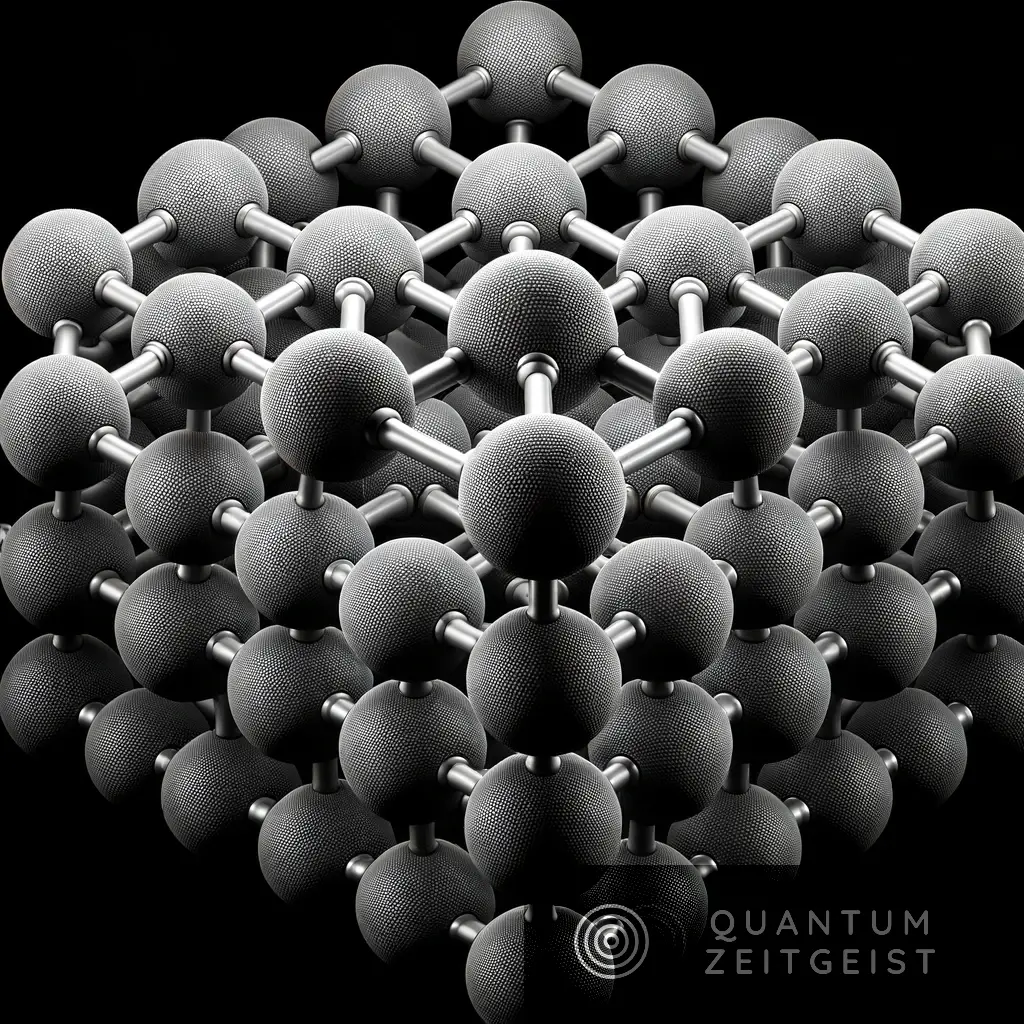
The unique structure of LK-99 allows the minute distorted structure to be maintained in the interfaces. This is the most important factor that LK-99 maintains and exhibits superconductivity at room temperatures and ambient pressure. The shrinkage in LK-99 is caused by Cu2+ substitution of Pb2+(2) ions in the insulating network of Pb(2)-phosphate, and it generates stress. It concurrently transfers to Pb(1) of the cylindrical column, resulting in distortion of the cylindrical column interface, which creates superconducting quantum wells (SQWs) in the interface.
The Role of Stress in Superconductivity
“For the first time in the world, we report the success in synthesizing a room-temperature and ambient-pressure superconductor with a chemical approach to solve the temperature and pressure problem.”
The stress generated by the decrease in volume under low temperature or high pressure causes a minute strain or distortion. This structural change seems to bring about the superconductivity of it. The stress caused by temperature and pressure brings a minute structural distortion and strain, which creates an electronic state for superconductivity. In LK-99, the stress generated by the Cu2+ replacement of Pb(2)2+ ion was not relieved due to the structural uniqueness of LK-99 and, at the same time, was appropriately transferred to the interface of the cylindrical column.
Potential Applications of LK-99
LK-99 has many possibilities for applications such as magnets, motors, cables, levitation trains, power cables, qubits for a quantum computer, THz Antennas, etc. This new development is expected to be a significant historical event that opens a new era for humankind. For those who want a primer on quantum computers or devices, we have published plenty of articles. For those who welcome a more technical look, we have published achievements in developing qubits across a range of technologies, of which superconducting is just one type of technology. There are two publicly listed quantum companies that utilise superconducting qubits in their quantum processors (Rigetti and D-wave).
“All evidence and explanation lead that LK-99 is the first room temperature and ambient-pressure superconductor. The LK-99 has many possibilities for various applications such as magnet, motor, cable, levitation train, power cable, qubit for a quantum computer, THz Antennas, etc. We believe that our new development will be a brand-new historical event that opens a new era for humankind.”
Workable Room Temperature Superconductors or Hot Air?
In Summary, Scientists have successfully synthesized a room-temperature superconductor, LK-99, that works at ambient pressure, a world-first achievement. The superconductivity of LK-99 is due to minute structural distortion caused by the substitution of copper ions, creating superconducting quantum wells and allowing it to maintain and exhibit superconductivity at room temperatures and ambient pressure.
Many claims such as these need to be validated by other parties and examine the publication and attempt to recreate the effects of superconductivity. Whether this is a Room Temperature Superconductor remains to be adequately validated. It might take a few months or weeks until researchers can fully digest and then attempt to recreate the material that has gotten the science world excited!
- For the first time, a room temperature superconductor (LK-99) has been successfully synthesized, working at ambient pressure.
- The superconductivity of LK-99 is proven with the Critical temperature (Tc), Zero-resistivity, Critical current (Ic), Critical magnetic field (Hc), and the Meissner effect.
- The superconductivity of LK-99 originates from minute structural distortion by a slight volume shrinkage (0.48 %), not by external factors such as temperature and pressure.
- The shrinkage is caused by Cu2+ substitution of Pb2+(2) ions in the insulating network of Pb(2)-phosphate, and it generates stress.
- The stress concurrently transfers to Pb(1) of the cylindrical column, resulting in distortion of the cylindrical column interface, which creates superconducting quantum wells (SQWs) in the interface.
- The unique structure of LK-99 that allows the minute distorted structure to be maintained in the interfaces is the most important factor that LK-99 maintains and exhibits superconductivity at room temperatures and ambient pressure.
- The LK-99 has many possibilities for applications such as magnet, motor, cable, levitation train, power cable, qubits for a quantum computer, THz Antennas, etc.