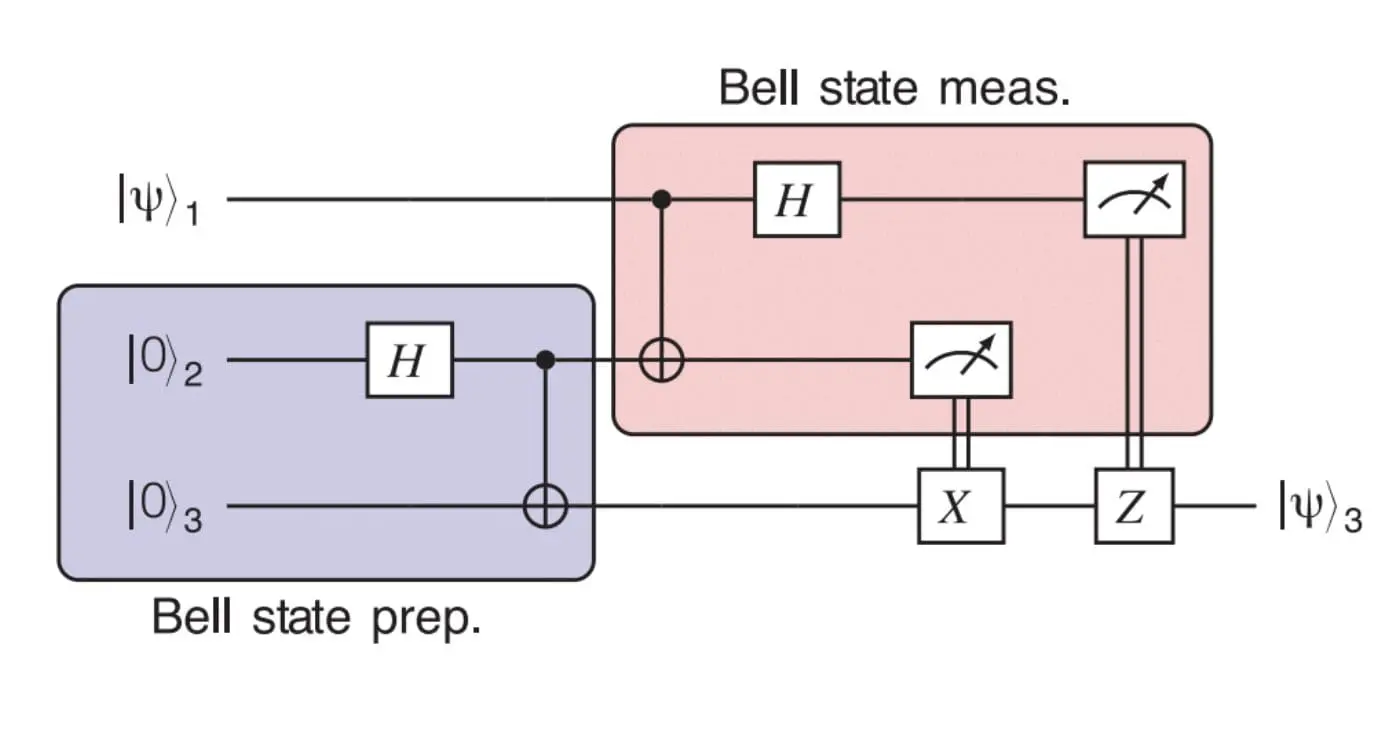
Scientists from Quantinuum have made a breakthrough in quantum teleportation, a process that allows information to be transferred from one particle to another without physical movement. Researchers led by Ryan-Anderson have developed a new method for logical teleportation, which uses a lattice surgery gate set to transfer quantum information between particles. This approach eliminates the need for a Bell resource state and reduces the number of logical qubits required.
The team’s work builds on previous research by Dennis, Kitaev, Landahl, and Preskill, as well as more recent studies by Hayes et al and Bonilla Ataides et al. Companies involved in this area of research include PECOS, which provides a performance estimator for codes on surfaces. The development of quantum teleportation has significant implications for the future of quantum computing and communication. Key individuals involved in this work include Ryan-Anderson, Dennis, Kitaev, Landahl, Preskill, Hayes, and Bonilla Ataides.
The authors demonstrate a novel approach to quantum teleportation using a lattice surgery gate set. This set enables the transfer of quantum information from one location to another without physical transport of the information. This breakthrough has significant implications for the development of large-scale quantum computers and quantum communication networks.
Quantum teleportation is a process that allows for the transfer of quantum information from one particle to another, potentially over long distances, without physically moving the particles themselves. This phenomenon relies on the principles of quantum entanglement and measurement-based feedback control.
Key Findings:
- Lattice Surgery Gate Set: The authors introduce a new gate set, called lattice surgery, which enables the implementation of logical teleportation circuits with reduced resource requirements.
- Two Implementations: They present two different implementations of logical teleportation circuits using the lattice surgery gate set, showcasing the flexibility and versatility of this approach.
- Reduced Resource Requirements: The second implementation (circuit B) does not require a Bell resource state and uses fewer logical qubits than traditional approaches, making it more efficient and practical for large-scale quantum computing architectures.
This research has significant implications for the development of large-scale quantum computers, as it provides a more efficient and scalable approach to quantum teleportation. This breakthrough can also enable the creation of more robust and reliable quantum communication networks.
Overall, this paper presents a significant advancement in the field of quantum computing and communication, and I’m excited to see how these findings will be built upon in future research.
DOI: https://www.science.org/doi/full/10.1126/science.adp6016



See today’s quantum computing news on Quantum Zeitgeist for the latest breakthroughs in qubits, hardware, algorithms, and industry deals.