Welcome to this week’s Quantum Technology Digest! We’ve curated the ten most impactful stories shaping the rapidly evolving landscape of quantum computing and related fields. This week highlights a fascinating mix of progress – from hardware advancements and significant funding rounds to demonstrable scientific breakthroughs utilizing quantum power.
Notably, this week’s news showcases a strong push toward scalability and error correction, crucial hurdles in realizing practical quantum computers. Several articles detail advancements in qubit technology – including Rigetti’s CZ gate implementation, Xanadu’s modular Aurora platform, and Quantum Elements’ record-breaking fidelity in logical qubits – alongside robust investment in neutral atom approaches from Pasqal and recognized leadership from Harvard/CNRS/Paris-Saclay/Wisconsin-Madison. Beyond the hardware, we see quantum computing tackling complex scientific challenges, as demonstrated by IBM’s molecular validation.
Finally, the global race for quantum dominance continues to heat up, with both China and Canada outlining ambitious plans and significant investment in the sector. This week’s digest underscores the breadth of innovation happening now, spanning multiple platforms, geographical locations, and application areas – a clear sign the quantum revolution is gaining momentum.
1. Rigetti Computing: 2025 Progress, Losses, and Key Partnerships

Rigetti Computing announced its 2025 financial results, reporting $7.1 million in revenue alongside a $216.2 million net loss, reflecting the high costs of quantum hardware development. However, the company showcased significant technical achievements, notably achieving 99.9% two-qubit gate fidelity with a 28 nanosecond gate speed on a prototype platform and demonstrating consistent high one-qubit gate fidelity. This progress is bolstered by an $8.4 million order from India’s C-DAC for a 108-qubit on-premises quantum computer, signaling growing market demand and strategic partnerships for Rigetti’s scalable, chiplet-based architecture.
2. Rigetti’s Cepheus-1 Boosts Quantum Performance with CZ Gate Implementation
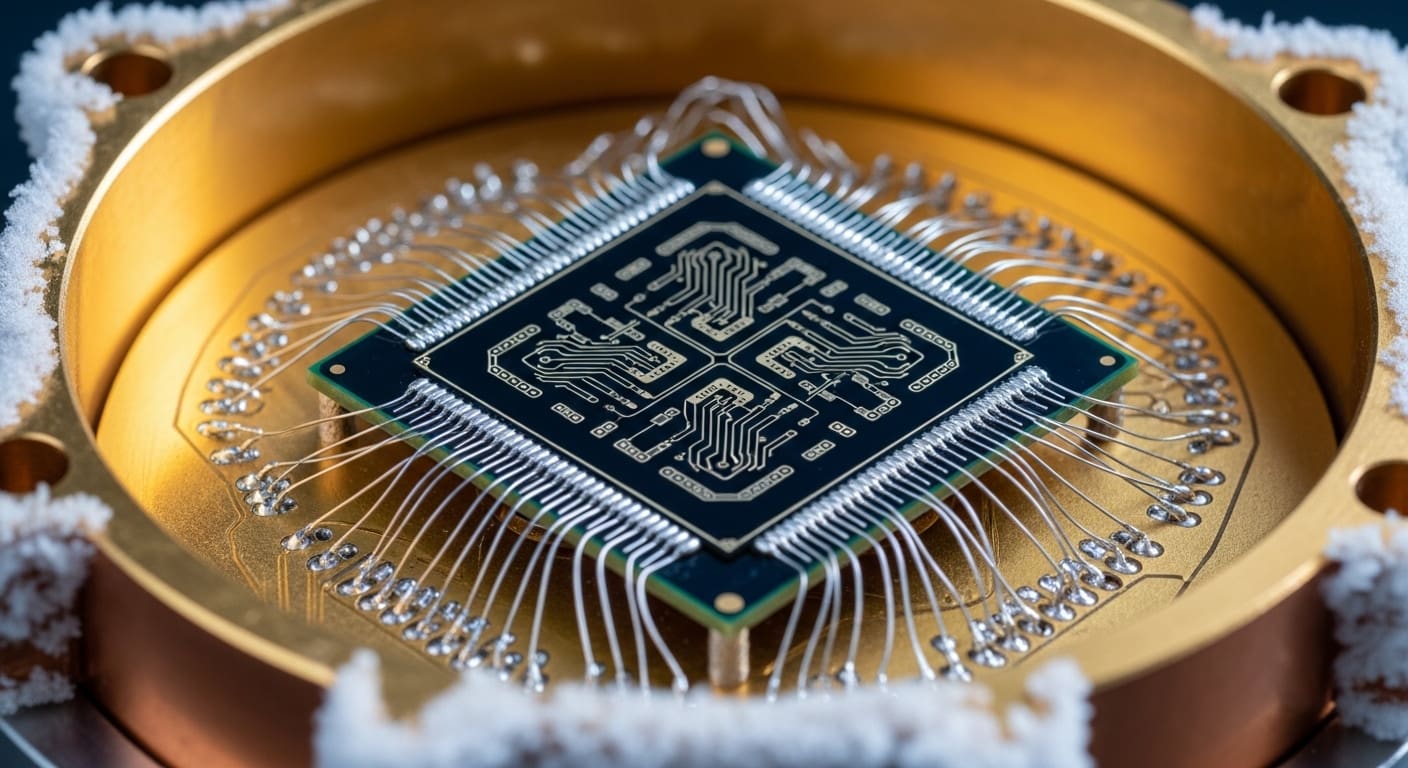
Rigetti Computing has upgraded its Cepheus-1, 36Q quantum processing unit by replacing iSWAP entangling gates with CZ gates, a move designed to enhance scalability and improve quantum error correction. This transition allows for more efficient parity-check circuits – vital for error detection – and bypasses the quadratic scaling limitations of iSWAP gates related to inter-processor communication. Achieving speeds under 30 nanoseconds with over 99.9% fidelity, Rigetti believes CZ gates better align with the demands of increasingly complex quantum algorithms and larger-scale computations. While iSWAP offered strong expressivity in earlier processors, CZ prioritizes the requirements of robust, scalable quantum systems.
3. IBM Synthesizes & Validates Exotic Molecule with Quantum Computing Power
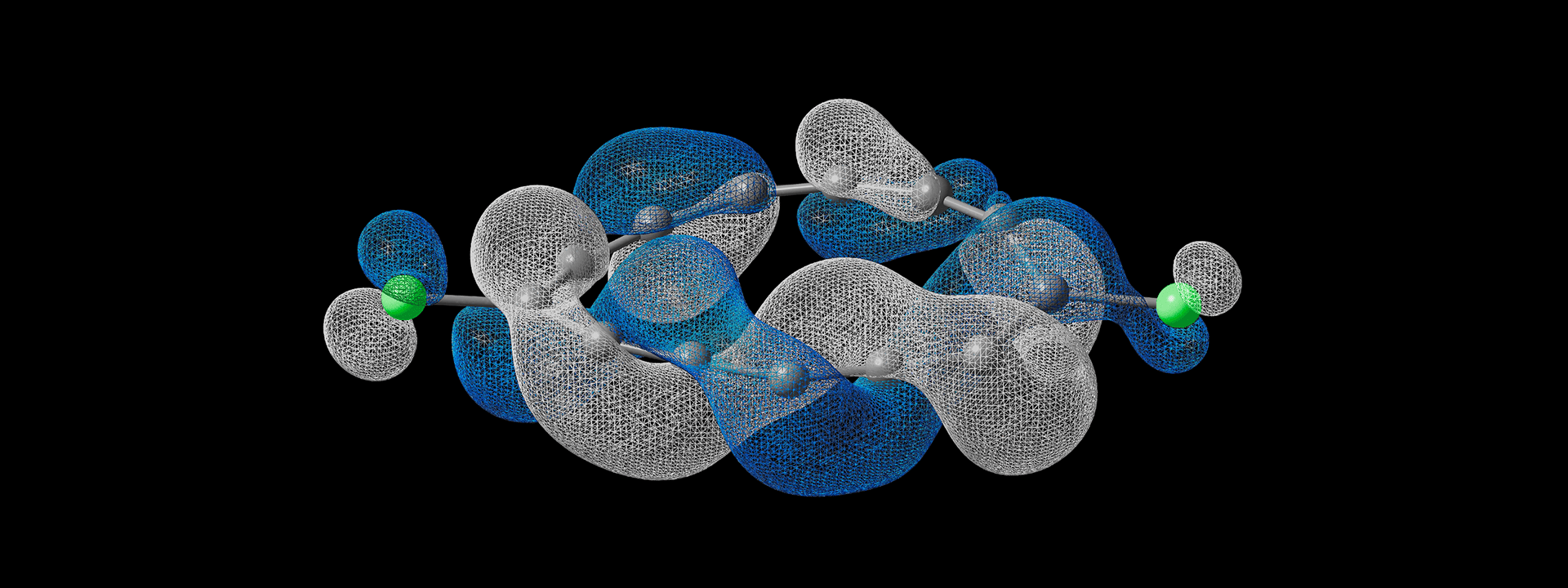
Researchers at IBM, in collaboration with the University of Manchester and Oxford University, have successfully designed, synthesized, and validated a novel molecule (C₁₃Cl₂) exhibiting a half-Möbius electronic topology – a previously unobserved electronic structure. This molecule, assembled atom-by-atom, displays a unique corkscrew-like electron pattern and was validated using a high-fidelity quantum computation, overcoming limitations of classical computers in simulating its complex electron interactions. The achievement demonstrates the potential of quantum computers to unlock new insights in molecular engineering and control matter at a topological level, allowing for deliberate control of material properties.
4. Neutral Atom Quantum Computing Advances Win Prestigious Bell Prize
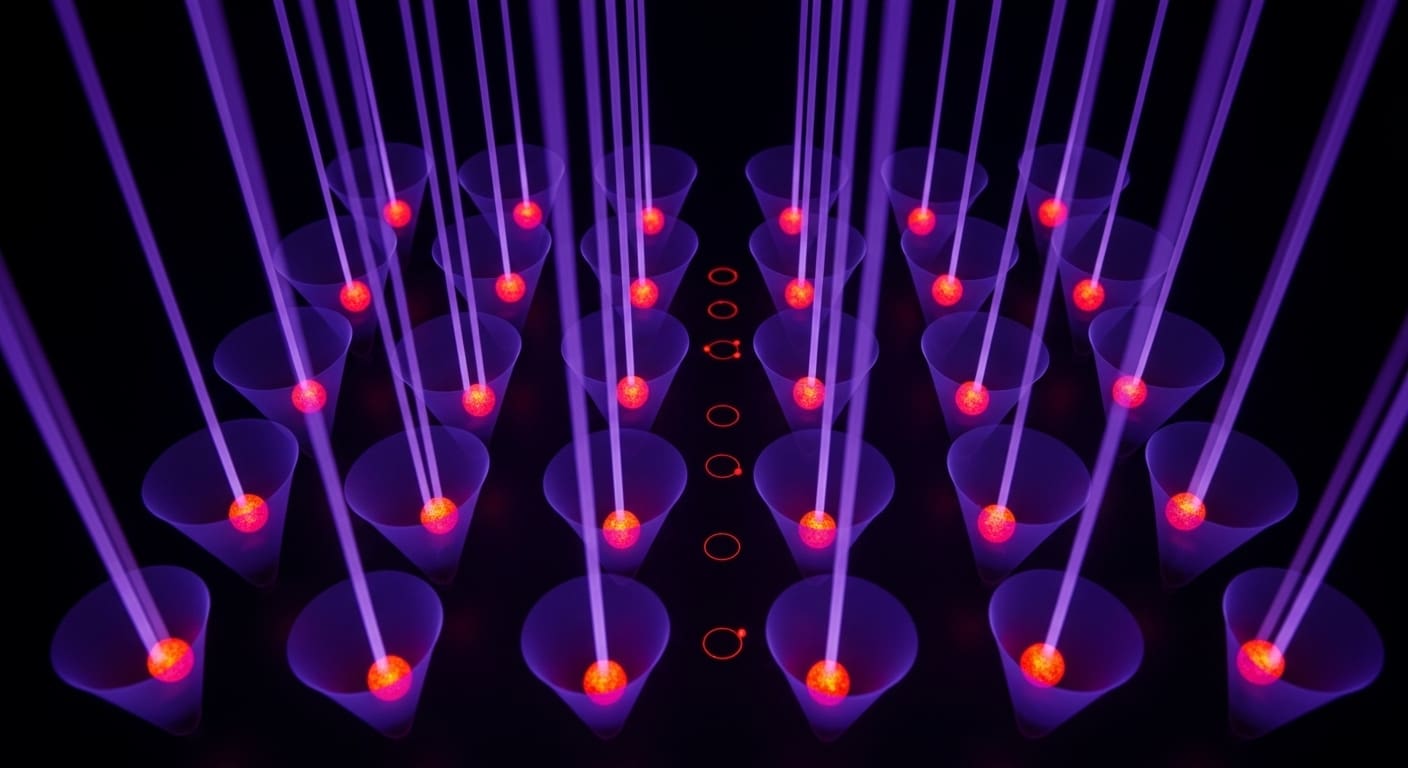
Researchers at Harvard University, CNRS, Université Paris-Saclay, and the University of Wisconsin-Madison—specifically Mikhail Lukin, Antoine Browaeys, and Mark Saffman—have been awarded the ninth John Stewart Bell Prize for their groundbreaking work in scalable neutral atom quantum computing. The award recognizes their pioneering development of reconfigurable optical tweezer arrays capable of controlling hundreds of individually addressable atoms, alongside advances in entangled atom transport and Rydberg-mediated interactions. This research addresses a key challenge in quantum computing: scaling up system size without losing experimental precision, paving the way for more complex simulations and fault-tolerant architectures. QuEra Computing Inc., co-founded by Lukin, has played a crucial role in translating these advancements into tangible quantum hardware.
5. Xanadu Advances Photonic Quantum Computing with Scalable Aurora Platform & Public Listing

Xanadu Quantum Technologies showcased its technical roadmap and full-stack platform, including the Aurora quantum computer, at its Analyst Day event. Aurora is notable as the first networked, modular quantum computer utilizing photons – a design Xanadu believes is key to achieving practical error correction and scalability. Backed by $275 million in investment and projecting a $3.1 billion pro forma enterprise value upon its merger with Crane Harbor Acquisition Corp, Xanadu aims for meaningful commercialization by 2029 and plans to list on the Nasdaq and Toronto Stock Exchange under the symbol “XNDU”. The company’s development of PennyLane, a hardware-agnostic software platform, further supports its comprehensive approach to quantum computing.
6. Pasqal Secures €340M Funding, Targeting $2 Billion Public Listing

Pasqal, a France-based neutral atom quantum computing company, has secured at least €340 million in funding through a private round and convertible financing, achieving a valuation of $2 billion. This investment will fuel expansion of Pasqal’s French infrastructure, accelerate research and development towards a fault-tolerant quantum computer by the end of the decade, and double production capacity within 24 months. The company plans to go public on both Nasdaq (anticipated 2026) and Euronext, demonstrating a shift towards industrial scalability in the quantum computing sector, particularly with neutral atom technology.
7. Xanadu Quantum Technologies: Pioneering Photonic Computing & Nasdaq Listing

Xanadu Quantum Technologies is preparing to become the first publicly listed, sole-focus photonic quantum computing company through a business combination with Crane Harbor Acquisition Corp. The company showcased its networked, modular quantum computer, Aurora, which prioritizes scalability and connectivity over simply increasing qubit count—a key approach to overcoming coherence challenges and enabling error correction. Valued at approximately $3.1 billion, Xanadu aims for meaningful commercialization by 2029, supported by its PennyLane open-source software platform that integrates quantum computing with classical AI and broadens developer accessibility.
8. China’s AI & Quantum Leap: A Five-Year Plan for Tech Dominance
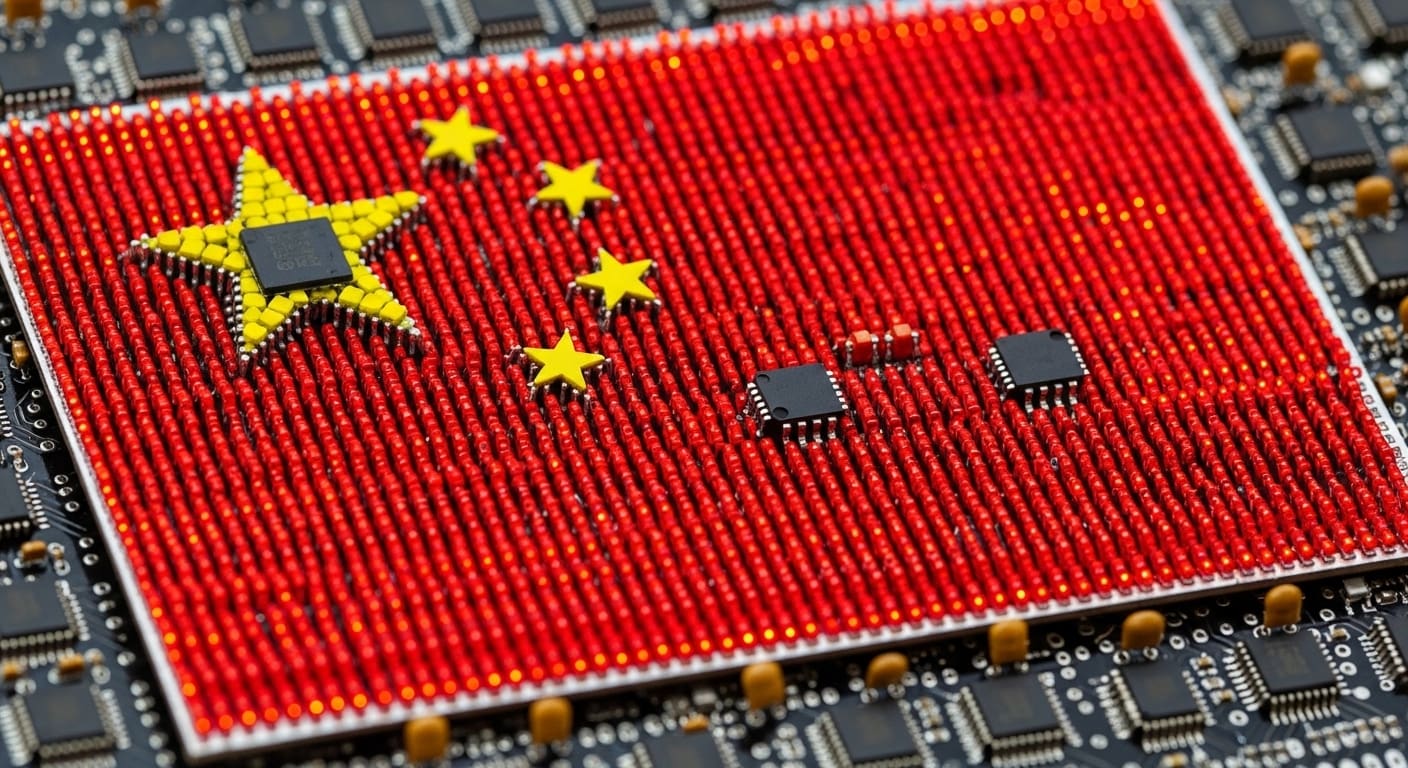
According to a new five-year plan released by China’s state-planning body, the nation aims to integrate artificial intelligence across all economic sectors and achieve global leadership in technologies like quantum computing, 6G, and robotics. The plan outlines a strategy focused on “new quality productive forces,” prioritizing domestic innovation alongside a surprising embrace of open-source AI—a shift from previous approaches—to overcome reliance on U.S. technology and address a rapidly aging workforce. Researchers at the Chinese Academy of Sciences are specifically tasked with developing scalable quantum computers and an integrated quantum communication network as part of this ambitious initiative.
9. Canada’s Quantum Leap: Companies Poised for Growth in 2026

A team from Quantum Zeitgeist details the burgeoning Canadian quantum computing industry, highlighting a significant investment of over CA$2 billion over two decades now reaching a critical juncture in 2026. This report profiles 23 companies and 11 ecosystem organizations, with a particular focus on Xanadu Quantum Technologies, which is on the verge of becoming the world’s first publicly traded pure-play photonic quantum computing company via a SPAC merger. Furthermore, three of Canada’s “Quantum Champions” – including Xanadu and Photonic – have been selected for DARPA’s Quantum Benchmarking Initiative, signifying strong technical credibility and potential for scalability, while the Canadian government’s Quantum Champions Program aims to retain key quantum companies within Canada’s borders.
10. Quantum Elements Achieves Record Fidelity in Entangled Logical Qubits

Quantum Elements, a Los Angeles-based start-up, has announced a breakthrough in quantum error correction, demonstrating record-high fidelity of 91-94% for entangled logical qubits on an IBM 127-qubit processor, as published in Nature Communications. Their novel approach combines quantum error detection with a form of dynamical decoupling, directly suppressing both logical and physical errors without requiring additional qubits. This hybrid technique achieved performance exceeding the breakeven point – logical qubits maintained higher fidelity than unencoded physical qubits – and represents a significant step towards building more reliable, fault-tolerant quantum computers.