

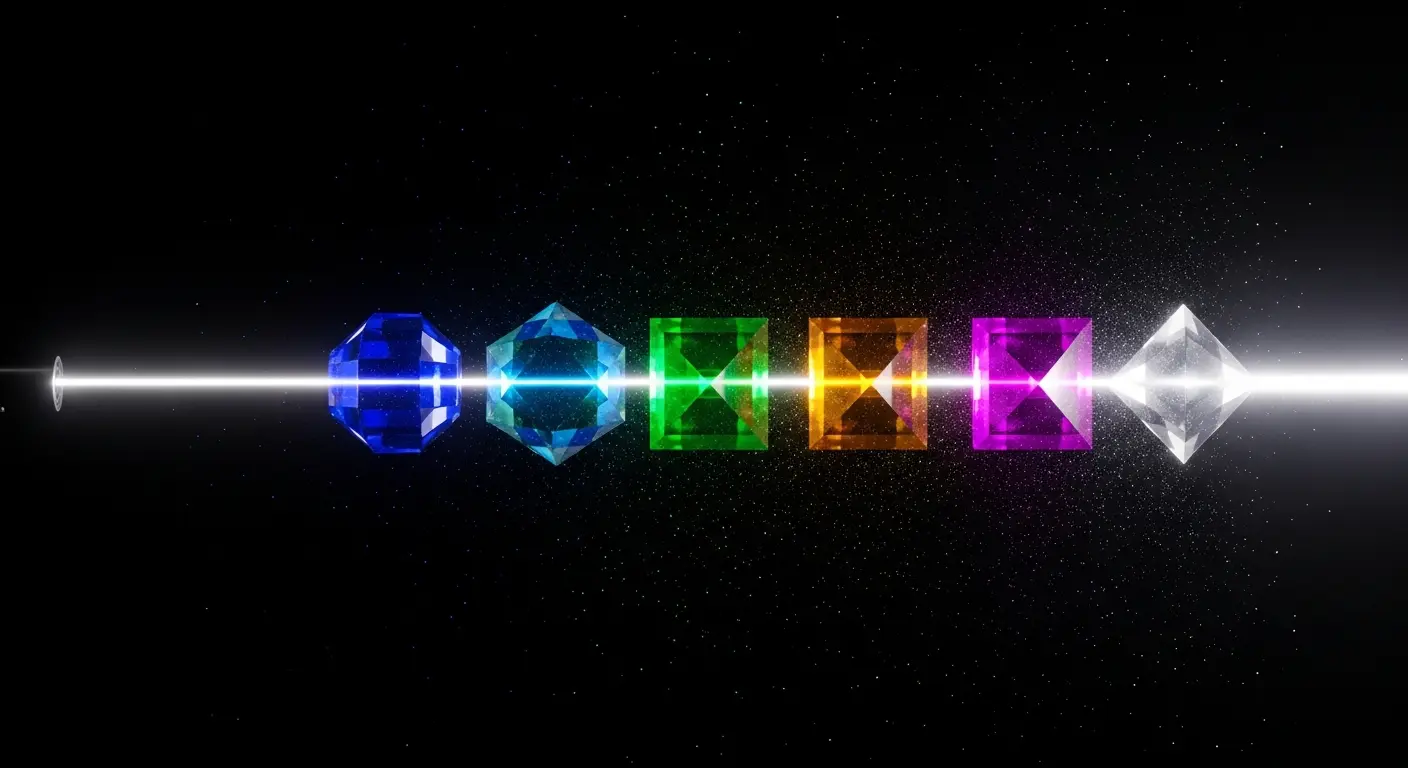
A new quantum algorithm overcomes fast oscillatory behaviour in quantum simulations by combining Hermitian systems in imaginary time and non-Hermitian systems. Researchers led by Peng Guo, along with Paul LeVan, Frank X. Lee, and Yong Zhao show this approach stabilises simulations, avoiding mid-circuit measurements and parameter adjustments for readily implementable solutions on existing quantum computers. Numerical tests confirm agreement with exact solutions, indicating a key pathway for stabilising simulations of a wider range of quantum systems. The algorithm utilises block encoding and Hadamard tests to provide a strong and flexible set of tools for determining scattering phase shifts
Linear scaling unlocks extended simulations of Hermitian and non-Hermitian quantum dynamics
The size and length of quantum circuits needed for accurate simulations have been reduced, now scaling linearly with evolution time when previously they were limited by rapidly fluctuating signals. This breakthrough circumvents a longstanding issue in modelling quantum systems, enabling simulations to proceed for durations previously unattainable due to statistical fluctuations overwhelming the signal. The fundamental challenge in real-time quantum simulations stems from the oscillatory nature of correlation functions, which decay rapidly and introduce significant noise. This necessitates extremely deep circuits to extract meaningful information, quickly exceeding the capabilities of near-term quantum devices. A combined quantum algorithm utilising block encoding and the Hadamard test allows accurate simulations of both Hermitian systems in imaginary time and non-Hermitian systems in real time, sidestepping the need for complex mid-circuit measurements or Hamiltonian adjustments. Imaginary time evolution, commonly employed in ground state energy estimation, effectively dampens these oscillations, while non-Hermitian dynamics offer a complementary approach for studying open quantum systems and resonances.
These advancements enable more stable and extended simulations of diverse quantum phenomena, particularly in areas like scattering and particle interactions. Numerical tests were performed on quantum simulators utilising a one-dimensional quantum mechanical setup with a contact interaction potential, mirroring conditions used in lattice quantum chromodynamics and other quantum field theories. Specifically, the integrated correlation function, a metric relating to the Hamiltonian of two interacting particles within a trap, was calculated, and simulations agreed with exact solutions for a duration limited by statistical fluctuations, validating the approach for modelling quantum systems. The contact interaction, characterised by a Dirac delta function potential, serves as a simplified yet powerful model for short-range interactions between particles. The integrated correlation function provides information about the scattering amplitude and phase shift, crucial quantities for understanding the dynamics of the system. The size and length of quantum circuits grow linearly with evolution time, a significant improvement over previous methods which often exhibited quadratic or exponential scaling. However, current methodology does not yet demonstrate scalability beyond relatively small system sizes. Further work is needed to address the challenges of maintaining signal integrity over extended simulation times and to explore the potential for applying this technique to more complex quantum systems, such as those found in condensed matter physics or high-energy physics. The implications extend to modelling few-body systems in nuclear physics and understanding the behaviour of strongly correlated electrons in materials.
Statistical error accumulation currently limits long-term quantum simulation fidelity
Demonstrations of accuracy with this new algorithm are presently constrained by the accumulation of statistical fluctuations, as the authors concede a key limitation. Agreement with established solutions diminishes as simulation time increases, suggesting that scaling up to model more complex, long-duration quantum processes will require significant advances in mitigating these errors. This fragility highlights a persistent tension within the field, where the pursuit of increasingly realistic simulations clashes with the inherent noise and limitations of current quantum hardware. The accumulation of statistical errors is inherent in Monte Carlo methods, which are often employed in quantum simulation to estimate expectation values. Reducing these errors typically requires increasing the number of samples, which in turn increases the computational cost and circuit depth.
A technique for simulating quantum systems that evolve over time has been established, bypassing a common problem of unstable signals. Combining simulations in both imaginary and non-Hermitian time, researchers have found a way to avoid problematic oscillations that previously limited the duration and accuracy of calculations; non-Hermitian systems describe scenarios where standard symmetry rules do not apply. Non-Hermitian quantum mechanics provides a framework for describing systems with gain and loss, or those coupled to an external environment. This approach simplifies implementation on existing quantum hardware due to the absence of mid-circuit measurements or Hamiltonian adjustments, utilising a method of compressing quantum information and a test which measures the overlap between quantum states. Block encoding is a technique for representing a unitary operator as a quantum circuit, allowing for efficient implementation of complex operations. The Hadamard test is a quantum algorithm used to estimate the overlap between two quantum states, providing a powerful tool for characterising quantum systems and extracting relevant information. The combination of these techniques allows for a robust and flexible approach to simulating quantum dynamics, paving the way for more accurate and efficient simulations of complex quantum systems. The algorithm presented offers a potential solution to the challenges of simulating scattering processes, which are fundamental to many areas of physics, including particle physics, nuclear physics, and condensed matter physics. The ability to accurately determine scattering phase shifts is crucial for understanding the interactions between particles and predicting the behaviour of quantum systems.
Researchers successfully developed a technique for simulating quantum systems that circumvents unstable signals previously encountered in real-time simulations. By utilising both imaginary and non-Hermitian time simulations, alongside block encoding and the Hadamard test, they achieved stable quantum evolution without requiring complex adjustments to quantum circuits. This method maintains linear growth in circuit size and length with increasing simulation time, and numerical tests confirmed agreement with exact solutions. The findings suggest a viable pathway for simulating a wider range of quantum systems and accurately determining scattering phase shifts, crucial for understanding particle interactions.
👉 More information
🗞 Scattering phase shift in quantum mechanics on quantum computers: non-Hermitian systems and imaginary-time simulations
🧠 ArXiv: https://arxiv.org/abs/2604.00127

See today’s quantum computing news on Quantum Zeitgeist for the latest breakthroughs in qubits, hardware, algorithms, and industry deals.



