

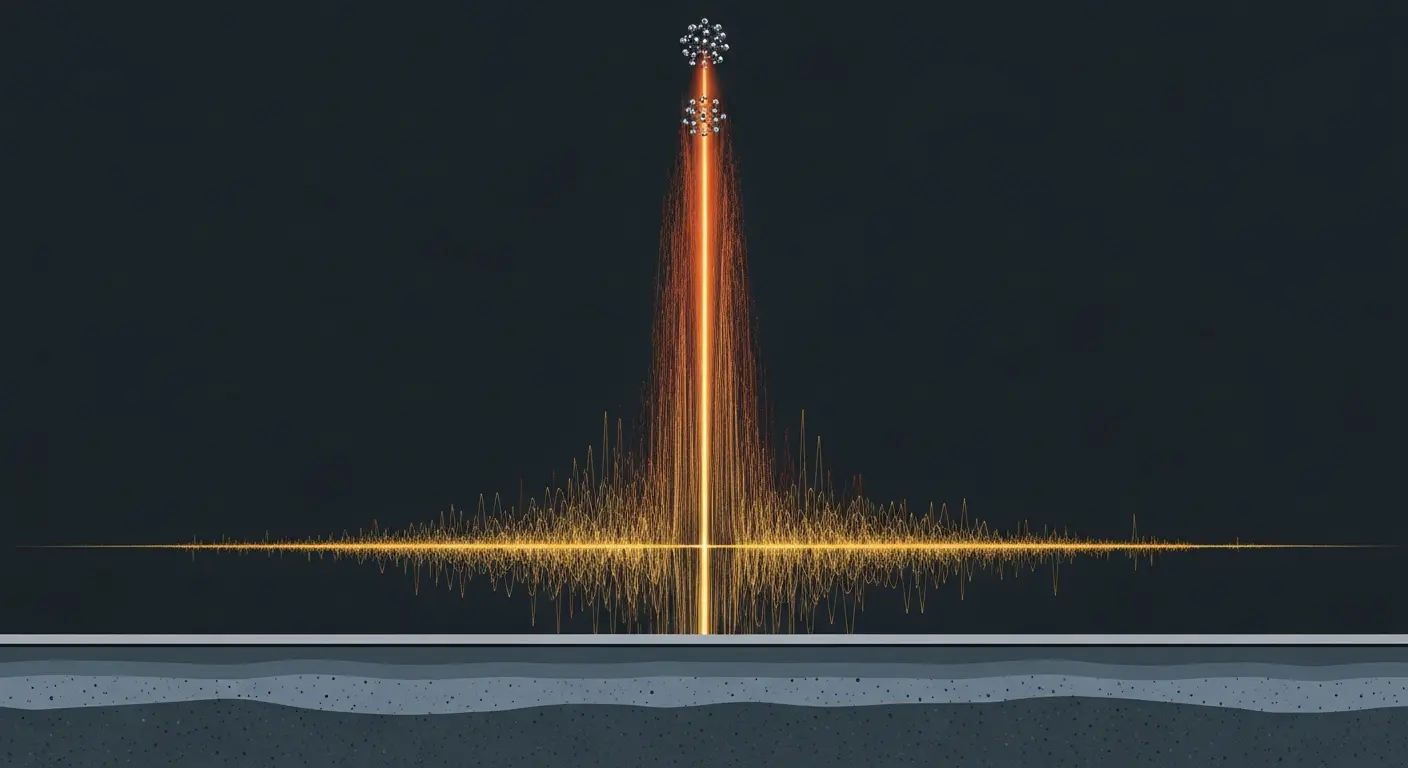
Scientists at Fuzhou University, in collaboration with Hefei National Laboratory, have developed a new method extending the usable sensing windows of quantum devices by over an order of magnitude. Tian-Le Yang and colleagues reveal that introducing engineered two-photon loss into a standard Kerr resonator model actively counteracts the detrimental effects of single-photon loss. This transforms unstable oscillations into a smooth and predictable decay. The approach, which relies on dissipatively stabilised non-Gaussian quantum states, offers a fully autonomous pathway to high-precision measurement. It enables high-precision measurement by circumventing the need for complex feedback control and establishes a new design principle for strong, scalable quantum sensing across multiple platforms.
Engineered photon loss stabilises cat states for extended quantum sensing windows
The high-sensitivity windows for quantum sensing have been extended by over an order of magnitude, transforming damped oscillations into a smooth, easily trackable trajectory. Previously, unavoidable single-photon loss within Kerr resonators caused disruptive oscillations, limiting precision measurements to extremely short timescales. The new technique actively counteracts this loss, enabling sustained high-precision sensing. It relies on adding engineered two-photon loss, a carefully controlled removal of photon pairs, to a standard two-photon-driven Kerr resonator, creating a hybrid model that stabilises non-Gaussian quantum states. Initial sensitivity gains originate from Gaussian squeezing, a reduction in quantum noise achieved by reducing the uncertainty in one quadrature of the electromagnetic field at the expense of increased uncertainty in the other. However, long-term precision now relies on even-parity cat states, a more durable type of quantum state characterised by a superposition of coherent states with opposite phases. These states offer a fully autonomous approach without complex feedback controls, and analysis of the quantum Fisher information revealed a clear temporal hierarchy; squeezing provides the initial boost in sensitivity, while sustained precision is driven by these stabilised cat states. The quantum Fisher information, a measure of the maximum achievable precision in estimating an unknown parameter, demonstrated the effectiveness of this hybrid approach in maintaining sensitivity over extended periods.
Stabilising quantum sensors via engineered two-photon dissipation in Kerr resonators
Engineered two-photon loss forms the core of this advancement, representing a carefully controlled method of removing pairs of photons from the system. This differs from the unavoidable, random loss of single photons that typically degrades quantum signals. Single-photon loss arises from imperfections in optical components, scattering, and absorption, all contributing to the decay of the quantum state. The technique actively combats the detrimental effects of single-photon loss by reshaping how the quantum state decays, transforming erratic oscillations into a predictable decline. A Kerr resonator, amplifying specific light frequencies through the nonlinear optical properties of the material, functions like a tiny, sensitive chamber, maintaining clarity despite external disturbances. The Kerr effect, a change in the refractive index of a material proportional to the intensity of light, allows for the amplification of specific frequencies and the creation of non-classical states of light.
It effectively provides a counterbalance to the disruptive influence of unwanted photon loss. The experiments utilise a two-photon-driven Kerr resonator, achieving an effective rate of 2.16MHz, exceeding typical single-photon loss; this difference is vital for mitigating disruptive influences. The higher the rate of two-photon driving, the stronger the nonlinear interactions within the resonator, and the more pronounced the effects of the Kerr effect become. Stabilising non-Gaussian quantum states offers a fully autonomous route to high-precision measurement, removing the need for real-time feedback control. Traditional quantum sensing often relies on feedback loops to correct for environmental noise and maintain the quantum state, adding complexity and potential sources of error. The team successfully demonstrated the stabilisation of delicate quantum states, transforming erratic decay into predictable patterns. However, translating these theoretical gains into tangible improvements demands experimental validation, requiring the construction of physical devices and careful characterisation of their performance.
Engineered photon loss stabilises quantum states and extends sensor lifetimes through modelling
Extending the lifespan of quantum sensors represents a key step towards practical applications, but the current reliance on modelling introduces a significant caveat. Whether the observed benefits will hold true when subjected to the imperfections and noise inherent in real-world systems remains to be seen, particularly given the challenges of precisely controlling loss rates. Acknowledging that these results currently rely on modelling is important, as real-world quantum devices inevitably introduce imperfections. The modelling employed utilises a theoretical framework based on the quantum Langevin equations, which describe the dynamics of the quantum system subject to both coherent driving and dissipative processes.
This work demonstrates a clear pathway to extend the useful lifespan of quantum sensors by over ten times, a substantial improvement. This advance isn’t about creating a perfect system, but about actively countering unavoidable signal loss, a major obstacle to building practical quantum technologies. By combining it with a standard Kerr resonator, scientists created a hybrid system that stabilises delicate, non-Gaussian quantum states known as even-parity cat states. Unlike previous approaches, these stabilised states allow for sustained high-precision measurements without complex, real-time feedback; the system self-corrects. The implications of this research extend beyond fundamental quantum metrology, potentially impacting areas such as gravitational wave detection, magnetic field sensing, and precision spectroscopy. The ability to maintain quantum coherence for longer durations is crucial for enhancing the sensitivity and accuracy of these technologies, paving the way for new scientific discoveries and technological advancements. Furthermore, the principle of engineered dissipation could be applied to other quantum systems, offering a versatile approach to stabilising fragile quantum states and improving the performance of quantum devices.
The research demonstrated that adding engineered two-photon loss to a standard Kerr resonator extends the high-sensitivity window of quantum sensors by over an order of magnitude. This matters because unavoidable signal loss currently limits the practical application of these sensors, and this method actively counteracts that loss. Scientists found that this approach stabilises quantum states, enabling prolonged, high-precision measurement without requiring real-time feedback control. The modelling used a theoretical framework based on quantum Langevin equations to describe the system’s dynamics.
👉 More information
🗞 Quantum metrology via mitigation of single-photon loss using an engineered nonlinear oscillator
🧠 ARXIV: https://arxiv.org/abs/2604.20563


See today’s quantum computing news on Quantum Zeitgeist for the latest breakthroughs in qubits, hardware, algorithms, and industry deals.



