In the past few decades, the quantum industry has gone from a far-off concept in physics textbooks to a transformative force reshaping technology, medicine and drugs, finance, and even outer space. Today, quantum computing promises to crack problems once thought unsolvable, quantum cryptography is redefining security, and quantum sensors are taking precision to levels we’ve never dreamed of. But how did we get here? The quantum world didn’t leap into existence overnight—it’s the result of decades of tireless effort by brilliant minds who dared to imagine beyond the limits of classical physics.
This article celebrates the pioneers who paved the way for the quantum revolution. These aren’t just academics cloaked in lab coats—they were dreamers and rule-breakers who saw the universe in ways most of us couldn’t. From the early 20th-century physicists who introduced the world to quantum mechanics to the modern innovators turning abstract theory into cutting-edge technology, these figures shaped the quantum industry as we know it today.
We’ll journey through their historical roots, groundbreaking research, and the impact of their work on the ever-expanding quantum landscape. Whether it’s the mind-bending equations of Shor, the paradigm-shifting ideas of Feynman, or the trailblazing tech developed by today’s startups, these are the stories of the visionaries who transformed “quantum” from a buzzword into a world-changing reality. Buckle up—this is the story of quantum evolution, told through the lives of its brilliant pioneers.
Quantum Pioneers 1.0 stands for those foundational thinkers. It’s not exhaustive, and there are going to be people we could have included. We’ll also be doing a Quantum Pioneers 2.0, just like versioning on software and models! So please stay tuned.
Seth Lloyd
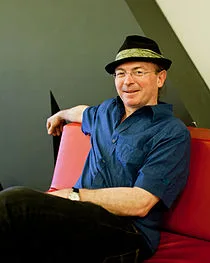
First off the list is Seth Lloyd, an American theoretical physicist and computer scientist at MIT born in 1960 in Boston, MA, who is one of the main contributors to quantum computing systems. He has a strong background in mechanical engineering and thus likes to refer to himself as the “quantum mechanic“. Lloyd’s academic journey began with a degree from Harvard College in 1982, followed by a Marshall Scholarship that took him to Cambridge University in 1984, where he earned a certificate of advanced study in mathematics and a master of philosophy degree. He later completed his doctorate in 1988 at Rockefeller University with a thesis intriguingly titled, ‘Black Holes, Demons, and the Loss of Coherence: How Complex Systems Get Information, and What They Do With It.’
Among many of his contributions today, Lloyd proposed the very first technologically feasible design for a quantum computer, making it instrumental in advancing the quantum landscape – quantum computation, quantum communication, and quantum biology. His 2006 book, Programming the Universe, posits that the universe operates as a vast quantum computer, influencing scientific thought and public understanding of quantum mechanics.
In 2013, his publication “The Universe as Quantum Computer“ explored the profound idea that the universe inherently operates like a quantum computer; he concluded that the universe’s physical evolution can be understood as executing a quantum algorithm. This perspective deepens our understanding of quantum mechanics and cosmology and inspires new approaches to studying the relationship between information, computation, and the fabric of reality.
Peter Shor

The next pioneer is Peter Shor, the Morss Professor of Applied Mathematics at MIT since 2003, is widely recognized as a foundational figure in quantum computing. He was born on August 14, 1959, in New York, USA. In terms of his educational attainment, Shor completed his B.A. in mathematics from Caltech in 1981 and later on completed his Ph.D. at MIT in 1985 under Tom Leighton; Shor held a postdoctoral fellowship at MSRI before joining AT&T’s research staff, where he worked until 2003.
Shor’s groundbreaking contributions to theoretical computer science, particularly his creation of Shor’s Algorithm in 1994, a well-known quantum algorithm that has the potential to factorize exponentially faster than the best classical algorithms currently known. Shor’s algorithm has made him famous in the global scientific community and made his contribution primarily pivotal in quantum cryptography. Moreover, his achievements have earned numerous prestigious awards, including the Gödel Prize, a MacArthur Fellowship, the Dirac Medal, and the Breakthrough Prize in Fundamental Physics. MIT honored him with the 2022–2023 Killian Faculty Achievement Award, citing his “seminal contributions” to quantum computing’s foundations.
A member of the National Academy of Sciences and a Fellow of the American Academy of Arts and Sciences, it is without doubt that up to this date, Shor’s work continues to inspire advancements in quantum information and computing, solidifying his legacy as one of the most influential figures in the field.
Lov Grover

Born in 1961, Lov Grover is an Indian-American computer scientist renowned for his groundbreaking contribution to quantum computing: the Grover database search algorithm. Following Peter Shor’s landmark discovery, Grover introduced the second major quantum algorithm, now famously known as “Grover’s Algorithm,” further solidifying quantum systems as a transformative field in computation.
Grover’s algorithm is a quantum computing breakthrough designed to search unsorted databases exponentially faster than classical methods. Developed in 1996, it reduces the search complexity in classical systems, offering significant speedups. This efficiency has broad applications, including optimization problems, cryptography, and machine learning. Its ability to process large datasets quickly makes it invaluable in fields like drug discovery, financial modeling, and artificial intelligence. Grover’s algorithm showcases quantum computing’s potential to revolutionize data-intensive tasks, underscoring its transformative impact across industries requiring rapid and precise problem-solving capabilities.
Grover’s academic journey began at the Indian Institute of Technology, Delhi, where he earned his bachelor’s degree in 1981. He later completed his PhD in Electrical Engineering at Stanford University in 1985. Shortly after, in 1984, he joined the prestigious Bell Laboratories, where his work laid the foundation for his quantum computing contributions.
Michael A. Nielsen
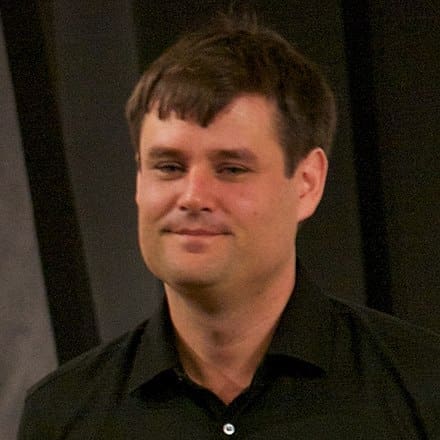
Michael Nielsen, born in 1974, is an Australian-American quantum physicist, science writer, computer programming researcher, and author who has significantly influenced quantum computing and the open science movement. As a pioneer in quantum computing, Michael co-authored the seminal textbook ‘Quantum Computation and Quantum Information,’ which has become a cornerstone in the field. Beyond his contributions to quantum mechanics, he’s a passionate advocate for open science, striving to make scientific research more collaborative and accessible.
Michael’s innovative projects, such as ‘Quantum Country’ and ‘Neural Networks and Deep Learning,’ exemplify his commitment to creating transformative educational resources. In addition, his work on “Quantum Computing for the Very Curious” is an in-depth online essay that demystifies the principles of quantum computing and quantum mechanics, wherein it employs a unique mnemonic medium designed to enhance long-term retention of complex concepts.
Isaac L. Chuang
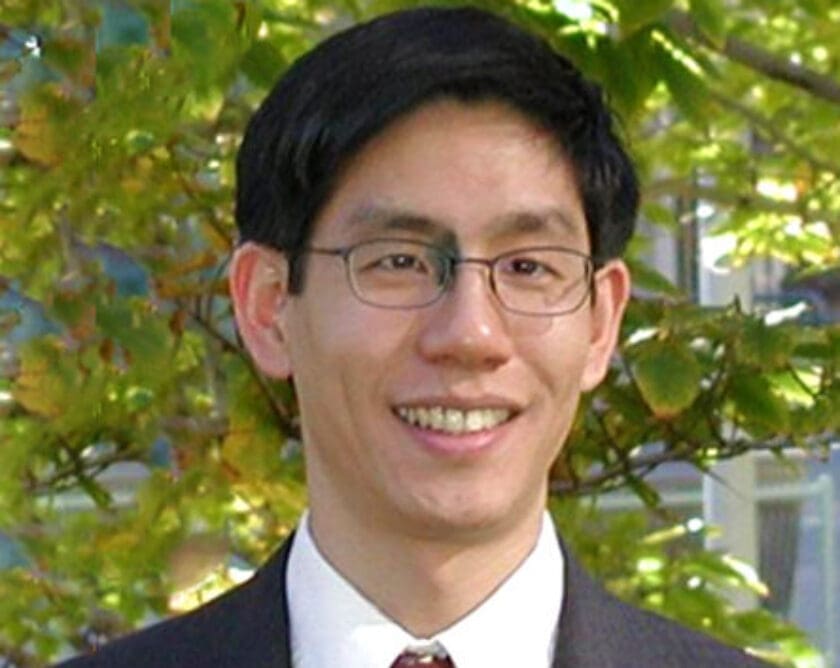
Isaac Chuang born in 1968, is one of the American pioneers in quantum information science; he is well known for his groundbreaking experiments in building quantum computers using nuclear spins in moleculesand provided the first practical demonstrations of major quantum algorithms, including Shor’s famous factoring algorithm. In addition, Prof. Chuang also developed key techniques like error correction, algorithmic cooling, and entanglement manipulation, which are innovations that have shaped the roadmap for large-scale quantum systems.
Before joining MIT in 2000, where he’s been a leader in quantum science, Prof. Chuang was a research staff member at IBM. His academic journey is equally impressive, with a doctorate in Electrical Engineering from Stanford, where he was a Hertz Foundation Fellow and multiple degrees in Physics and Electrical Engineering from MIT. He’s also the co-author of the definitive textbook Quantum Computation and Quantum Information, with Michael Nielsen, a cornerstone in the field.
David Deutsch
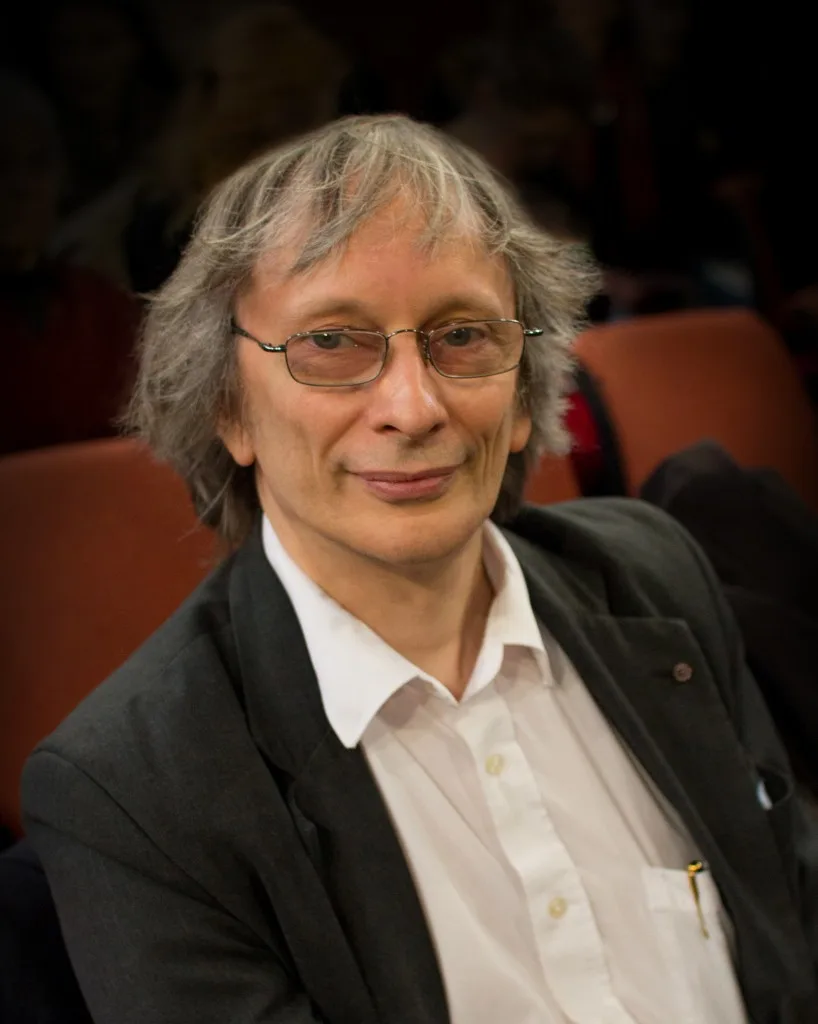
David Deutsch born in May 18, 1953, in Haifa, Israel, is a groundbreaking physicist who has profoundly shaped the world of quantum computing. A visiting professor in the Department of Atomic and Laser Physics at the Centre for Quantum Computation at Oxford University, David’s contributions have redefined how we think about computation and quantum mechanics.
He’s best known for pioneering the concept of the Quantum Turing machine, laying the theoretical foundation for quantum computers. On top of that, he developed one of the first algorithms designed specifically for these futuristic machines, thus making him ‘the father of quantum computing‘. Beyond his technical achievements, David is a passionate advocate for the many-worlds interpretation of quantum mechanics, offering a bold perspective on the nature of reality.
He also published the book The Beginning of Infinity, which explores how pursuing knowledge and better explanations drives human progress and innovation. Published in 2011, the book argues that knowledge has no limits, with applications spanning science, philosophy, and technology.
For quantum computing, Deutsch’s ideas reinforce the importance of creativity and conceptual breakthroughs, aligning with his own foundational work in the field. The book also highlights the many-worlds interpretation of quantum mechanics, offering insights into the principles behind quantum computation.
Richard Feynman
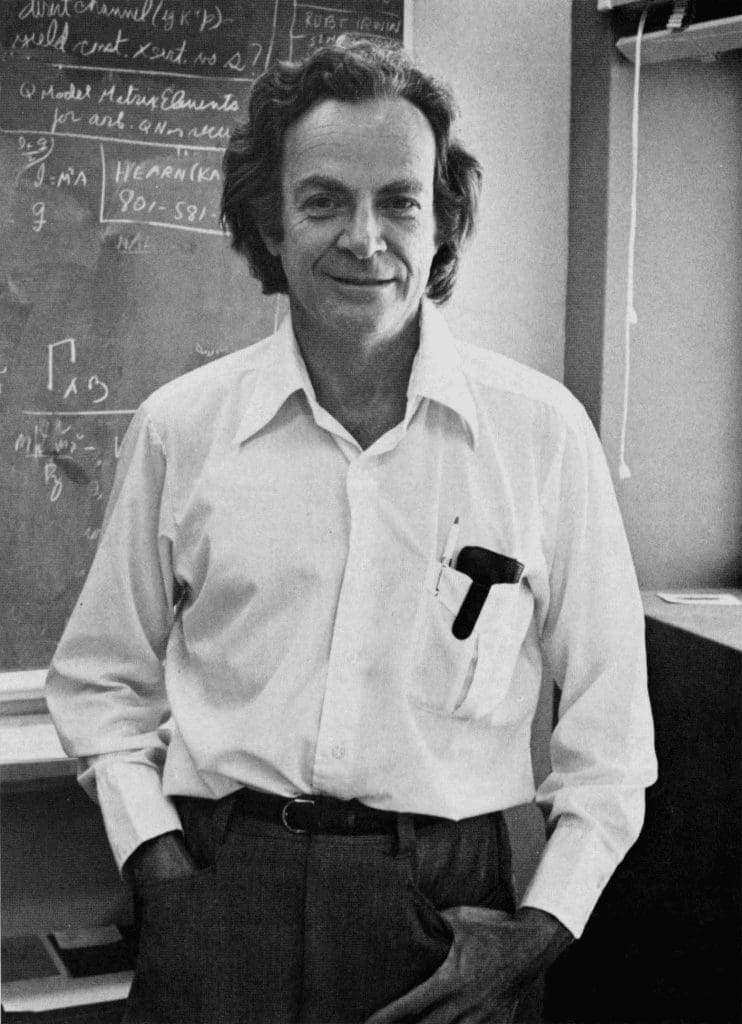
Richard Feynman was one of the most brilliant and influential physicists of the 20th century. Born in New York City on May 11, 1918, Feynman’s academic journey took him to MIT for his bachelor’s in physics and Princeton University, where he earned his Ph.D. in 1942. His career spanned pivotal roles, including Research Assistant at Princeton, Professor of Theoretical Physics at Cornell, and later a distinguished tenure at Caltech, where he became the Richard Chace Tolman Professor of Theoretical Physics.
Feynman’s contributions to science extend beyond his groundbreaking research. A member of prestigious institutions like the National Academy of Sciences and a foreign member of London’s Royal Society, he was recognized with numerous awards, including the Albert Einstein Award and the Lawrence Award.
Additionally, Feynman is popular for his groundbreaking contributions to quantum mechanics and computing. In the 1940s and 1950s, he developed quantum electrodynamics (QED), earning him significant acclaim. In a 1982 lecture at MIT, Feynman proposed utilizing quantum mechanical phenomena to perform computations beyond the reach of classical computers, laying the foundation for quantum computing. His visionary ideas continue to influence the field, solidifying his status as a foundational figure in quantum computing.
Alan Baratz

Dr. Alan Baratz, born in 1966, is a tech industry trailblazer and the current CEO of the very first commercial quantum computing company, D-Wave. Alan stepped into this role in 2020 after serving as Executive Vice President of R&D and Chief Product Officer, where he led the development and deployment of D-Wave’s cutting-edge quantum technologies.
With over 25 years of experience in product development and launching innovative solutions, Alan has a storied career at the intersection of technology and business. As the first president of JavaSoft at Sun Microsystems, he played a pivotal role in transforming the Java platform from a nascent idea to a vital technology powering mission-critical systems in nearly 80 percent of Fortune 1000 companies.
Baratz holds strong leadership skills as he has been in different leadership positions at giant tech companies such as Cisco, Avaya, and IBM and steered startups like Versata and NeoPath Networks as CEO.
Jian Wei Pan
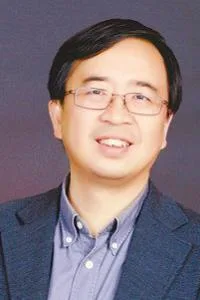
Jian-Wei Pan, is often called the ‘Father of Quantum’ in China. Born on March 11, 1970, Pan’s journey into physics began at the University of Science and Technology of China (USTC), where he earned his Bachelor’s and Master’s degrees before completing his PhD at the University of Vienna in 1999.
Pan is a Professor of Physics at USTC and an Academician of the Chinese Academy of Sciences. His impressive leadership includes serving as the CAS Centre for Excellence Director in Quantum Information and Quantum Physics. Pan led the successful launch of the Micius satellite in 2016, enabling long-distance quantum key distribution and marking a significant milestone in secure global communications.
Additionally, Pan was the chief scientist in the Beijing-to-Shanghai 2000-km Quantum Communication Backbone Project. This initiative utilizes a terrestrial fiber-optic network designed to enable secure quantum communication over 2000 kilometers between major cities in China. It also uses quantum key distribution (QKD) to ensure highly secure data transmission and complements the satellite-based Micius project, which focuses on global-scale, long-distance quantum communication.
Chad Rigetti

Dr. Chad Rigetti is one of the notable pioneers in the quantum computing world and the founder and CEO of Rigetti Computing. Since starting the company in 2013, Dr. Rigetti has driven it to global prominence, securing over $200 million in venture funding and assembling a top-tier team to push the boundaries of quantum innovation.
Before founding Rigetti, Dr. Rigetti honed his expertise in IBM Research’s quantum computing group, working on cutting-edge silicon-based chip architectures and control systems for practical quantum machines. He’s a prolific inventor and researcher with 38 U.S. patents to his name, and over 20 peer-reviewed papers cited more than 4,000 times.
Rigetti Computing is a full-stack quantum company, meaning it does it all—from designing and fabricating quantum chips to developing software that enables groundbreaking algorithms. Dr. Rigetti holds a Ph.D. in applied physics from Yale and a B.S. in physics with honors from the University of Regina. Over the years since its launching, Rigetti has not stepped back in innovation. The company has been making big strides in quantum computing since. In February 2016, they created their first-ever quantum processor—a three-qubit chip made with aluminum circuits on a silicon wafer. By spring 2017, they had already stepped things up, testing eight-qubit quantum computers.
Then, in June of that same year, Rigetti launched Forest 1.0, a quantum computing platform designed to let developers dive in and start building quantum algorithms. Fast forward to July 2023, and they unveiled a game-changer—a single-chip 84-qubit quantum processor designed to scale up to even bigger systems.
Stephanie Wehner

Dr. Stephanie Wehner a German physicist and computer scientist who’s making waves in the world of quantum technology. Currently, she leads the Quantum Internet and Networked Computing initiative at QuTech, Delft University of Technology, which puts her at the forefront of shaping the future of global quantum communications.
Stephanie has made major contributions to quantum cryptography and communication, including her introduction of the noisy-storage model, which has become a key concept in the field. Through the Quantum Internet Alliance, she’s working toward building a large-scale quantum network. Her accolades include membership in the Royal Dutch Academy of Arts and Sciences, the prestigious KNAW Ammodo Award, and co-founding QCRYPT, now the largest conference in quantum cryptography.
Charles H. Bennett
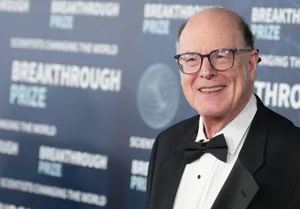
Charles H. Bennett, born in 1943 in New York, is a physicist who played a massive role in shaping quantum cryptography and information theory. Bennett’s journey started in 1964 when he graduated with a chemistry degree from Brandeis University. Fast forward to 1970, and he earned his Ph.D. from Harvard University, where he worked on computer simulations of moving molecules – pretty groundbreaking stuff at the time.
After that, Bennett spent a couple of years at Argonne National Laboratory in Illinois, but in 1972, he found his long-term home at IBM Research in Yorktown Heights, New York. One of his significant focus areas has been understanding how thermodynamic imbalances can lead to the emergence of complex, classical behavior from quantum systems.
In 1984, he and Gilles Brassard from Montreal developed the first and most widely used protocol for quantum cryptography, which has had an enormous impact on secure communication. Then, in 1993, Bennett and his collaborators made another groundbreaking discovery: they showed that quantum states could be transmitted using a mix of classical communication and prior entanglement, a phenomenon now known as quantum teleportation. This opened up a whole new world of possibilities in quantum information science!
Gilles Brassard
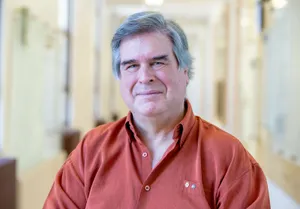
Gilles Brassard, born on April 20, 1955, is one of the brilliant minds behind the Bb84 protocol for quantum cryptography, a method that enables secure data transmission; he developed this with Charles Bennett. Apart from that groundbreaking discovery, Brassard also co-invented quantum teleportation. This phenomenon allows quantum states to be transferred between particles, hailed as one of the most significant advancements in quantum science. His work on quantum teleportation, alongside Claude Crépeau, was even named one of Québec Science’s top discoveries of the year in 1993.
Thus, it is without doubt that his works will be recognized widely. Gilles Brassard has been awarded over 30 prestigious awards and honors, including the Prix Marie-Victorin, the Killam Prize, the Gerhard Herzberg Canada Gold Medal for Science and Engineering, and the Rank Prize. He has been named an Officer of the Order of Canada and the Ordre national du Québec. Additionally, he is a fellow of the Royal Society of Canada and the Royal Society of London.
Paul Dirac
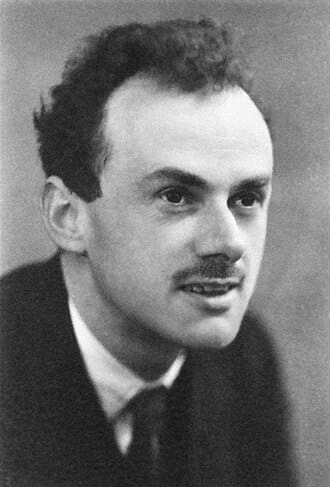
Paul Adrien Maurice Dirac (August 8, 1902 – October 20, 1984) was an English theoretical physicist and mathematician widely regarded as one of the pioneers of quantum mechanics. He played a key role in developing quantum electrodynamics and quantum field theory. Most of his contributions were between 1925 and 1926, a series of quantum theories were developed that successfully explained the energy levels of electrons within atoms.
Then, in 1928, he developed the Dirac equation, which describes the motion of electrons relativistically. This wasn’t just an extraordinary mathematical equation—it also led Dirac to predict the existence of the positron, the electron’s antiparticle, which he explained using his concept of the “Dirac sea.” On top of that, Dirac’s equation helped unlock the origin of quantum spin, showing it’s a relativistic phenomenon. Then, in 1930, he published The Principles of Quantum Mechanics, a groundbreaking book that quickly became a standard textbook on the subject—and it’s still in use today. But Dirac’s contributions go way beyond just this book.
Albert Einstein

Last but not least is Albert Einstein, born on March 14, 1879, and passed away on April 18, 1955. Einstein developed a deep interest in music, mathematics, and science as a child, with the violin being his instrument of choice. In 1894, he left school and moved to Switzerland, where he continued his education. Eventually, he gained admission to the Swiss Federal Polytechnic Institute in Zurich, setting the stage for his future achievements in physics.
Among others are Einstein’s contributions – the Quantum Theory of Light, the General Theory of Relativity, the Special Theory of Relativity, Wave-Particle Duality, and many more.
He was a groundbreaking physicist best known for developing the theory of relativity, including his famous equation E=mc². His work on the photoelectric effect, for which he won the Nobel Prize in 1921, helped lay the foundations of quantum mechanics. Einstein’s theories revolutionized our understanding of space, time, and energy, influencing modern physics and opening the door for new scientific discoveries in general relativity and quantum field theory.