

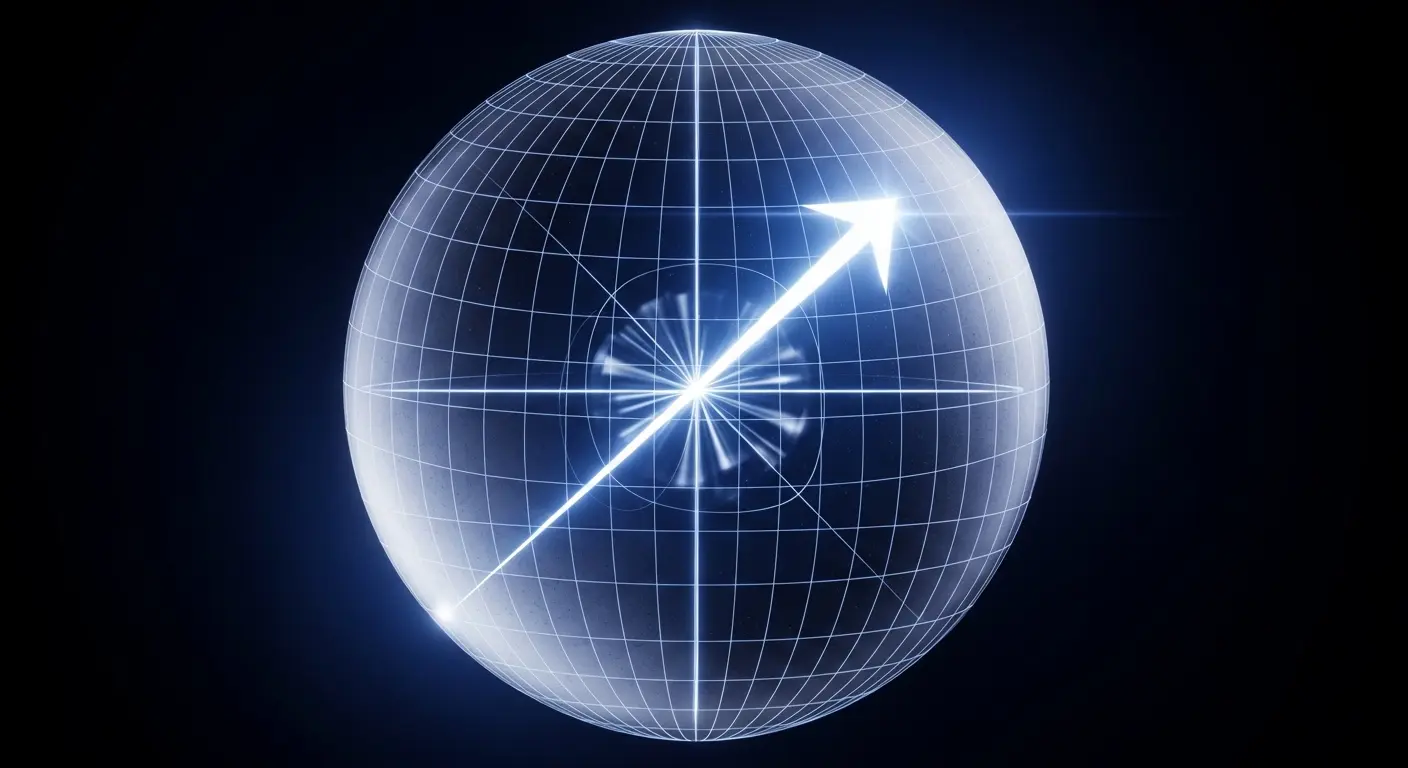
Researchers at Sapienza University of Rome, the University of Palermo, Queen’s University Belfast, and the University of Milan have developed a new training strategy for photonic quantum extreme learning machines that accurately characterises quantum states, a crucial advancement for the field of quantum technologies. Rosario Di Bartolo and colleagues circumvent the limitations imposed by experimental imperfections, drifts, and imprecise modelling with their innovative approach. It uniquely performs both the learning stage and the optimisation of measurement settings entirely with classical light, before applying inference to genuine quantum states. The method accurately reconstructs single-qubit Pauli observables and extends to estimating two-qubit entanglement, representing a key step towards faster, adaptive and resource-efficient training of photonic quantum learning devices and a novel form of generalisation between classical and quantum systems.
Classical light training enables high-fidelity single-qubit state reconstruction and entanglement
Single-qubit Pauli observables were reconstructed with an accuracy exceeding 99%, a level previously unattainable without detailed prior knowledge of the photonic quantum extreme learning machine’s internal workings. Traditionally, reliable quantum state reconstruction necessitates complex modelling of the quantum system, including precise characterisation of all noise sources and systematic errors. This longstanding limitation arises because quantum systems are inherently susceptible to decoherence and environmental noise, which distort the quantum information and complicate accurate measurements. The new technique, however, achieves this high fidelity by leveraging classical light for the entire training process. This involves illuminating the quantum device with classical light to simulate quantum behaviour and optimise the machine learning model without directly manipulating fragile quantum states. The surprising transfer of learning capability from classical simulations to genuine quantum states subsequently enabled accurate estimation of two-qubit entanglement witnesses for arbitrary bipartite states. Entanglement witnesses are mathematical functions that can confirm the presence of entanglement, a key resource for quantum computation and communication.
Consistent performance across a diverse set of previously unseen single-photon states further validated the 99% accuracy of single-qubit Pauli observable reconstruction, confirming the strong durability of the classical training method. Pauli observables represent fundamental measurements in quantum mechanics, describing the expectation values of different quantum properties. The robustness of the method across various input states suggests that the trained model has learned a general representation of the quantum system, rather than simply memorising the training data. A two-qubit entanglement witness, a key indicator of quantum correlation, was successfully estimated for arbitrary bipartite states, showcasing the technique’s scalability. Bipartite states involve two quantum particles, and accurately assessing their entanglement is vital for applications like quantum key distribution and quantum teleportation. Optimisation of measurement settings, crucial for accurate readings, was achieved entirely using classical light, reducing the time needed for this stage from hours to minutes. This speed increase is vital for maintaining stability in sensitive quantum systems, as prolonged calibration times can introduce drifts and errors. The classical optimisation process involves adjusting parameters such as beam polarisation and detector settings to maximise the signal-to-noise ratio and improve the accuracy of the measurements. Despite these significant advances, the current system requires careful alignment and calibration of the photonic components and does not yet address the challenges of scaling to systems with a significantly larger number of qubits.
Classical light training unlocks potential for scalable quantum machine learning
Accurate characterisation of quantum states remains a fundamental challenge, hindering progress in building practical quantum technologies. The difficulty stems from the no-cloning theorem, which prohibits the perfect copying of an unknown quantum state, and the fragility of quantum superposition and entanglement. These limitations necessitate innovative approaches to quantum state tomography and machine learning. The current system is limited to single-photon and two-qubit states, raising questions about its scalability to more complex quantum systems featuring a significantly larger number of qubits and intricate entanglement, yet it demonstrates a remarkable classical-to-quantum transfer. Scaling to larger qubit numbers presents significant technical hurdles, including increased complexity of the photonic circuits, higher demands on detector sensitivity, and the accumulation of errors. However, the successful demonstration of classical training provides a promising pathway towards overcoming these challenges. This technique provides a method for training quantum systems using only readily available classical light sources, bypassing the need for complex initial quantum state preparations, reducing resource demands and accelerating development. Preparing and maintaining complex quantum states is often a significant bottleneck in quantum experiments, and the ability to train the system using classical light eliminates this requirement.
Scientists have established a new method for training photonic quantum extreme learning machines with classical light sources. Performing both learning and measurement optimisation using standard light, then applying the trained model to genuine quantum states, allowed researchers to bypass the need for detailed modelling of the quantum device itself, enabling accurate reconstruction of single-qubit properties and estimation of two-qubit entanglement. The photonic quantum extreme learning machine utilises integrated photonic circuits to implement a linear optical network, which performs a unitary transformation on the input quantum states. This transformation is then followed by single-photon detectors, which measure the output states. The classical training process involves adjusting the parameters of the photonic circuit to optimise the performance of the machine learning model. This demonstrates a form of generalisation previously unseen across classical and quantum boundaries and will begin to unlock more complex quantum computations. The ability to transfer knowledge learned from classical simulations to genuine quantum systems opens up new possibilities for developing hybrid quantum-classical algorithms and exploring the interplay between classical and quantum information processing. Further research will focus on extending this technique to larger qubit systems and exploring its potential for solving more complex quantum machine learning tasks.
Scientists demonstrated a technique to train photonic quantum extreme learning machines using only classical light. This classical training bypasses the need for complex quantum state preparation, simplifying the process and reducing resource requirements. The method enabled accurate reconstruction of single-qubit properties and estimation of two-qubit entanglement, showcasing a new form of generalisation between classical and quantum systems. Researchers intend to extend this approach to larger qubit systems and more complex quantum machine learning tasks.
👉 More information
🗞 Efficient classical training of model-free quantum photonic reservoir
🧠 ArXiv: https://arxiv.org/abs/2604.12441
See today’s quantum computing news on Quantum Zeitgeist for the latest breakthroughs in qubits, hardware, algorithms, and industry deals.



