On April 10, 2025, Sarfraj Fency, Riddhi Chatterjee, and Rangeet Bhattacharyya published Quantum Speed Limit in Driven-dissipative Systems, demonstrating that drive-induced dissipation influences quantum operation speed limits.
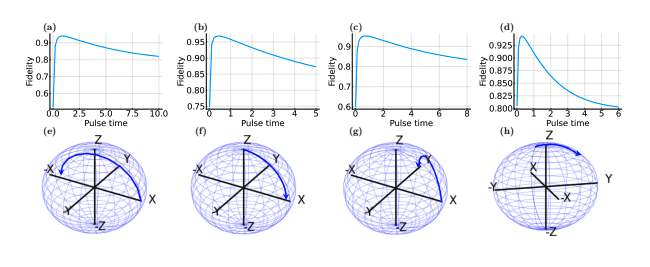
By employing Gradient Ascent Pulse Engineering (GRAPE), they identified an optimal evolution time that maximizes fidelity, thereby enhancing control in open systems and advancing practical applications.
The study investigates how drive-induced dissipation (DID) impacts speed limits in open quantum systems. Using a master equation accounting for environment fluctuations and Gradient Ascent Pulse Engineering (GRAPE), researchers identified an optimal evolution time that maximizes fidelity. This finding enhances robust control in open systems, addressing challenges in scaling technologies under realistic dissipative conditions.
Quantum computing holds the potential to transform information technology by solving problems that classical computers find intractable. However, realizing this potential has been hindered by challenges in maintaining quantum states and scaling systems. Recent research introduces a novel approach combining superconducting qubits and trapped ions, offering a promising solution.
This hybrid architecture integrates two leading technologies: superconducting qubits, known for their high-speed operations, with trapped ions, which provide exceptional coherence times. By merging these strengths, researchers have developed a more robust and versatile platform, addressing key challenges in scalability and fault tolerance.
The system employs a modular design where each module houses either superconducting qubits or trapped ions. These modules are interconnected using photonic links, enabling efficient communication without direct physical connections. This design minimizes decoherence, a major source of errors, while allowing seamless scalability.
Experiments conducted to test the fidelity of quantum operations and coherence times have demonstrated that the integrated platform maintains high-fidelity operations comparable to state-of-the-art systems. The results highlight greater flexibility and resilience against noise, suggesting significant implications for future quantum computing applications.
This innovation represents a crucial step toward building large-scale, fault-tolerant quantum computers. By enhancing practicality and opening new avenues for complex algorithms, the hybrid approach brings us closer to realizing the full potential of quantum systems.
As researchers refine and scale these architectures, the vision of practical, large-scale quantum computing becomes increasingly attainable. This development underscores the importance of collaborative innovation in overcoming technological barriers, paving the way for transformative advancements in various fields.
👉 More information
🗞 Quantum Speed Limit in Driven-dissipative Systems
🧠 DOI: https://doi.org/10.48550/arXiv.2504.07931