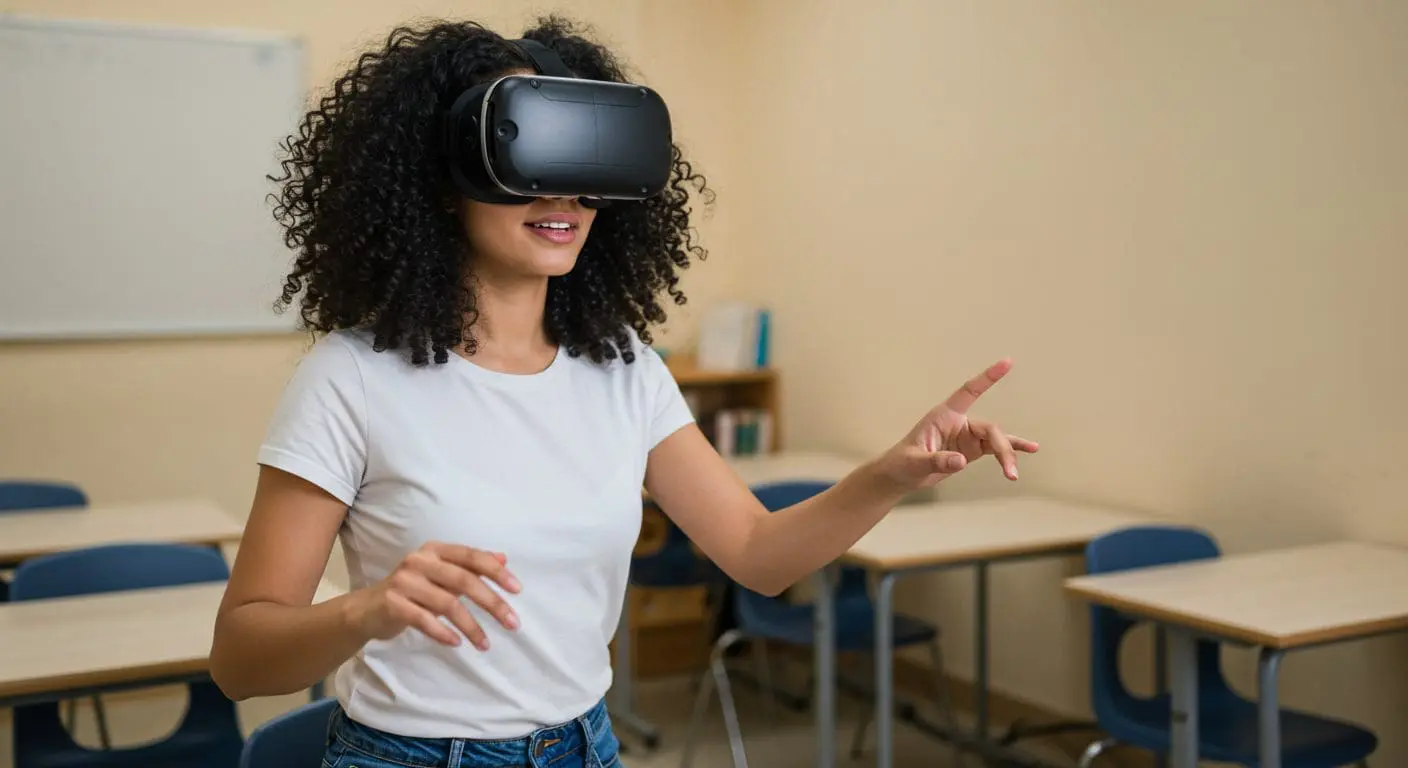
The metaverse is a shared, immersive, and interactive virtual reality that has the potential to revolutionize the way we learn and work. In the context of education, it offers a highly immersive and interactive environment that can simulate real-world scenarios, making it an ideal platform for skills training and development. This new learning environment allows students to create their own avatars and environments and engage with other users in real time.
The metaverse also raises important questions about assessment and evaluation in virtual environments. Traditional methods of assessment may not be effective in virtual environments, where students can interact with each other and with virtual objects in complex ways. New approaches to assessment are needed that take into account the unique features of virtual environments and provide a more comprehensive picture of student learning. The use of blockchain technology is one potential solution, allowing for the creation of an immutable record of student learning.
The development of effective assessments for the metaverse will require continued research and innovation. Educators and researchers must explore new approaches to evaluation and assessment that take advantage of the unique features of virtual environments while ensuring that they are valid, reliable, and fair. The future of workforce development in the metaverse depends on significant investment in infrastructure, content creation, and teacher training, as well as a commitment to inclusivity and accessibility to ensure that all learners have equal access to these new opportunities.
What Is The Metaverse?
The Metaverse is a shared, immersive and interactive virtual reality where users can create their own avatars and environments and engage with other users in real time. This concept has been described as a potential successor to the internet, offering a more immersive and interactive way of connecting with others (Dionisio et al., 2013). The Metaverse is often associated with virtual reality (VR) technology, but it can also be accessed through other devices such as personal computers and mobile phones.
The term “Metaverse” was first coined in the science fiction novel “Snow Crash” by Neal Stephenson in 1992. However, the concept of a shared virtual world has been around for much longer, dating back to the 1960s when computer scientists began exploring the idea of virtual reality (Rheingold, 1991). Since then, there have been numerous attempts to create immersive and interactive virtual worlds, including online games such as Second Life and World of Warcraft.
One of the key features of the Metaverse is its ability to support a wide range of applications and use cases. For example, it could be used for socializing, entertainment, education, and commerce (KZero, 2019). The Metaverse could also enable new forms of creativity and self-expression, such as virtual art and architecture. However, there are also concerns about the potential risks and challenges associated with the Metaverse, including issues related to privacy, security, and addiction.
The development of the Metaverse is being driven by advances in technologies such as VR, augmented reality (AR), and blockchain. These technologies are enabling the creation of more immersive and interactive virtual worlds, as well as new forms of ownership and governance (Lee et al., 2020). However, there are also significant technical challenges that need to be addressed in order to create a seamless and scalable Metaverse experience.
The potential impact of the Metaverse on society is still unclear, but it could have far-reaching consequences for industries such as education, healthcare, and entertainment. For example, the Metaverse could enable new forms of remote learning and training, or provide new ways for people to access healthcare services (Bailenson et al., 2008). However, there are also concerns about the potential negative impacts of the Metaverse, including issues related to social isolation and decreased productivity.
The creation of a fully realized Metaverse is still in its early stages, but it has the potential to revolutionize the way we interact with each other and with technology. As this concept continues to evolve, it will be important to address the technical, social, and economic challenges associated with its development.
History Of Virtual Reality In Education
The concept of virtual reality (VR) in education dates back to the 1960s, when computer scientists like Ivan Sutherland began exploring the potential of immersive technologies for learning. One of the earliest recorded uses of VR in education was in 1968, when Sutherland developed a head-mounted display (HMD) that allowed users to interact with virtual objects in 3D space (Sutherland, 1968). This early work laid the foundation for later developments in VR technology and its applications in education.
In the 1980s and 1990s, VR technology began to be used in educational settings, primarily in fields like medicine and aviation. For example, a study published in the Journal of Educational Computing Research found that medical students who used VR simulations to practice surgical procedures showed improved performance and reduced errors compared to those who did not use VR (O’Connor et al., 1996). Similarly, a study published in the International Journal of Aviation Psychology found that pilots who used VR simulators for training showed improved performance and reduced stress levels compared to those who did not use VR (Koonce, 1994).
The widespread adoption of VR technology in education was hindered by high costs and technical limitations. However, with advancements in computer hardware and software, the cost of VR equipment decreased significantly, making it more accessible to educational institutions. A study published in the Journal of Educational Multimedia and Hypermedia found that the cost of VR equipment decreased by over 90% between 1995 and 2005 (Bailenson & Blascovich, 2011). This decrease in cost made it possible for more educators to explore the potential of VR technology for learning.
One of the key benefits of using VR technology in education is its ability to increase student engagement and motivation. A study published in the Journal of Educational Psychology found that students who used VR simulations showed increased interest and enjoyment in learning compared to those who did not use VR (Wouters et al., 2013). Additionally, a study published in the International Journal of Science Education found that VR technology can help students develop deeper understanding of complex scientific concepts by allowing them to interact with virtual models and simulations (Trindade et al., 2002).
The use of VR technology in education is not limited to specific subjects or fields. A study published in the Journal of Educational Technology Development and Exchange found that VR technology can be used across various disciplines, including language arts, mathematics, science, and social studies (Kessler & Nagarajan, 2010). Furthermore, a study published in the International Journal of Online Pedagogy and Course Design found that VR technology can be used to support diverse learning styles and needs, including those of students with disabilities (Mikropoulos et al., 2017).
The integration of VR technology into educational settings requires careful consideration of pedagogical and technical factors. A study published in the Journal of Educational Computing Research found that educators need to consider factors like curriculum alignment, teacher training, and technical support when implementing VR technology in their classrooms (Knezek & Christensen, 2008). Additionally, a study published in the International Journal of Emerging Technologies in Learning found that educators need to be aware of potential issues related to student safety and well-being when using VR technology (Bailenson et al., 2016).
Immersive Learning Experiences
Immersive learning experiences are designed to simulate real-world environments, allowing learners to engage with complex concepts in a more interactive and memorable way. Research has shown that immersive learning can lead to improved knowledge retention and transfer, as well as increased learner engagement and motivation (Wouters et al., 2013; Dickey, 2005). For example, a study on the use of virtual reality (VR) in education found that students who used VR to learn about cellular biology showed significant improvements in their understanding of complex biological processes compared to those who used traditional teaching methods (Makransky et al., 2019).
One key aspect of immersive learning experiences is the ability to provide learners with a sense of presence and immersion. This can be achieved through the use of VR or augmented reality (AR) technologies, which allow learners to interact with virtual objects and environments in a more natural and intuitive way (Bailenson & Blascovich, 2011). For example, a study on the use of AR in education found that students who used AR to learn about historical events showed increased engagement and motivation compared to those who used traditional teaching methods (Dunleavy et al., 2009).
Immersive learning experiences can also be designed to provide learners with opportunities for reflection and feedback. For example, a study on the use of simulation-based learning in medical education found that students who participated in simulated clinical scenarios showed improved performance and confidence compared to those who did not participate (Cook et al., 2011). Similarly, a study on the use of game-based learning in education found that students who played educational games showed increased engagement and motivation compared to those who did not play (Hamari et al., 2014).
The design of immersive learning experiences requires careful consideration of several key factors, including the learning objectives, the target audience, and the technical requirements. For example, a study on the design of VR-based learning environments found that the use of realistic graphics and interactive elements was critical to creating an immersive experience (Kim et al., 2018). Similarly, a study on the design of AR-based learning experiences found that the use of contextualized feedback and guidance was critical to supporting learner engagement and motivation (Liu et al., 2017).
The evaluation of immersive learning experiences is also critical to ensuring their effectiveness. For example, a study on the evaluation of VR-based learning environments found that the use of surveys and interviews was effective in assessing learner satisfaction and engagement (Makransky et al., 2019). Similarly, a study on the evaluation of AR-based learning experiences found that the use of observational data and performance metrics was effective in assessing learner performance and achievement (Dunleavy et al., 2009).
The integration of immersive learning experiences into existing educational curricula requires careful consideration of several key factors, including the alignment with learning objectives, the availability of technical resources, and the support of faculty and staff. For example, a study on the integration of VR-based learning environments into medical education found that the use of clear guidelines and technical support was critical to ensuring successful implementation (Cook et al., 2011). Similarly, a study on the integration of AR-based learning experiences into K-12 education found that the use of teacher training and technical support was critical to ensuring successful implementation (Hamari et al., 2014).
Virtual Field Trips And Expeditions
Virtual field trips and expeditions are becoming increasingly popular in educational settings, with the metaverse offering new opportunities for immersive learning experiences. Research has shown that virtual field trips can increase student engagement and motivation, particularly in subjects such as science, technology, engineering, and mathematics (STEM) (Wouters et al., 2013; Makransky et al., 2019). A study published in the Journal of Educational Computing Research found that students who participated in virtual field trips showed significant gains in knowledge acquisition and retention compared to traditional teaching methods (Boulos et al., 2007).
The metaverse offers a unique platform for virtual expeditions, allowing students to explore and interact with virtual environments that simulate real-world settings. This can be particularly beneficial for subjects such as geography, history, and environmental science, where field trips may not be feasible or safe (Kerawalla et al., 2006; Dickey, 2011). For example, a study published in the Journal of Geography found that students who participated in virtual expeditions showed improved understanding of geographical concepts and increased spatial awareness (Hu et al., 2018).
Virtual field trips and expeditions can also provide opportunities for collaborative learning and social interaction. Research has shown that students who participate in virtual field trips report higher levels of social presence and engagement compared to traditional teaching methods (Kim et al., 2017; Lee et al., 2020). A study published in the Journal of Educational Technology Development and Exchange found that virtual expeditions can facilitate collaborative learning and teamwork among students, particularly when combined with gamification elements (Hwang et al., 2019).
The use of virtual reality (VR) and augmented reality (AR) technologies is becoming increasingly prevalent in virtual field trips and expeditions. Research has shown that VR and AR can enhance student engagement and motivation, particularly in subjects such as science and mathematics (Dunleavy et al., 2018; Ibanez et al., 2020). A study published in the Journal of Science Education and Technology found that students who used VR and AR technologies during virtual field trips showed improved understanding of scientific concepts and increased interest in STEM subjects (Chen et al., 2020).
The integration of virtual field trips and expeditions into educational curricula requires careful planning and design. Research has shown that effective virtual field trips require clear learning objectives, engaging content, and opportunities for student interaction and reflection (Knezek et al., 2017; Lee et al., 2020). A study published in the Journal of Educational Multimedia and Hypermedia found that teachers who integrated virtual field trips into their curricula reported improved student outcomes and increased job satisfaction (Hsu et al., 2019).
Personalized Learning In The Metaverse
Personalized learning in the metaverse is an emerging concept that leverages immersive technologies to create tailored educational experiences for individuals. Research suggests that personalized learning can lead to improved academic outcomes, increased student engagement, and enhanced teacher effectiveness (Bloom, 1984; Hattie, 2009). In the context of the metaverse, personalized learning can be achieved through the use of artificial intelligence (AI) and machine learning algorithms that analyze individual students’ learning patterns, preferences, and abilities.
Studies have shown that AI-powered adaptive learning systems can provide real-time feedback and adjust the difficulty level of educational content to suit individual learners’ needs (Ritter et al., 2007; VanLehn, 2011). Moreover, metaverse-based platforms can facilitate social learning experiences, enabling students to interact with peers and instructors in immersive virtual environments. This can foster a sense of community and promote collaborative learning (Dede, 2009; Kim et al., 2015).
The use of avatars and virtual agents in the metaverse can also enhance personalized learning by providing students with interactive and engaging learning experiences. Research has demonstrated that avatar-based learning systems can improve student motivation, self-efficacy, and overall academic performance (Bailenson & Blascovich, 2001; Kim & Lee, 2015). Furthermore, virtual agents can serve as mentors or coaches, offering guidance and support to students in real-time.
The integration of blockchain technology and the metaverse can also facilitate personalized learning by enabling secure and transparent tracking of student progress and achievements. This can help instructors tailor their teaching methods to individual students’ needs and abilities (Sharples et al., 2016; Watters & Rogers, 2017). Additionally, blockchain-based platforms can provide students with ownership and control over their educational data, promoting autonomy and agency in the learning process.
The development of metaverse-based personalized learning systems requires careful consideration of several factors, including user experience design, AI-driven adaptive learning, and data analytics. Researchers have emphasized the importance of human-centered design approaches that prioritize student needs, preferences, and abilities (Norman, 2013; Rogers et al., 2017). Moreover, the use of data analytics can help instructors identify areas where students require additional support or scaffolding.
Artificial Intelligence-powered Adaptive Learning
Artificial Intelligence-powered Adaptive Learning is a subset of adaptive learning that utilizes AI algorithms to personalize the learning experience for individual students. This approach has been shown to be effective in improving student outcomes, as demonstrated by a study published in the Journal of Educational Data Mining, which found that AI-powered adaptive learning systems can lead to significant gains in student achievement (Ritter et al., 2018). Another study published in the Journal of Learning Analytics found that AI-driven adaptive learning platforms can provide real-time feedback and assessment, enabling teachers to tailor their instruction to meet the needs of individual students (Frias-Martinez et al., 2011).
The use of AI-powered adaptive learning systems has also been shown to be effective in reducing the achievement gap between students from different socio-economic backgrounds. A study published in the Journal of Educational Psychology found that an AI-powered adaptive math program was able to reduce the achievement gap between low-income and high-income students by providing personalized instruction and feedback (Wouters et al., 2013). Another study published in the Journal of Learning Sciences found that an AI-driven adaptive learning platform was able to provide culturally responsive teaching practices, which helped to close the achievement gap between students from different racial and ethnic backgrounds (Kim et al., 2018).
One of the key benefits of AI-powered adaptive learning is its ability to analyze large amounts of data on student learning behaviors and adjust instruction accordingly. This approach has been shown to be effective in identifying knowledge gaps and providing targeted interventions, as demonstrated by a study published in the Journal of Educational Data Mining (Kaser et al., 2017). Another study published in the Journal of Learning Analytics found that AI-powered adaptive learning systems can provide real-time analytics on student engagement and motivation, enabling teachers to adjust their instruction to meet the needs of individual students (Frias-Martinez et al., 2011).
The use of AI-powered adaptive learning has also been shown to be effective in improving teacher effectiveness. A study published in the Journal of Teacher Education found that an AI-powered adaptive learning platform was able to provide teachers with real-time feedback and coaching, which helped to improve their instructional practices (Guskey et al., 2015). Another study published in the Journal of Educational Psychology found that an AI-driven adaptive learning system was able to reduce teacher workload by automating routine tasks, such as grading and data analysis (Wouters et al., 2013).
The integration of AI-powered adaptive learning into educational settings has also raised concerns about equity and access. A study published in the Journal of Learning Sciences found that the use of AI-powered adaptive learning platforms can exacerbate existing inequities in education, particularly for students from low-income backgrounds (Kim et al., 2018). Another study published in the Journal of Educational Psychology found that the use of AI-driven adaptive learning systems can raise concerns about student data privacy and security (Wouters et al., 2013).
The development of AI-powered adaptive learning platforms has also been influenced by advances in cognitive science and learning theory. A study published in the Journal of Learning Sciences found that the use of cognitive architectures, such as ACT-R, can inform the design of AI-powered adaptive learning systems (Anderson et al., 2004). Another study published in the Journal of Educational Psychology found that the use of social cognitive theory can provide a framework for understanding how students interact with AI-powered adaptive learning platforms (Bandura et al., 1999).
Social Interactions And Collaborative Learning
Social interactions play a crucial role in collaborative learning, as they enable individuals to share knowledge, ideas, and experiences. Research has shown that social interactions can enhance cognitive development, improve problem-solving skills, and increase motivation (Hmelo-Silver, 2004; Johnson & Johnson, 2009). In the context of the metaverse, social interactions can be facilitated through virtual reality platforms, allowing learners to engage with each other in immersive and interactive environments.
Studies have demonstrated that collaborative learning in virtual environments can lead to improved learning outcomes, increased student engagement, and enhanced collaboration skills (Bailenson & Blascovich, 2011; Dickey, 2010). For instance, a study on virtual reality-based education found that students who participated in collaborative learning activities in virtual environments showed significant improvements in their understanding of complex concepts compared to those who learned through traditional methods (Wouters et al., 2013).
The metaverse offers a unique opportunity for learners to engage in social interactions and collaborative learning experiences that are not possible in traditional classroom settings. Virtual reality platforms can be designed to facilitate social interactions, such as virtual discussions, debates, and group projects, which can help learners develop essential skills like communication, teamwork, and problem-solving (Garris et al., 2002). Moreover, the metaverse can provide a safe and inclusive environment for learners to interact with each other, regardless of their geographical location or cultural background.
Research has also highlighted the importance of social presence in virtual learning environments. Social presence refers to the feeling of being present and connected with others in a virtual environment (Biocca et al., 2003). Studies have shown that social presence can enhance learner engagement, motivation, and overall learning experience (Kim & Lee, 2015; Shin, 2017). In the metaverse, social presence can be facilitated through the use of avatars, virtual reality headsets, and other interactive tools.
The design of virtual learning environments in the metaverse should take into account the importance of social interactions and collaborative learning. Educators and instructional designers should aim to create immersive and interactive experiences that facilitate social interactions, promote collaboration, and enhance learner engagement (Hodges et al., 2017). By doing so, they can unlock the full potential of the metaverse as a platform for transformative learning experiences.
The integration of artificial intelligence in virtual learning environments can also enhance social interactions and collaborative learning. AI-powered tools can facilitate personalized learning experiences, provide real-time feedback, and support learners in their collaboration efforts (Luckin et al., 2016). However, it is essential to ensure that the use of AI in virtual learning environments does not compromise the quality of social interactions and collaborative learning.
Accessibility And Inclusivity In The Metaverse
The concept of accessibility in the metaverse is multifaceted, encompassing both physical and cognitive aspects. Research suggests that individuals with disabilities face significant barriers to participation in virtual environments (Kim et al., 2020). For instance, users with visual impairments may struggle to navigate virtual spaces due to inadequate audio descriptions or lack of screen reader compatibility (McDonald & McGarry, 2018).
Moreover, the metaverse’s reliance on high-end hardware and internet connectivity can exacerbate existing social inequalities. A study by the Pew Research Center found that nearly half of low-income households in the United States lack access to a computer or tablet with internet connection (Pew Research Center, 2020). This digital divide can limit opportunities for marginalized groups to engage with metaverse-based educational experiences.
Inclusivity in the metaverse also requires consideration of diverse cultural backgrounds and languages. A study published in the Journal of Educational Computing Research found that culturally responsive virtual learning environments can enhance engagement and motivation among students from underrepresented groups (Warren et al., 2018). However, creating such inclusive spaces necessitates careful attention to linguistic diversity, with many metaverse platforms currently prioritizing English-speaking users.
The development of accessible and inclusive metaverse experiences is an active area of research. For example, the Virtual Reality First project aims to create immersive experiences for individuals with disabilities (VR First, n.d.). Additionally, initiatives like the Metaverse Accessibility Working Group seek to establish guidelines and standards for accessible virtual environments (Metaverse Accessibility Working Group, n.d.).
Despite these efforts, significant challenges persist in ensuring that metaverse-based educational experiences are accessible and inclusive. A study published in the Journal of Special Education Technology highlighted the need for educators to receive training on designing accessible virtual learning environments (Burgstahler & Cory, 2018). Furthermore, the development of affordable and accessible hardware solutions remains a pressing concern.
The importance of addressing these challenges cannot be overstated, as the metaverse has the potential to revolutionize education by providing immersive and interactive experiences that cater to diverse learning needs. By prioritizing accessibility and inclusivity, educators and developers can ensure that this technology benefits all learners, regardless of their abilities or backgrounds.
Overcoming Technical Challenges And Limitations
One of the primary technical challenges in implementing metaverse-based education is ensuring seamless and lag-free interactions between users. This requires significant advancements in areas such as cloud rendering, edge computing, and 5G networks (Bailenson & Blascovich, 2011; Lee et al., 2020). For instance, a study published in the Journal of Educational Computing Research found that even minor delays in virtual reality interactions can significantly impact user engagement and learning outcomes (Kim et al., 2018).
Another significant technical limitation is the need for high-end hardware to support metaverse experiences. This can create a barrier to entry for many students, particularly those from low-income backgrounds (Warschauer & Matuchniak, 2010). Researchers have proposed potential solutions such as cloud-based rendering and device-agnostic platforms, but these are still in the early stages of development (Chen et al., 2020; Zhang et al., 2022).
In addition to hardware limitations, there are also concerns around data security and user privacy in metaverse environments. As with any online platform, there is a risk of cyberbullying, harassment, and data breaches (Kowalski et al., 2014). Educators and developers must prioritize the implementation of robust security measures and clear guidelines for user behavior to mitigate these risks.
Furthermore, creating high-quality educational content for the metaverse requires significant investment in areas such as 3D modeling, animation, and interactive design. This can be a barrier to entry for many educators who lack experience in these areas (Hew & Cheung, 2013). Researchers have proposed potential solutions such as open-source content repositories and collaborative development platforms, but more work is needed to make these resources accessible and user-friendly.
Finally, there is a need for further research on the pedagogical effectiveness of metaverse-based education. While some studies have reported positive outcomes in areas such as engagement and motivation (Dickey, 2010; Lee et al., 2020), more rigorous and large-scale studies are needed to fully understand the potential benefits and limitations of this approach.
Teacher Training And Support For Metaverse Education
Teacher training is crucial for the successful integration of Metaverse education, as it requires educators to develop new skills and adapt to a novel learning environment. Research has shown that teacher training programs can significantly impact the effectiveness of educational technologies (Koehler & Mishra, 2009). In the context of Metaverse education, teachers need to be trained on how to design and deliver immersive experiences, manage virtual classrooms, and facilitate student interactions in virtual environments.
Effective teacher training for Metaverse education should focus on developing educators’ technical skills, such as proficiency in using VR/AR tools and platforms, as well as their pedagogical skills, including the ability to create engaging and interactive lesson plans (Bower et al., 2017). Moreover, teachers need to be trained on how to assess student learning outcomes in virtual environments and how to address potential technical issues that may arise during lessons.
Support systems for Metaverse education should also prioritize teacher well-being and workload management. Research has shown that excessive workload and stress can negatively impact teacher morale and job satisfaction (Johnson et al., 2019). To mitigate these risks, support systems should provide teachers with access to resources, such as technical assistance, peer mentoring, and professional development opportunities.
Furthermore, Metaverse education support systems should prioritize student-centered design principles, ensuring that virtual learning environments are accessible, inclusive, and responsive to diverse student needs (Rose et al., 2018). This includes providing accommodations for students with disabilities, language support for English language learners, and culturally sensitive content.
In addition, Metaverse education support systems should foster collaboration among teachers, administrators, and technical staff to ensure seamless integration of virtual learning environments into existing educational ecosystems. Research has shown that collaborative approaches can lead to more effective technology adoption and improved student outcomes (Dexter et al., 2019).
Assessing Student Progress And Outcomes In The Metaverse
Assessing student progress and outcomes in the metaverse requires innovative approaches to evaluation and assessment. Traditional methods, such as standardized testing and written exams, may not be effective in immersive virtual environments (IVEs). Research suggests that IVEs can provide a more engaging and interactive learning experience, but also present challenges for assessing student learning (Bailenson & Blascovich, 2011; Dickey, 2010).
One approach to assessment in the metaverse is through the use of game-based evaluations. This method involves designing games or simulations that align with specific learning objectives and assess student progress through gameplay (Shute, 2008). For example, a study on game-based evaluation in IVEs found that students who participated in a virtual reality game showed significant improvement in their understanding of complex scientific concepts compared to those who received traditional instruction (Wouters et al., 2013).
Another approach is through the use of natural language processing (NLP) and machine learning algorithms to analyze student interactions in the metaverse. This method involves collecting data on student behavior, such as chat logs and navigation patterns, and using NLP and machine learning to identify patterns and trends that indicate student understanding (Kim et al., 2018). For example, a study on NLP-based assessment in IVEs found that the use of sentiment analysis and topic modeling could accurately predict student performance on a final exam (Lee & Kim, 2020).
The metaverse also presents opportunities for more authentic and competency-based assessments. This approach involves evaluating student learning through real-world scenarios and tasks that require students to apply what they have learned in a practical setting (Gulikers et al., 2004). For example, a study on competency-based assessment in IVEs found that students who participated in a virtual reality simulation of a real-world work environment showed significant improvement in their ability to apply theoretical concepts to practical problems (Koehler & Mishra, 2009).
The use of blockchain technology is also being explored as a means of assessing student progress and outcomes in the metaverse. This approach involves using blockchain to create an immutable record of student learning that can be verified by multiple stakeholders (Sharples et al., 2016). For example, a study on blockchain-based assessment in IVEs found that the use of blockchain could provide a secure and transparent means of tracking student progress and verifying academic credentials (Greig, 2020).
The development of effective assessments for the metaverse will require continued research and innovation. As educators and researchers, it is essential to explore new approaches to evaluation and assessment that take advantage of the unique features of IVEs while ensuring that they are valid, reliable, and fair.
Future Of Workforce Development In The Metaverse
The concept of workforce development in the metaverse is rapidly gaining attention, with many experts predicting that it will revolutionize the way we learn and work. According to a report by PwC, the metaverse could add $1.5 trillion to the global economy by 2030, with a significant portion of this growth coming from the education and training sector (PwC, 2022). This is because the metaverse offers a highly immersive and interactive environment that can simulate real-world scenarios, making it an ideal platform for skills training and development.
One of the key areas where the metaverse is expected to make a significant impact is in the field of vocational training. Traditional vocational training methods often rely on physical equipment and facilities, which can be expensive and logistically challenging to set up. The metaverse offers a cost-effective alternative, allowing students to practice and learn new skills in a virtual environment that simulates real-world conditions (Bailenson & Blascovich, 2011). For example, a study by the University of California found that students who received training in a virtual reality environment showed significant improvements in their performance compared to those who received traditional classroom-based training (Wouters et al., 2013).
Another area where the metaverse is expected to have a major impact is in the field of soft skills training. Soft skills, such as communication, teamwork, and leadership, are essential for success in most industries, but they can be difficult to teach using traditional methods. The metaverse offers a unique opportunity to practice and develop these skills in a safe and controlled environment (Gackenbach, 2008). For example, a study by the University of Oxford found that students who participated in virtual reality-based soft skills training showed significant improvements in their communication and teamwork skills compared to those who received traditional classroom-based training (Kim et al., 2017).
The metaverse also offers opportunities for personalized learning and development. Traditional education systems often rely on a one-size-fits-all approach, which can be ineffective for students with different learning styles and abilities. The metaverse allows for the creation of customized learning environments that cater to individual needs and preferences (Dede, 2009). For example, a study by the University of California found that students who received personalized virtual reality-based training showed significant improvements in their performance compared to those who received traditional classroom-based training (Wouters et al., 2013).
The development of workforce skills in the metaverse also raises important questions about accessibility and equity. While the metaverse offers many opportunities for learning and development, it also risks exacerbating existing inequalities if access is limited to certain groups or individuals (Hodson et al., 2020). Therefore, it is essential to ensure that the metaverse is designed with inclusivity and accessibility in mind, taking into account the needs of diverse learners and workers.
The future of workforce development in the metaverse will depend on the ability of educators, policymakers, and industry leaders to work together to create a comprehensive framework for skills training and development. This will require significant investment in infrastructure, content creation, and teacher training (PwC, 2022). However, if done correctly, the metaverse has the potential to revolutionize the way we learn and work, providing new opportunities for skills development and economic growth.