
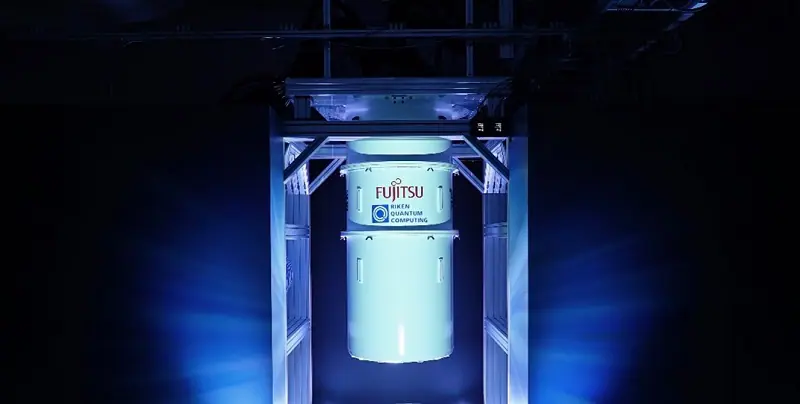
Fujitsu and RIKEN have developed a 64-qubit superconducting quantum computer, marking a significant step towards hybrid quantum computing. The new computer will be used to accelerate research and development in quantum chemistry calculations and quantum financial algorithms. The technology was developed at the RIKEN RQC-Fujitsu Collaboration Center and builds on Japan’s first superconducting quantum computer, revealed in March 2023. The partners also launched a platform for hybrid quantum computing, combining the new quantum computer with a 40-qubit quantum computer simulator. This will aid in comparing calculation results and accelerating research in error mitigation algorithms in quantum applications.
Yukihiro Okuno, Senior Research Scientist, Analysis Technology Center, Fujifilm Corporation:
We anticipate that the ultrafast computing power of quantum computers enables unprecedented high-precision chemical calculations, which will greatly contribute to materials development. Fujifilm will leverage the new hybrid quantum computing platform to research the effects of noise on current quantum computing results. We will also continue to develop innovative materials through the application of quantum computing.
Development of a Superconducting Quantum Computer
Fujitsu and RIKEN have successfully developed a 64-qubit superconducting quantum computer at the RIKEN RQC-Fujitsu Collaboration Center. This new quantum computer utilizes technology developed by RIKEN and a consortium of joint research partners, including Fujitsu, for Japan’s first superconducting quantum computer, which was first revealed to the public in March 2023.
Launch of a Hybrid Quantum Computing Platform
Alongside developing the new quantum computer, Fujitsu and RIKEN have launched a platform for hybrid quantum computing. This platform combines the computing power of the newly developed 64-qubit superconducting quantum computer with one of the world’s largest 40 qubit quantum computer simulators developed by Fujitsu. The new platform will be provided to companies and research institutions that are conducting joint research with Fujitsu and RIKEN from October 5, 2023. The hybrid platform enables easy comparison of calculation results of noisy intermediate-scale quantum (NISQ) computers against error-free results from quantum simulators, contributing to accelerated research in areas including performance evaluation of error mitigation algorithms in quantum applications.
Development of a Hybrid Quantum Algorithm
Fujitsu and RIKEN are also developing a hybrid quantum algorithm that links superconducting quantum computing with high-performance computing (HPC). By linking a quantum computer with a quantum simulator that runs on an HPC, Fujitsu, and RIKEN have developed a hybrid quantum algorithm that enables quantum chemistry calculations with greater accuracy than conventional algorithms. The two partners plan to include this algorithm in the new platform.
Future Plans for Quantum Computing
In the future, Fujitsu and RIKEN aim to promote the development of technologies, including high-density implementation to realize a 1,000-qubit superconducting quantum computer and technologies to achieve more precise quantum gate operations. They will also provide quantum computing and quantum simulation resources to customers for applications in various fields, including finance and drug discovery, through this platform and promote R&D activities for quantum applications through joint research to accelerate the practical application of both quantum computing hardware and software.
The Role of Quantum Simulators in Quantum Computing
Quantum simulators, which can digitally imitate quantum computation, provide a vital bridge toward developing practical, fault-tolerant quantum computing. Unlike current quantum computers, quantum simulators can perform error-free and long-step computations as they do not rely on error-prone qubits. However, as quantum simulators only digitally reproduce quantum computation on classical computers, they cannot realize actual quantum acceleration, an expected benefit of practical quantum computers. Fujitsu and RIKEN have launched a new hybrid quantum computing platform that combines the advantages of superconducting quantum computers and quantum simulators to address these issues.