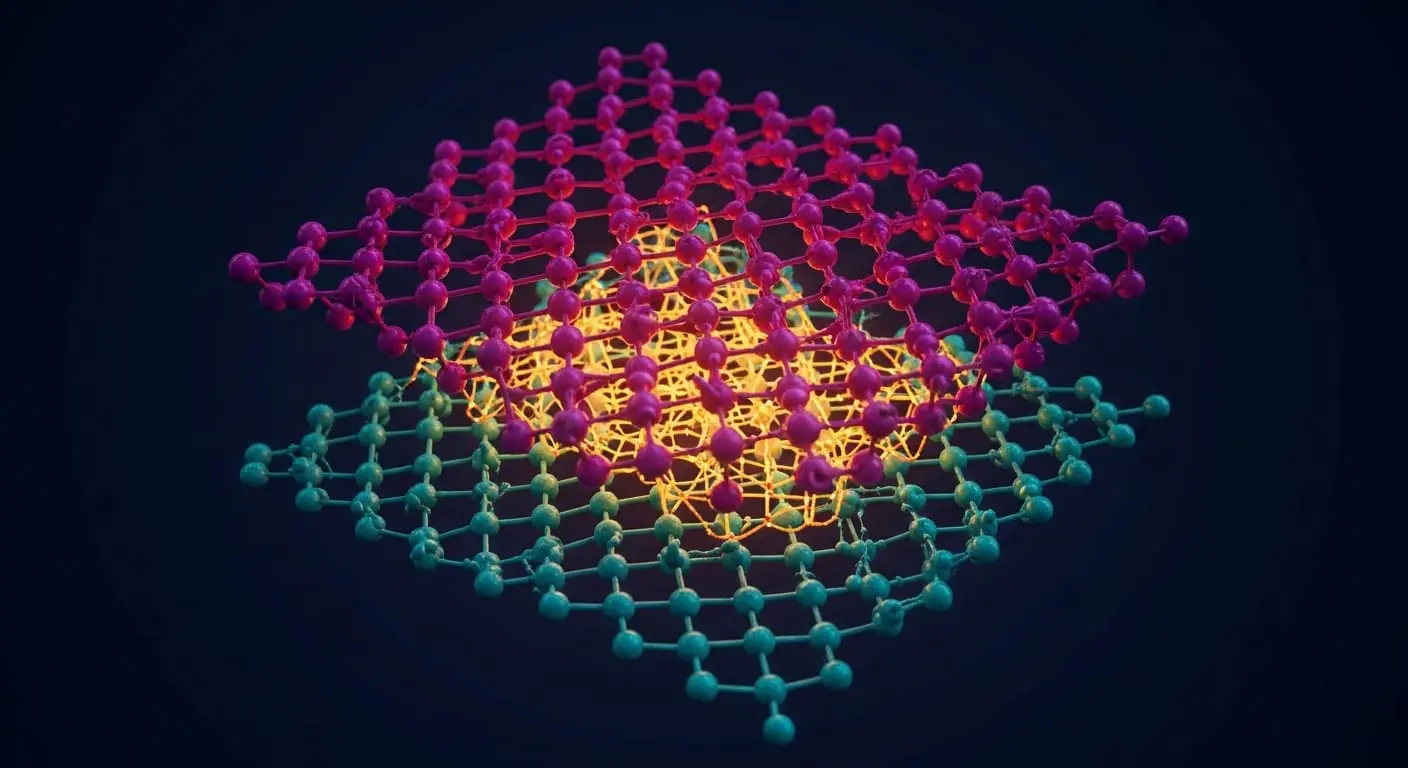
Researchers at Choua¨ıb Doukkali University, led by Hasna Chnafa, have undertaken a detailed investigation of electron transport phenomena within graphene, incorporating the effects of an induced energy gap, a scalar potential, and uniaxial zigzag strain. The study employs the transfer-matrix approach, a robust method in condensed matter physics, to model electron behaviour and calculate transmission probabilities as functions of key system parameters. The findings demonstrate that careful manipulation of strain, applied laser fields, and scalar potential barriers provides a viable route to control electronic transport in gapped graphene, potentially facilitating advancements in the development of novel optoelectronic devices and nanoscale electronics. Notably, the emergence of pronounced Fano-type oscillations under moderate strain conditions highlights the complex interplay between laser frequency, field amplitude, and the resulting transmission characteristics.
Strain and laser field manipulation optimise graphene electron transmission characteristics
The investigation reveals that graphene’s electron transmission can be modulated by as much as 30% through the application of uniaxial zigzag strain, a significant improvement over previous limitations which largely restricted strong band-gap tuning to suspended graphene samples. This level of control is achieved by precisely manipulating the material’s atomic structure, effectively tailoring graphene’s electronic properties beyond previously attainable capabilities. The transfer-matrix method, used in this research, recursively calculates the probability amplitude of an electron traversing the system, accounting for reflections and transmissions at each interface defined by the potential barrier and strain. Moderate strain generates pronounced Fano-type oscillations, distinctive interference patterns in electron flow characterised by an asymmetric lineshape, which diminish at higher strain levels. These oscillations are crucial for engineering specific transmission characteristics and represent a key finding for device design. The Fano resonance arises from the quantum mechanical interference between a discrete bound state and a continuum of scattering states, and its presence indicates strong coupling between these states within the strained graphene structure.
The observed 30% modulation achieved via strain coincided with observations that increasing the amplitude of applied laser fields generally enhances electron transmission, while conversely, higher laser frequencies suppress it. This demonstrates a dual pathway for electronic control, offering complementary mechanisms for tuning graphene’s conductivity. The laser field interacts with the electrons in graphene, inducing transitions between energy bands and altering the effective potential landscape. Specifically, the research indicates that the width of the potential barrier generates characteristic oscillatory patterns in the upper sideband of the transmission spectrum, revealing a sensitivity to structural dimensions and a consequential effect on the energy levels of electrons passing through the material. Graphene’s full potential in advanced electronics is currently limited by its inherent lack of a substantial band gap, a characteristic that restricts its use in transistors and other semiconductor devices requiring a defined on/off ratio. A zero band gap means that electrons can flow freely even when the device should be ‘off’, leading to high power consumption and unreliable operation.
Strain engineering presents a promising route to induce a band gap in graphene, but achieving precise and predictable control over this process has remained elusive. The induced band gap arises from the modification of the electronic band structure due to the strain, altering the energy-momentum relationship of the electrons. Understanding how moderate strain affects electron flow provides key insight into manipulating graphene’s properties, as moderate stretching creates distinctive electron transmission patterns. These patterns are not merely random fluctuations but are directly linked to the formation of new energy levels and the modification of existing ones within the graphene lattice. Though these Fano-type oscillations are diminished by excessive force, beyond a certain strain threshold the graphene lattice can become unstable or undergo irreversible changes, they demonstrate a pathway to control electron behaviour via external mechanical influence, which is vital for designing future transistors and optoelectronic components. The ability to mechanically tune the electronic properties of a material offers a significant advantage over traditional methods relying solely on chemical doping or electrostatic gating.
Higher laser frequencies suppress transmission, offering a complementary control mechanism to field amplitude; however, these findings currently rely on theoretical models and simulations based on the transfer-matrix approach. Validating these predictions through consistent, scalable control in fabricated devices remains a significant hurdle to realising practical applications. The transfer-matrix method, while powerful, relies on simplifying assumptions about the system’s geometry and potential landscape. A combination of strain, electric fields and laser illumination offers a pathway towards novel optoelectronic devices by modulating graphene’s electronic properties. Moderate, uniaxial zigzag strain generates distinctive interference patterns in electron transmission, arising from the interaction between conducting and blocked electron pathways, and manipulating laser field amplitude boosts transmission while increasing laser frequency diminishes it, providing complementary control mechanisms. Further research will focus on exploring the limits of these control mechanisms and developing fabrication techniques to translate these theoretical findings into functional devices, potentially leading to the creation of high-performance transistors, photodetectors, and other advanced electronic components based on graphene.
The research demonstrated that electron transmission in graphene can be controlled by applying a combination of energy gaps, external potentials, laser fields and uniaxial zigzag strain. This is significant because it provides a mechanical means of tuning the material’s electronic properties, offering an alternative to chemical doping or electrostatic gating. Researchers found that moderate strain created interference patterns in electron transmission, while laser field amplitude enhanced transmission and higher frequencies suppressed it. The authors intend to explore the limits of these control mechanisms and develop fabrication techniques to create functional devices.
👉 More information
🗞 Quantum transport in gapped graphene under strain and laser–electrostatic barriers
🧠 ArXiv: https://arxiv.org/abs/2604.19297
See today’s quantum computing news on Quantum Zeitgeist for the latest breakthroughs in qubits, hardware, algorithms, and industry deals.