Researchers have demonstrated a scalable simulation of Quantum Random-Access Memory (QRAM) analysis using less than 1 gigabyte of memory, a feat previously hindered by the immense computational resources typically required for such modeling. The team co-led by Guo-Ping Guo and Zhao-Yun Chen, along with Yun-Jie Wang, Tai-Ping Sun, Xi-Ning Zhuang, Xiao-Fan Xu, Huan-Yu Liu, Cheng Xue, and Yu-Chun Wu, developed a simulator utilizing a “bucket-brigade (BB) QRAM” architecture combined with a “noise-aware pruning algorithm” to achieve efficient scaling and full quantum state access. Simulations revealed “suppression anomalies” in Error Filtration (EF) performance at high noise levels or large address sizes, indicating that postselection probability fundamentally limits EF scaling. The research refines existing EF theory, establishing conditional criteria linking base infidelity to achievable suppression and providing a practical tool for assessing QRAM as a quantum resource.
Bucket-Brigade QRAM Simulator Enables Large-Scale Noise Analysis
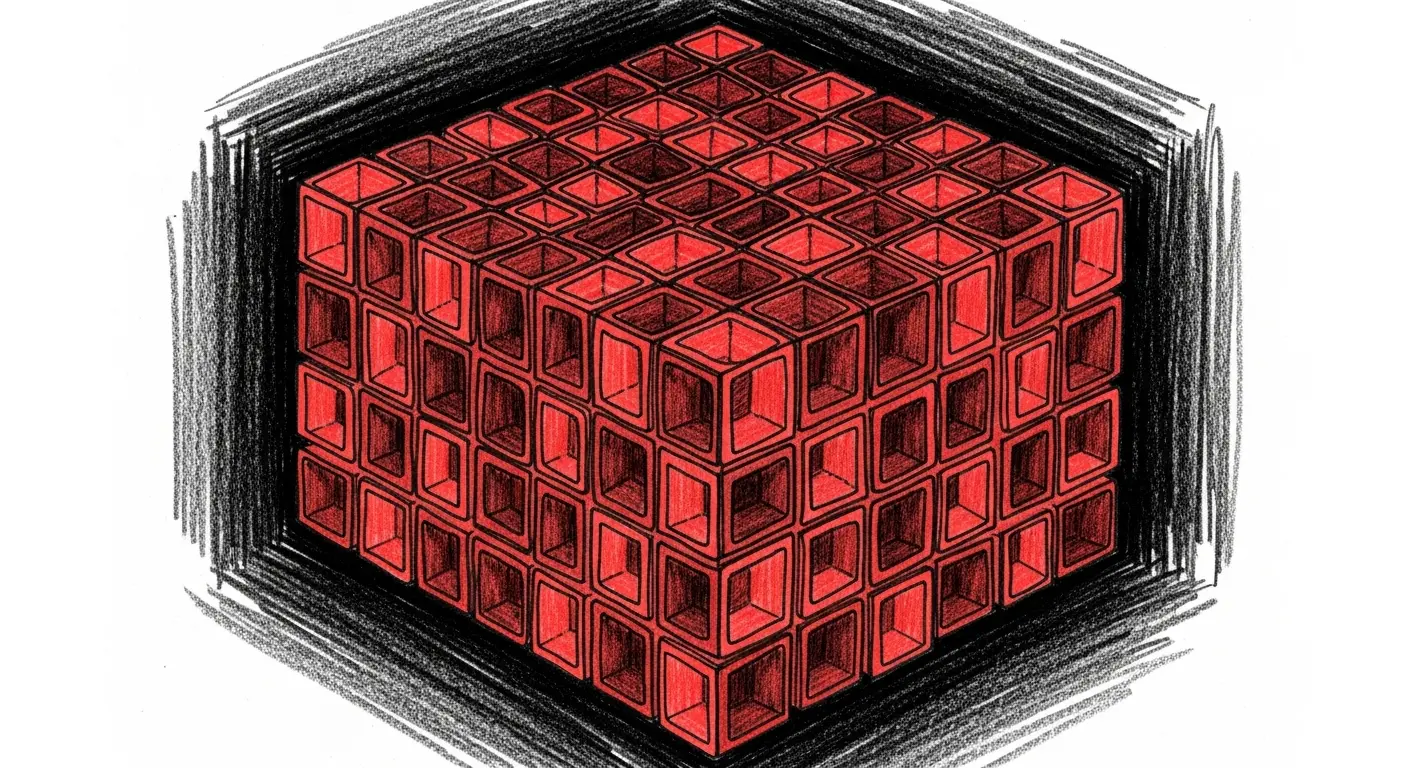
A novel simulator employing a bucket-brigade Quantum Random-Access Memory (QRAM) architecture has enabled researchers to analyze noise impacts on error filtration at scales previously unattainable, revealing fundamental limitations in the technique’s performance. Unlike prior simulations constrained by computational demands, this new framework achieved simulations of systems with 20 layers using less than 1 GB of memory, a significant reduction that unlocks exploration of more realistic parameter regimes for QRAM assessment. The simulator’s efficiency stems from a combination of sparse state encoding and a noise-aware pruning algorithm, allowing for full quantum state access while maintaining computational tractability. Researchers from the Institute of the Advanced Technology, University of Science and Technology of China, and Origin Quantum Computing developed the simulator to address a critical gap in understanding error filtration (EF) performance in practical QRAM systems.
Existing analyses have relied on approximations, limiting their applicability to smaller, idealized scenarios; this new tool allows for probing EF performance with moderate fidelity and larger address sizes. Simulations revealed “suppression anomalies” at high noise levels, demonstrating that the probability of successful postselection fundamentally limits the scalability of EF. By incorporating this effect, the researchers refined EF theory to provide conditional criteria that link the base infidelity to the achievable suppression, thereby delineating the regime in which EF yields progressive improvement.
Error Filtration Theory Refined by Infidelity-Suppression Link
Error filtration (EF) has emerged as a potentially advantageous alternative to full quantum error correction, promising noise suppression without the substantial overhead of encoding; however, practical performance assessments have been hampered by computational limitations until recently. Existing theoretical analyses often rely on approximations valid only in ideal scenarios, while simulations have struggled to scale to the system sizes needed to accurately model realistic quantum random-access memory (QRAM). A research team led by Guo-Ping Guo and Zhao-Yun Chen, along with Yun-Jie Wang, Tai-Ping Sun, Xi-Ning Zhuang, Xiao-Fan Xu, Huan-Yu Liu, Cheng Xue, and Yu-Chun Wu, have now overcome these hurdles with a novel simulator capable of probing EF performance under conditions previously inaccessible, revealing critical limitations to the technique’s scalability. These anomalies indicate that the probability of successful postselection, a key component of EF, fundamentally limits its scaling potential.
The findings prompted a refinement of existing EF theory, establishing conditional criteria that directly link the base infidelity of the quantum system to the achievable level of suppression. The research demonstrates that incorporating this effect refines EF theory to provide conditional criteria that link the base infidelity to the achievable suppression, effectively delineating the conditions under which EF provides genuine performance gains.
Layer QRAM Simulations Achieved with Sub-1 GB Memory
This feat is particularly noteworthy given the immense computational resources typically demanded by quantum simulations, opening new avenues for practical analysis of QRAM as a quantum resource. This simulator’s efficiency enabled the research team, led by Guo-Ping Guo and Zhao-Yun Chen, along with Yun-Jie Wang, Tai-Ping Sun, Xi-Ning Zhuang, Xiao-Fan Xu, Huan-Yu Liu, Cheng Xue, and Yu-Chun Wu, to explore parameter regimes previously inaccessible to numerical simulations, probing systems with 20 layers using less than 1 GB of memory, a substantial increase in complexity. The researchers refined EF theory to provide conditional criteria that link the base infidelity to the achievable suppression, thereby delineating the regime in which EF yields progressive improvement. The ability to simulate these complex systems with minimal memory requirements represents a crucial step toward realizing the potential of QRAM in future quantum technologies.



See today’s quantum computing news on Quantum Zeitgeist for the latest breakthroughs in qubits, hardware, algorithms, and industry deals.