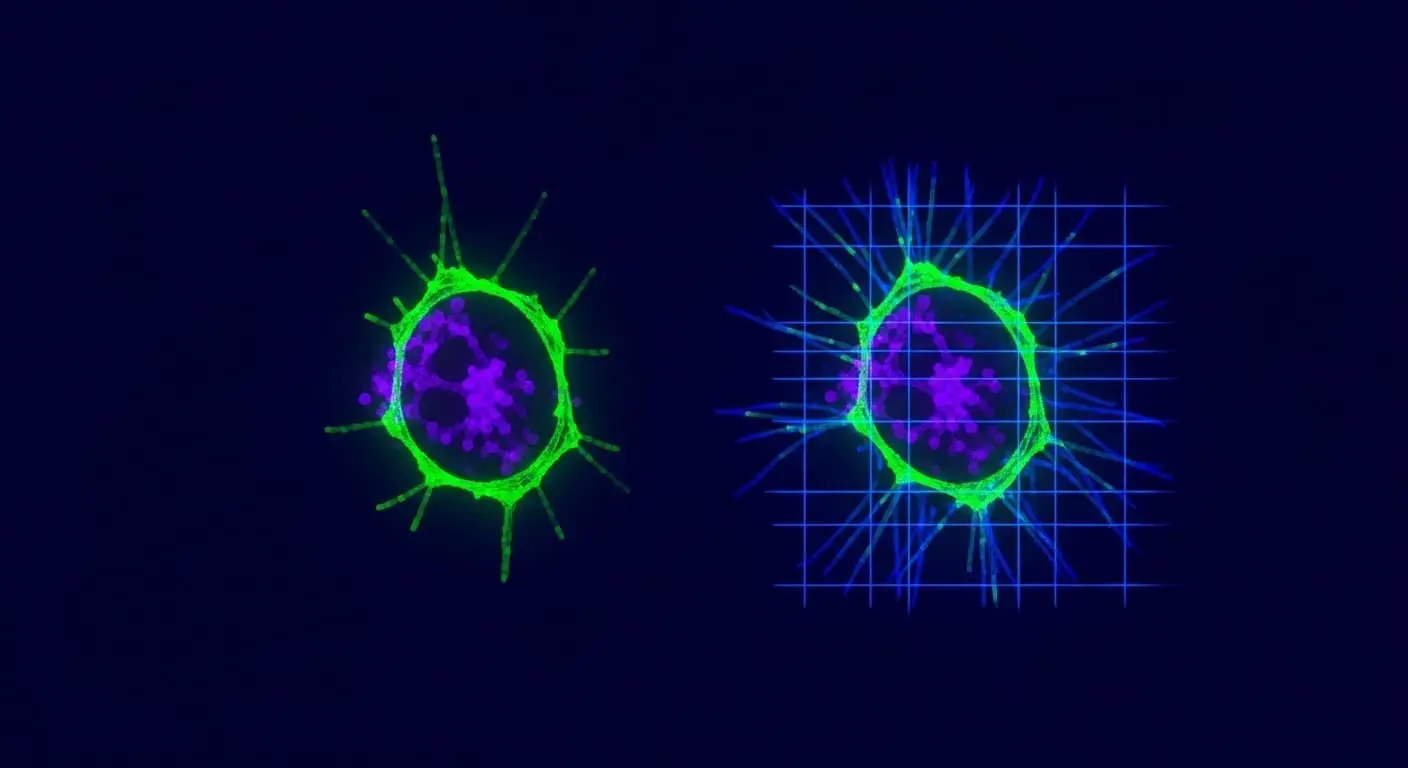
Hayato Yunoki and Yoshihiko Hasegawa at The University of Tokyo have formulated a kinetic uncertainty relation for many-body systems undergoing collective dissipation, a model pertinent to boundary time crystals. The analytical formulation defines lower bounds for fluctuations, showing that interactions between particles can enhance precision as particle number increases. Numerical simulations across various phases validate the formulation, representing the first theoretical framework for understanding precision limits in these systems and enabling the development of advanced quantum technologies.
Thermodynamic limits to precision in quantum many-body systems
Achieving extreme precision in physical processes is a primary goal when designing nanoscale devices and exploring nonequilibrium dynamics. Precision bounds in collective dissipative quantum many-body systems are described for an arbitrary particle number N, providing a solid foundation for designing future quantum technologies that exploit many-body phenomena. Recent developments in stochastic thermodynamics have revealed a universal trade-off governing such processes, demonstrating that higher precision inevitably demands a correspondingly greater thermodynamic cost.
This principle determines the maximum achievable precision for a given system and quantifies how far its current operation lies from the ultimate theoretical boundary. Inequalities providing these fundamental limits on stochastic processes are known as thermodynamic uncertainty relations (TURs). For classical Markov jump processes, the relative fluctuation of a time-integrated current Q satisfies Var[Q] ⟨Q⟩ ≥1 C, where Var[Q] and ⟨Q⟩ denote the variance and the expectation value of the current, respectively. The cost factor is given by C = Σ/2, with Σ representing the total entropy production.
Furthermore, a complementary inequality known as the kinetic uncertainty relation (KUR) holds for an arbitrary time-integrated observable when the cost is replaced by the dynamical activity C = Ac, which denotes the total number of jumps. Recent works have extended these frameworks to the quantum regime, discovering that quantum systems can violate the classical bound. Purely quantum effects such as coherence can suppress dynamical fluctuations, yielding higher precision than classically permitted.
Formulating these quantum precision limits directly dictates the ultimate stability of quantum devices such as quantum clocks and quantum batteries. As the pursuit of these advanced quantum technologies moves toward macroscopic scales, interacting quantum many-body systems naturally form their physical backbone. These systems exhibit exotic fundamental phenomena, such as macroscopic phase transitions driven by collective effects, and simultaneously underpin the development of complex solid-state architectures and future quantum information technologies.
While classical TURs were successfully derived for many-body models, prior investigations into quantum precision bounds remained strictly confined to single-body systems. Therefore, formulating these precision limits for the quantum many-body regime emerges as an important theoretical objective. Genuine many-body effects, specifically collective dissipation, redefine these fundamental precision boundaries, and this remains largely unknown. A recent study evaluated the precision limit of the first-passage time under continuous homodyne measurement in a system with collective dissipation, but their exact calculations were limited to very small systems with N = 2. A paradigmatic phenomenon governed by such collective dissipation and coherent driving is the boundary time crystal (BTC). Wilczek originally proposed the concept of a time crystal as a physical state that spontaneously breaks time-translation symmetry.
Early theoretical investigations primarily focused on the discrete breaking of time-translation symmetry in periodically driven setups, and numerous experiments subsequently confirmed the existence of these discrete time crystals. Continuous time-translation symmetry can spontaneously break in dissipative quantum many-body systems, resulting in a nonequilibrium phase termed the BTC. In this phase, order parameters exhibit persistent self-sustained oscillations in the thermodynamic limit. Following its initial formulation, the BTC concept was generalised, and its emergence across various models and physical platforms was confirmed both theoretically and experimentally.
A paradigmatic model of a BTC consists of an ensemble of spin-1/2 particles subject to superradiant decay induced by a Markovian bath, and its dynamics are described by Eq. The competition between the coherent driving and the collective dissipation gives rise to distinct nonequilibrium regimes, including stationary and oscillatory phases. Recent works have actively explored the application of time crystals induced by collective dissipation to quantum metrology or quantum clocks, which is one of the most prominent applications of the TUR or KUR. In this Letter, a KUR for quantum trajectories governed by the collective dissipative dynamics in Eq is derived, serving as a paradigmatic model of the BTC. This formulation clarifies how genuine many-body effects dictate the fundamental limits of precision. A fundamental difficulty was overcome by utilising the many-body mean-field approximation, successfully bounding the precision with physically transparent observables.
Furthermore, analytical inequalities were validated through numerical simulations. The behaviour of the actual precision and its theoretical lower bound was investigated across the stationary, critical, and BTC phases. Finally, the scaling of the precision with respect to the particle number N was analysed to uncover the system-size dependence unique to many-body systems. To describe the system of N particles, the collective spin operators Sα = 1 2 PN i=1 σ(i) α (α = x, y, z) and the corresponding ladder operators S± = Sx ± iSy are introduced.
The time evolution of the system’s density matrix ρ is governed by a Markovian master equation in the Lindblad form. This model has been widely studied in the context of cooperative resonance fluorescence and cooperative emission in cavities, and it accurately describes a variety of experimental setups. Recently, it has also been extensively investigated as the standard model for studying the BTC. To analyse the macroscopic behaviour of the system, the magnetization components mα ≡⟨Sα⟩/(N/2) are defined.
Applying a mean-field approximation to a many-body system undergoing collective dissipation allows for the analytical formulation of a kinetic uncertainty relation. This derivation establishes lower bounds for relative fluctuations in terms of physical quantities. Analysis reveals a cooperative enhancement mechanism whereby collective interactions permit the precision to scale with the number of particles. Numerical simulations confirm these findings across the stationary, critical, and boundary time crystal phases.
This work provides a theoretical description of precision bounds in collective dissipative quantum many-body systems for an arbitrary particle number N, offering a foundation for designing quantum technologies that utilise many-body phenomena. Achieving extreme precision is a central objective in nanoscale engineering and the investigation of nonequilibrium processes. Thermodynamic and kinetic uncertainty relations define fundamental precision bounds, yet prior quantum derivations were limited to single-body systems, leaving the ultimate precision limits for interacting many-body systems unknown.
The model considered consists of an ensemble of spin-1/2 particles subject to superradiant decay induced by a Markovian bath, with dynamics described by a master equation. Competition between coherent driving and collective dissipation gives rise to stationary and oscillatory phases. Attaining the ultimate precision remains a central objective in the engineering of nanoscale systems and the investigation of nonequilibrium processes. While thermodynamic and kinetic uncertainty relations establish fundamental precision bounds, prior derivations in the quantum regime have remained confined to single-body systems.
Consequently, the ultimate precision limits for interacting many-body systems have been unknown. In this Letter, a kinetic uncertainty relation for a many-body system undergoing collective dissipation is analytically formulated, representing a paradigmatic model of boundary time crystals. Lower bounds for relative fluctuations are derived by applying a mean-field approximation, expressed in terms of clear physical quantities. Analysis identifies a cooperative enhancement mechanism, demonstrating that collective interactions allow the precision to scale with the number of particles.
Many-body enhancements demonstrate improved quantum measurement sensitivity
Establishing precision limits in quantum systems is vital for developing advanced technologies such as highly accurate clocks and sensors. This research successfully extends existing theoretical frameworks beyond individual particles to encompass the complex interactions within many-body systems, revealing a surprising benefit: precision improves as the number of particles increases. The analytical results rely on a mean-field approximation, a simplification that treats each particle as experiencing an average interaction rather than accounting for every individual correlation, but this does not diminish the significance of establishing these precision limits.
This work provides a key first step towards understanding how many particles behave collectively in quantum systems, revealing a counterintuitive benefit where precision improves with increasing particle number. Validating these analytical findings with numerical simulations strengthens confidence in the approach and offers a foundation for designing advanced quantum technologies. The benefits of collective quantum behaviour are now becoming clear, demonstrating that precision in quantum systems improves as more particles interact, a surprising result for nanoscale engineering.
This work establishes a theoretical framework for understanding precision limits within interacting quantum systems, specifically those exhibiting collective dissipation, such as boundary time crystals. By formulating a kinetic uncertainty relation and applying a mean-field approximation, precision can improve alongside increasing particle number, challenging conventional expectations. Validated through numerical simulations across multiple phases of matter, this analytical formulation provides a foundation for designing future quantum technologies that use many-body phenomena.
The research demonstrated that precision in quantum measurements improves as the number of particles in a system increases. This finding challenges the expectation that interactions between particles would diminish precision, instead revealing a cooperative enhancement mechanism. Researchers analytically formulated a kinetic uncertainty relation for many-body systems undergoing collective dissipation, validating the results with numerical simulations for an arbitrary particle number N. This work provides a theoretical basis for designing quantum technologies that exploit collective quantum behaviour.
👉 More information
🗞 Kinetic Uncertainty Relation in Collective Dissipative Quantum Many-Body Systems
🧠 ArXiv: https://arxiv.org/abs/2604.05747




See today’s quantum computing news on Quantum Zeitgeist for the latest breakthroughs in qubits, hardware, algorithms, and industry deals.