Quantum computing promises to revolutionise several scientific and technological domains through fundamentally new ways of processing information. Laurin E. Fischer, affiliated with the Laboratoire de théorie et simulation des matériaux, Faculté des sciences et techniques de l’ingénieur, University of unspecified location and IBM Quantum, alongside colleagues, demonstrate significant progress in enabling large-scale digital quantum simulations using superconducting qubits. This research is particularly significant because it addresses a critical limitation in current quantum devices, imperfections that hinder practical advantage for complex problems in fields such as condensed matter physics and materials science. By exploring methods across the computational stack, including hardware innovations, noise modelling, error mitigation and algorithmic improvements, this work represents a crucial step towards extracting meaningful results from noisy quantum data and realising the full potential of quantum simulation.\n\nThe thesis was presented on 28 October at the Faculty of Science and Engineering, Laboratory of Theory and Simulation of Materials, Doctoral Programme in Materials Science and Engineering for the degree of Doctor of Science by Laurin Elias Fischer.\n\nIt was accepted on the proposal of the jury, with Professor Harald Brune as president, Professors Nicola Marzari and Ivano Tavernelli as thesis directors, Professor Zoë Holmes as rapporteur, Professor Zoltán Zimborás as rapporteur, and Professor Frank Wilhelm-Mauch as rapporteur. The work is documented as arXiv:2602.04719v1 [quant-ph] from February 2026.\n\n
Addressing Challenges in Quantum Simulation Progress
\n\n
Advancing Quantum Simulation through Hardware and Algorithms
\n\n
Advancing quantum simulation through hardware innovation, noise mitigation and algorithmic refinement promises to unlock previously intractable scientific challenges
\n\n
Scientists across condensed matter physics and materials science widely recognise the transformative potential of quantum computing. However, the realization of practical quantum advantage for problems of real scientific relevance remains hindered by the imperfections of current quantum devices. These limitations also affect quantum hardware based on superconducting circuits, which nevertheless remain among the most advanced and scalable quantum computing platforms available today.
\n\n
The long-term vision of fully fault-tolerant quantum computers capable of autonomously correcting their own errors is still beyond reach, primarily due to the substantial qubit overhead required for error correction. As a consequence, the field has increasingly focused on intermediate-term strategies that combine quantum and classical computational resources, exploit hardware-native operations, and apply error mitigation techniques to extract meaningful results from noisy quantum data.
\n\n
Bridging the Gaps Across the Computational Stack
\n\n
Bridging Gaps in the Quantum Computational Stack
\n\n
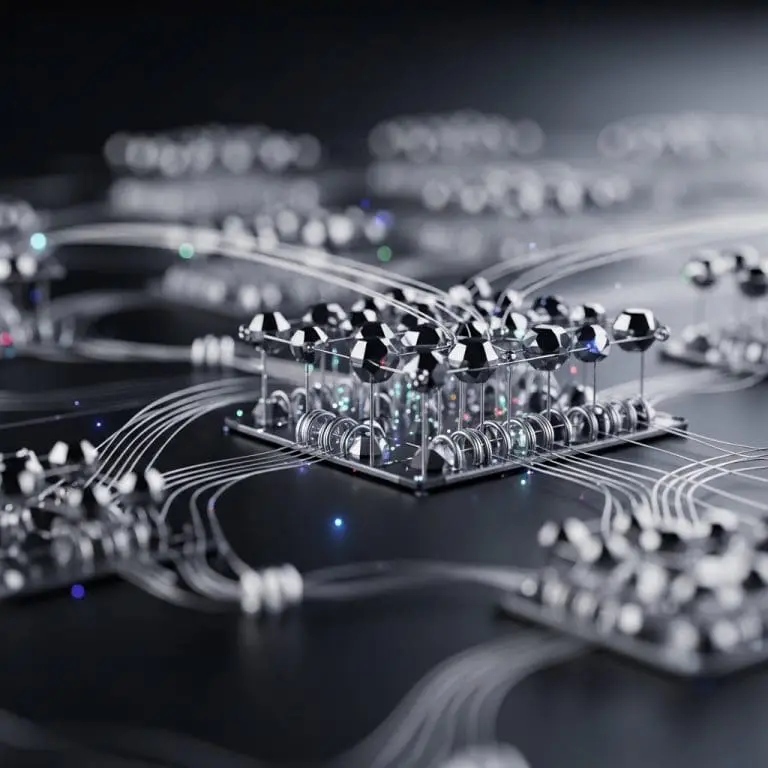
This thesis contributes to this broader effort by investigating methods to advance quantum simulation across the entire computational stack. These contributions span hardware-level innovations, refined techniques for noise modelling and error mitigation, and algorithmic improvements enabled by efficient quantum measurement and classical post-processing. On the hardware side, we develop a framework for full qudit-based quantum computation using superconducting transmon circuits.
\n\n
Implementing Qudit and Efficient Data Processing Techniques
\n\n
Exploiting Qudits and Efficient Data Post-Processing
\n\n
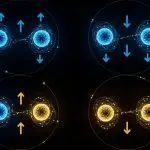
This approach maximises the use of available quantum resources by exploiting higher energy levels of transmons beyond the conventionally used two-dimensional qubit subspace. We demonstrate the implementation of a universal qudit gate set, which enables more efficient circuit synthesis and facilitates the realization of informationally complete (IC) measurements.
\n\n
On the algorithmic and software side, we introduce techniques for the efficient classical processing of quantum data obtained via IC measurements. In particular, we present a method that reduces the variance of observable estimators during post-processing, thereby improving the efficiency of quantum algorithms without requiring additional quantum resources.
\n\n
From the perspective of error mitigation, we employ IC measurements to perform accurate quantum computations by mitigating noise effects in classical post-processing. We demonstrate two such error mitigation techniques on IBM Quantum hardware at scales that exceed the brute-force simulation capabilities of classical computers. First, we use IC measurements to parallelize the quantum subspace expansion algorithm for ground-state estimation. Second, we leverage a tensor-network-based pipeline that systematically compensates for noise effects in simulations of many-body quantum dynamics.
\n\n
The latter approach relies on accurate models of the device’s noise channels, which have historically been challenged by experimental ambiguities leading to biased noise models. We show that a novel noise-learning scheme can resolve these inconsistencies, improving both the bias and variance of noise-model-based error mitigation strategies.
\n\n
Overall, the results presented in this thesis demonstrate how digital quantum simulation can be advanced despite the presence of noise, pushing the frontiers of quantum computing with superconducting hardware on multiple fronts. These advances extend the reach of error mitigation techniques and provide valuable insights that inform future strategies toward fault-tolerant quantum computing.
\n\n
The following publications are covered in this thesis:
L. E. Barkoutsos, D. J. Egger, and I. Tavernelli, “Ancilla-Free Implementation of Generalized Measurements for Qubits Embedded in a Qudit Space,” Physical Review Research 4.3 (2022), p. 033027, doi: 10.1103/PhysRevResearch.4.033027;
I. Tavernelli, “Universal Qudit Gate Synthesis for Transmons,” PRX Quantum 4.3 (2023), p. 030327, doi: 10.1103/PRXQuantum.4.030327;
L. E. Fischer, T. Dao, I. Tavernelli, and F. Tacchino, “Dual-frame optimization for informationally complete quantum measurements,” Physical Review A 109.6 (2024), p. 062415, doi: 10.1103/PhysRevA.109.062415;
L. Filippov, “Dynamical simulations of many-body quantum chaos on a quantum computer,” Nature Physics (2026), doi: 10.1038/s41567-025-02408-x;
E. Chen, A. Seif, and A. E. Fischer, “Large-scale implementation of quantum subspace expansion with classical shadows,” arXiv preprint arXiv:2510.25640 (2025).
\n\n
The following research was conducted during this doctorate but is not explicitly covered in the thesis:
D. O. Sokolov, P. K. Barkoutsos, J. Eisert, and I. Tavernelli, “Hardware-Tailored Diagonalization Circuits,” npj Quantum Information 10.1 (2024), p. 122, doi: 10.1038/s41534-024-00901-1;
D. E. Fischer, L. Guidoni, and I. Tavernelli, “Pulse Variational Quantum Eigensolver on Cross-Resonance-Based Hardware,” Physical Review Research 5.3 (2023), p. 033159, doi: 10.1103/PhysRevResearch.5.033159.
\n\n
Informationally-complete measurements enable efficient qudit computation and error mitigation by reducing the required measurement bases
\n\nResearchers developed a framework for full qudit-based quantum computation utilizing superconducting transmon circuits, maximizing the use of available quantum resources by extending beyond the conventional two-dimensional qubit subspace. A universal qudit gate set was implemented, facilitating more efficient circuit synthesis and the implementation of informationally-complete measurements.\n\nThese IC measurements were then leveraged for efficient classical processing of quantum data, introducing a method that demonstrably reduces the variance of observable estimators in post-processing, thereby enhancing algorithm efficiency without requiring additional quantum resources. Error mitigation techniques employing IC measurements were successfully demonstrated on IBM Quantum hardware at scales exceeding the capabilities of classical brute-force simulation.\n\nThe subspace expansion algorithm for ground state estimation was parallelized using IC measurements, while a tensor-network pipeline systematically compensated for the effects of noise during the simulation of many-body quantum dynamics. This tensor-network pipeline relied on accurate models of the device’s noise channels, addressing previous challenges posed by experimental ambiguities that led to biased models.\n\nA novel noise learning scheme was implemented to remove inconsistencies in noise models, improving both bias and variance in noise-model-based error mitigation. This scheme facilitated accurate quantum computations with mitigated noise through classical post-processing. The work showcases advancements in digital quantum simulation despite the presence of noise, extending the reach of error mitigation and informing strategies for fault-tolerant quantum computing with superconducting hardware on multiple fronts.\n\n
Hardware optimisation, noise mitigation and algorithmic advances for near-term quantum simulation are crucial for practical applications
\n\nResearchers have advanced simulation techniques across the computational stack for quantum computers. This doctoral thesis explores innovations at the hardware level, refines noise modelling and error mitigation, and improves algorithms through efficient measurement processing. These combined efforts aim to extract meaningful results from imperfect quantum devices, addressing a key challenge in the field.\n\nThe work details methods for enhancing quantum simulation, encompassing hardware improvements and algorithmic optimizations. Specifically, the thesis investigates techniques like gauge optimization and the application of frame theory to generalized measurements, alongside detailed analysis of single-qubit positive operator-valued measures.\n\nFurthermore, it presents explorations into dual-unitary kicked Ising circuits and decompositions of unitaries relevant to multi-qubit operations. Acknowledging the limitations of current hardware, the thesis focuses on strategies that combine quantum and classical resources. While fault-tolerant quantum computers remain a long-term goal, this research contributes to the development of practical techniques for mitigating errors and improving the accuracy of simulations. Future research directions include further refinement of error mitigation strategies and exploration of novel algorithmic approaches tailored to specific quantum architectures.\n\n
\n🗞 Enabling large-scale digital quantum simulations with superconducting qubits
\n🧠 ArXiv: https://arxiv.org/abs/2602.04719\n