
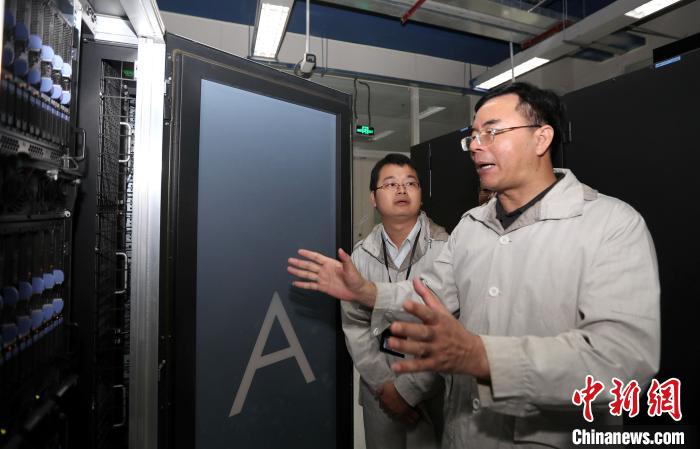
On October 27, it was revealed that the National Super-computing Centre in Shenzhen, China is planning to work on upgrading its supercomputer complex. The original report says the supercomputer will be at least 1000 times faster by 2022. It will be used in scientific, cloud computing, big data, and AI research among other subjects and fields.
The computer has ‘E-Level Clearance’ according to Chinese sources. It occupies 12000 square metres of space and has more than 100 cabinets running at high speeds. The Sugon Dawning 6000 Chinese supercomputer is supported as well.
The National Supercomputing Centre was established in 2009 and commenced operations two years later. It has more than 30000 users, more than a billion calculations completed, and fifteen billion hours of calculation time since the past decade.
The Supercomputing Centre has proven results and discoveries in scientific calculations, biomedicine, oil and gas, and many more fields. Some other fields the Centre is involved in are climate science, genetic sequencing, quantum annealing and simulation, and more.
Quantum Computing
In particular, the quantum simulation aspect of the National Super-computing Centre is our focus. The Centre is researching quantum simulations primarily as well as decryption and optimisation. Both the Peng Cheng Laboratory and Southern University of Science and Technology are collaborating with the Centre to develop practical uses of Quantum Algorithms.
The Shenzhen area and its surroundings will be benefiting from whatever technological finds the National Super-computing centre makes. This also ties in our previous article on China’s quantum ambition, which states that ‘whoever makes the first good move will gain the high ground of future quantum discoveries‘. It is very clear that China has high expectations in its quantum computing industry.



See today’s quantum computing news on Quantum Zeitgeist for the latest breakthroughs in qubits, hardware, algorithms, and industry deals.