The reconstruction of images from diffuse wave fields presents a persistent challenge across multiple imaging modalities, including thermography and atom probe tomography. Conventional techniques often struggle with limitations in spatial resolution and the distortion of signals caused by wave dispersion. Now, researchers are exploring a novel approach, linking these diffusive fields to their ‘virtual wave’ counterparts to enhance image clarity and accuracy. This work, detailed in a recent publication by P. Burgholzer, L. Gahleitner, and G. Mayr from the Research Center for Non Destructive Testing and the University of Applied Sciences Upper Austria, presents a method utilising established time-of-flight principles, commonly found in ultrasound and RADAR imaging, to reconstruct images from measured diffusive surface signals. The technique effectively compensates for dispersion and improves spatial resolution in these complex imaging scenarios.
Imaging techniques routinely rely on wave propagation to gather information about internal structures, yet inherent limitations restrict achievable resolution. Ernst Abbe demonstrated in 1873 that spatial resolution is fundamentally limited by the wavelength of the waves employed, a principle applicable across various imaging modalities. In acoustic imaging, such as photoacoustic imaging, this resolution is further constrained not only by detector capabilities but also by frequency-dependent attenuation during wave propagation, impacting higher frequency components more significantly.
Photoacoustic imaging generates signals by illuminating a sample with pulsed laser light, causing localised heating and subsequent ultrasonic pressure wave emission. The resulting pressure distribution reflects the degree of optical absorption within the sample, forming the basis of image reconstruction, though reconstructing this distribution proves challenging due to acoustic attenuation distorting the signal.
Recent work centres on the concept of ‘virtual waves’, locally constructed from measured diffusive surface signals, to enhance image resolution and address limitations inherent in interpreting dispersed wave packets. This approach effectively reconstructs the propagative wave that existed before diffusion occurred, offering a clearer basis for image formation. This transformation leverages established principles from wave physics, specifically the wave equation, and connects it to the diffusion equation through mathematical tools like Fredholm integrals, allowing for precise mapping between the diffusive field and its corresponding virtual wave.
To implement this virtual wave concept, researchers employ
To implement this virtual wave concept, researchers employ sophisticated mathematical techniques, notably truncated singular value decomposition (T-SVD) and the alternating direction method of multipliers (ADMM). These methods serve as regularisation techniques, crucial for stabilising the reconstruction process and mitigating the effects of noise and incomplete data, because inverse problems, like image reconstruction, are often ill-posed, meaning multiple solutions could potentially fit the measured data. T-SVD selectively filters out noisy components of the signal, while ADMM efficiently solves the complex optimisation problem involved in finding the best-fitting virtual wave.
The virtual wave concept (VWC) presents a novel approach to image reconstruction, particularly in scenarios involving diffusive fields, actively utilising locally virtual waves calculated from measured surface signals to enhance image resolution and mitigate signal degradation. This technique effectively addresses the inherent challenges posed by ill-posed inverse problems common in imaging modalities such as thermography and atom probe tomography, by calculating a reversible, propagative dual to the diffusive field. The VWC acts as a powerful regularisation technique, improving the signal-to-noise ratio and overall image quality, reversing the diffusion process and conceptually reconstructing the wave-like behaviour that preceded the measured diffusive signal. Implementation relies on established time-of-flight methods, commonly employed in ultrasound and radar imaging, to reconstruct the image from the virtual wave, with regularisation techniques, including truncated singular value decomposition (T-SVD) and the alternating direction method of multipliers (ADMM), applied to stabilise the solution and further refine the reconstructed image.
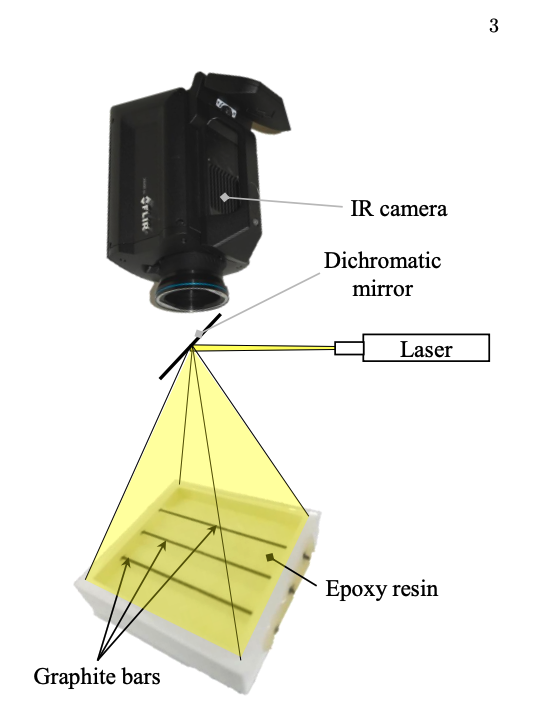
The versatility of the VWC extends across diverse imaging modalities, demonstrably improving spatial resolution in thermography and compensating for wave packet dispersion in atom probe tomography. Wave packet dispersion causes broadening of the signal, obscuring fine details, and the VWC effectively sharpens these signals, revealing previously obscured structural information. The effectiveness of the VWC stems from its ability to address the fundamental limitations of reconstructing images from diffusive data, creating a more well-posed problem and enabling more accurate and reliable image reconstruction.
This work establishes the Virtual Wave Concept (VWC) as a viable approach to image reconstruction from diffusive fields, demonstrating its capacity to enhance spatial resolution in thermography and mitigate dispersion effects in atom probe tomography. By framing reconstruction as the identification of a propagative dual to the measured diffusive signal, the research offers a novel perspective on established time-of-flight imaging techniques, addressing the inherent ill-posedness associated with reconstructing images from diffusive data. The application of established regularisation techniques, specifically Truncated Singular Value Decomposition (T-SVD) and the Alternating Direction Method of Multipliers (ADMM), proves crucial in stabilising the reconstruction process, with ADMM’s suitability arising from its capacity to incorporate sparsity constraints.
Results indicate the VWC’s potential to overcome limitations
Results indicate the VWC’s potential to overcome limitations inherent in conventional diffusive imaging, effectively compensating for the broadening of wave packets in atom probe tomography and enhancing the clarity of reconstructed images in thermography. While the research leverages established mathematical frameworks, it presents a unique application to the problem of diffusive field reconstruction, offering a new tool for researchers in the field. Future work should focus on quantifying the performance gains achieved through the VWC, utilising metrics such as signal-to-noise ratio and reconstruction accuracy, and investigating the limitations of the approach, including computational cost and sensitivity to noise.
Explicitly defining the conditions under which the virtual wave approximates reversibility in irreversible systems represents a key area for development, and expanding the scope of application beyond thermography and atom probe tomography represents a significant opportunity. Exploring the VWC’s potential in photoacoustic imaging, biomedical imaging, and non-destructive testing could broaden its impact across diverse scientific and engineering disciplines, and further research could investigate adaptive regularisation strategies, tailoring the reconstruction process to the specific characteristics of the imaged object and the noise environment.
🗞 Linking diffusive fields to virtual waves as their propagative duals
🧠 DOI: https://doi.org/10.48550/arXiv.2507.04542

See today’s quantum computing news on Quantum Zeitgeist for the latest breakthroughs in qubits, hardware, algorithms, and industry deals.