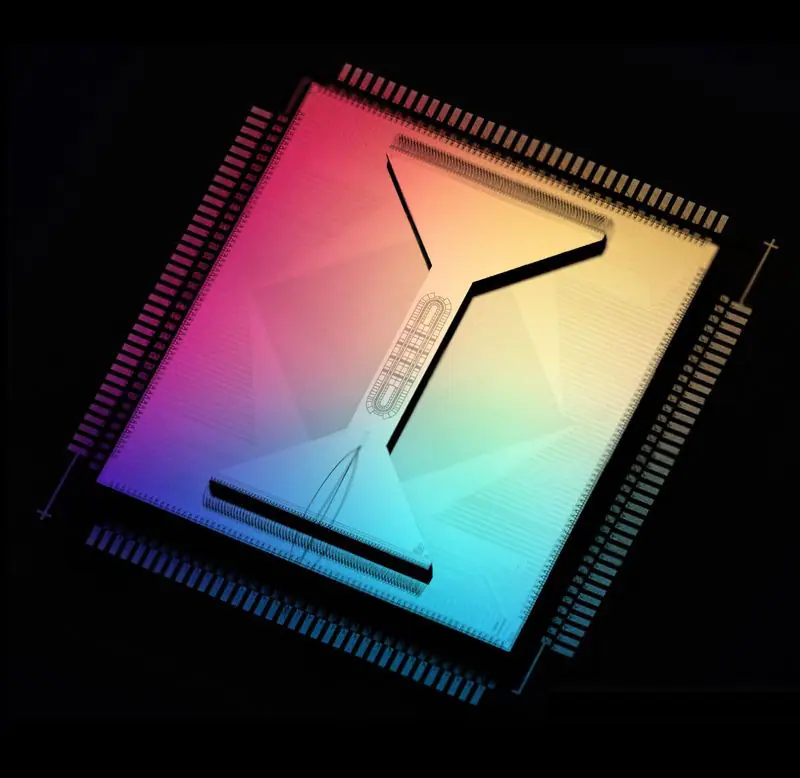
Honeywell is one of the companies you don’t naturally associate with frontier technologies like quantum computing. Honeywell’s quantum division Quantinuum was formerly known as Cambridge Quantum Computing. Might Honeywell be looking to capitalize on the buoyant quantum technology market? This market has seen meteoric rises in stock prices over the last few months.
Honeywell (NASDAQ: HON), The Quantum Tech Leader
Honeywell International Inc. is a multinational conglomerate. It is headquartered in Charlotte, North Carolina. The company specializes in aerospace, building technologies, performance materials, and safety and productivity solutions.
The company was founded in 1906 and has evolved through mergers and acquisitions. Honeywell operates across several industries. It provides critical technologies like avionics, automation systems, and advanced materials. These technologies are used in sectors ranging from aviation and defense to healthcare and energy. The company strongly emphasizes research and development and has positioned itself as a leader in industrial innovation. It integrates artificial intelligence, machine learning, and quantum computing into its product offerings.
Quantinuum
Quantinuum is a leading quantum computing company formed in 2021, combining Honeywell Quantum Solutions and Cambridge Quantum Computing.
As of February 2025, Dr. Rajeeb (Raj) Hazra serves as the Chief Executive Officer (CEO) of Quantinuum. He assumed this role in 2023. He brings over three decades of experience in Supercomputing. His expertise includes quantum technologies and various technical leadership positions. Dr. Hazra was the General Manager of the Compute and Networking Business Unit at Micron Technologies. He also spent 25 years at Intel Corporation. During his tenure, he led multiple divisions. These divisions included the Enterprise and Government Group, Technical Computing Group, Supercomputer Architecture and Planning, and Systems Technology Research.
Before Dr. Hazra’s appointment, Ilyas Khan was the founding CEO of Quantinuum. Following the merger of Honeywell Quantum Solutions and Cambridge Quantum in 2021, Khan became the Chief Product Officer and Vice Chairman of the Board of Directors. He founded Cambridge Quantum in 2014 and has been a prominent figure in the quantum computing industry.
Quantinuum is headquartered in the United States and the United Kingdom. The company combines Honeywell’s advanced trapped-ion quantum hardware with Cambridge Quantum’s skill in quantum software.
Quantinuum’s portfolio includes cryptography and artificial intelligence. The company aims to accelerate the commercialization of quantum computing by developing high-performance quantum processors.
Quantinuum is recognized for its high-fidelity trapped-ion quantum computers, which offer superior error rates compared to other quantum hardware platforms. The company has developed several key quantum software products, including quantum key distribution tools for enhanced cybersecurity. The company also focuses on quantum chemistry applications that simulate molecular interactions, aiding in drug discovery and material development.
System Model H-Series Quantum Computers
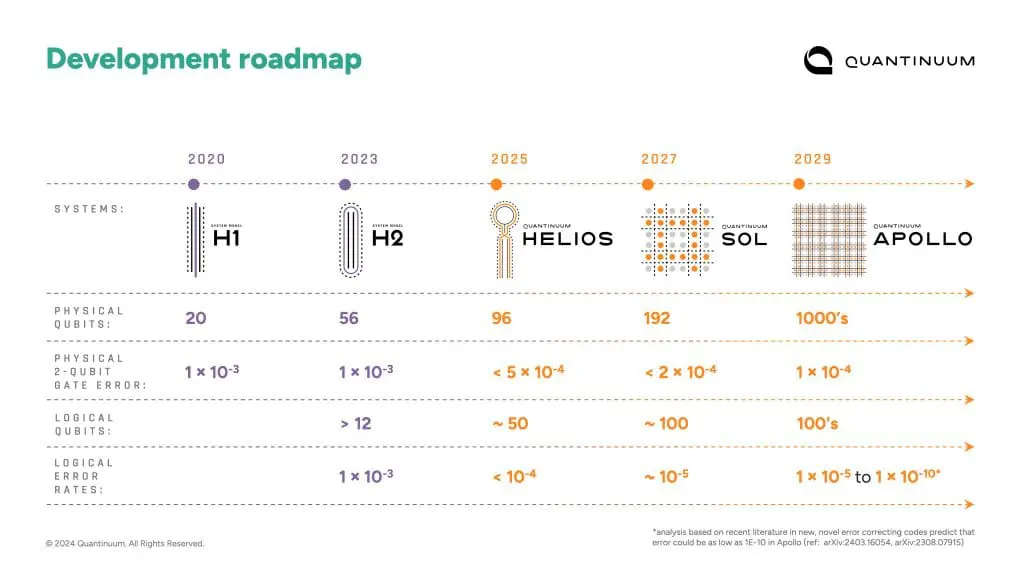
Quantinuum’s System Model H-Series comprises advanced trapped-ion quantum computers, including the H1 and H2 models. The H1 features a linear architecture with all-to-all qubit connectivity, facilitating efficient quantum operations. The H2 introduces a racetrack architecture, enhancing scalability and performance. Both models are designed to support complex quantum computations across various applications.
Quantum Origin
Quantum Origin is Quantinuum’s quantum-enhanced cryptographic platform designed to strengthen data security. It uses quantum random number generation to produce cryptographic keys with high entropy. This enhances the robustness of encryption protocols against emerging threats. This platform is particularly relevant in safeguarding sensitive information in sectors like finance and healthcare.
InQuanto
InQuanto is a quantum computational chemistry software platform developed by Quantinuum. It leverages quantum algorithms to simulate molecular and material behaviors, aiding researchers in understanding complex chemical interactions. This tool plays a critical role in accelerating discoveries in drug development. It also advances materials science by providing insights that are hard to obtain through classical computational methods.
TKET
TKET is an open-source quantum software development kit and compiler developed by Quantinuum. It is platform-agnostic and optimizes quantum circuits for various hardware architectures, enhancing the performance of quantum algorithms. TKET provides developers with tools to design, execute, and analyze quantum programs efficiently, facilitating advancements in quantum software development.
Lambeq
Lambeq is an open-source software library created by Quantinuum for quantum natural language processing (QNLP), a quantum variant of NLP. It enables the design and implementation of QNLP applications by parsing the grammatical structure of sentences into quantum circuits. This approach allows for exploring the relationships between quantum theory and natural language. It may lead to more interpretable and efficient AI systems.
Quantum Monte Carlo Integration Engine
Quantinuum’s Quantum Monte Carlo Integration (QMCI) engine is a computational tool designed to evaluate multi-dimensional integrals using quantum algorithms. It is beneficial in finance, where it can perform estimations more efficiently and accurately than classical methods. The QMCI engine’s modular architecture allows for continuous development of new quantum algorithms tailored to specific applications.
Nexus
Nexus is Quantinuum’s all-in-one quantum computing platform that provides users access to their quantum hardware and software solutions. It offers a comprehensive environment for managing quantum computing workflows, including job submission, resource management, and performance monitoring. Nexus is designed to simplify the integration of quantum computing into existing infrastructures. It makes quantum technologies more accessible to organizations aiming to leverage them.
Helios
Helios is Quantinuum’s Hardware-as-a-Service offering, providing flexible access to its quantum computing resources. It allows users to utilize quantum hardware on-premise. They can also access it in the cloud or through a hybrid approach. This caters to diverse computational needs. Helios aims to make quantum computing more accessible by offering scalable solutions tailored to specific organizational requirements.
Quantum Machine Learning
Quantinuum is actively developing quantum machine learning (QML) solutions integrating quantum algorithms with classical machine learning techniques. These solutions enhance pattern recognition, data analysis, and predictive modeling. By leveraging quantum computing’s capabilities, Quantinuum aims to improve the efficiency and accuracy of machine learning applications across various industries.
Optimization Algorithms
Quantinuum offers advanced optimization algorithms designed to solve complex combinatorial problems. These algorithms apply to logistics, supply chain management, and route planning. Quantinuum’s improvement solutions use quantum computing techniques. These techniques aim to find more efficient solutions to computationally intensive problems for classical methods.
Generative Quantum AI Framework
Quantinuum has unveiled a pioneering Generative Quantum AI framework (Gen QAI). It capitalizes on unique data generated by its advanced H2 quantum computer. This framework addresses complex challenges beyond the reach of classical computing.
The Rise of Quantinuum
Quantinuum is one of the largest employers in the quantum space. Across both hardware and software, it advances its Ion Trap quantum computers. It aims for new quantum volumes, which are metrics for comparing the performance of quantum computers. We don’t know the exact number of employees in the division. Still, it is estimated to be over 500 worldwide. Quantinuum is one of the largest dedicated entities that are exploring quantum computing.
Quantinuum is in a rapidly maturing market with companies like Rigetti, IonQ and Zapata AI. The latter pivoted away from Quantum and later failed. These companies made their way on the public market, not by IPO but via a SPAC. Investors have faced challenges over the years. This applies whether they held the SPAC company before the merger or afterward. It will not go unnoticed that considerable sums of investment flow into the quantum space.
Artificial Intelligence, Gen AI, and Quantum AI
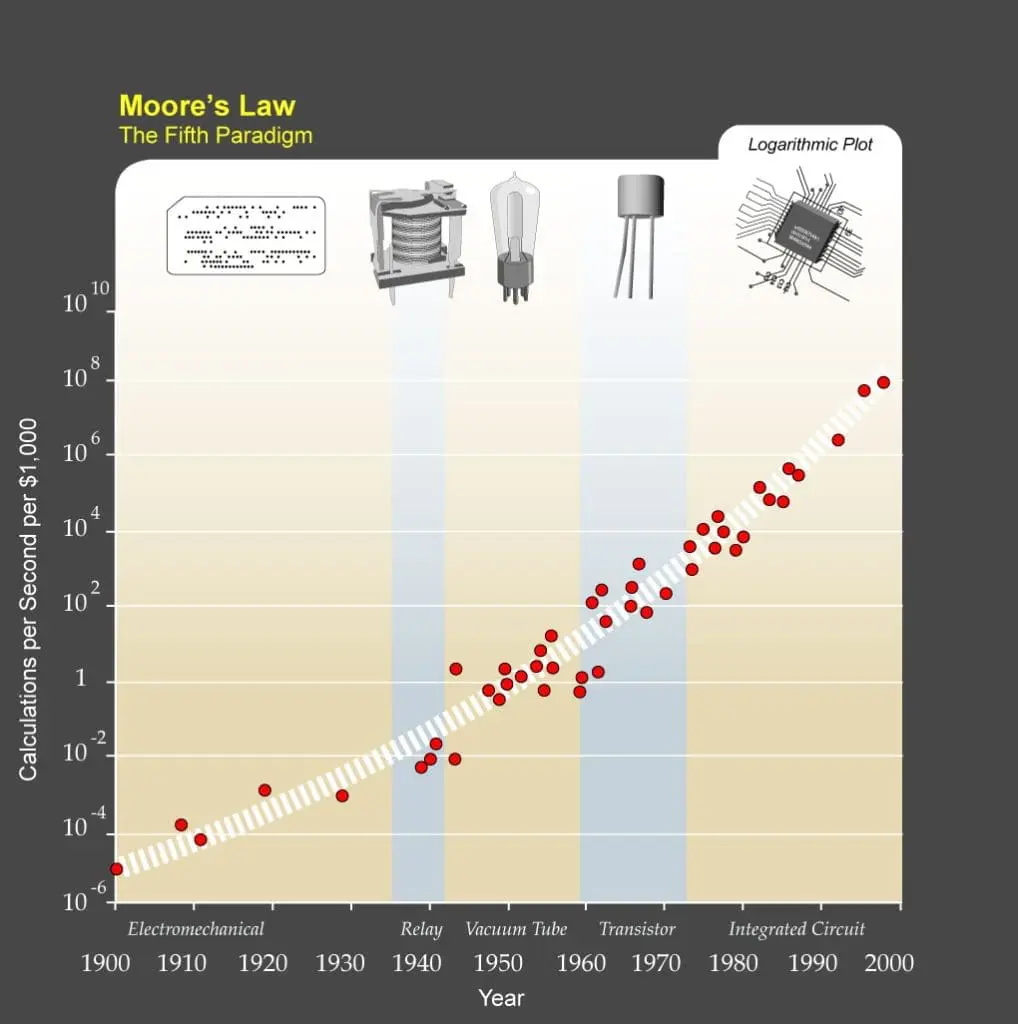
AI is one of the hottest tickets around. Clamoring for the latest GPU to compute inferences on the latest LLM (Large Language Model) model is almost mimetic. The world demands bigger and faster processors. The need for new technologies that offer benefits beyond classical computing is evident.
Some chip makers have suffered due to the launch of DeepSeek. Yet, one trend is hard to argue against: the need for more “compute.” The world needs more energy. Similarly, compute capacity remains much the same. This remains true even with innovations like DeepSeek. It required less powerful GPUs for training its model. It also needed less power to provide inferences.
Beyond the swipes at Quantum Computing from NVIDIA‘s CEO Jensen Huang, Quantum Computing has become markedly resilient. The debate continues about projected timelines for useful quantum computing. Meanwhile, actual companies are building better machines. These machines are supporting more qubits with better fidelity. More recently, Bill Gates has come out on nearer-term time horizons for useful or practical quantum computers.
Honeywell Restructure
Many will finally see the news that the conglomerate is embracing newer markets. The share price has barely moved in years. It has not benefited from the rise of AI or emerging technologies. The stock remains valued at around the same value as 4 years ago. Investors are not pricing in radical technologies like quantum, which Honeywell has in its stable.
Honeywell’s Three New Companies
Honeywell Automation
After completing the announced transactions, Honeywell Automation will lead the shift from automation to autonomy in the industrial sector. It expects $18 billion in revenue for 2024. The company will leverage its comprehensive portfolio of technologies. It will use software to drive productivity and digital transformation.
Honeywell Automation builds on its long-standing technological leadership. It leverages deep expertise and an extensive installed base. The company will serve a wide range of high-growth industries.
Honeywell Aerospace
Honeywell Aerospace provides technology and solutions for nearly all commercial and defense aircraft platforms. This includes propulsion, cockpit, navigation, and power systems. With $15 billion in expected revenue for 2024, the company will be one of the largest publicly traded aerospace suppliers. It leads to advancements in aviation through increased electrification and flight autonomy.
Advanced Materials
Honeywell’s Advanced Materials business will focus on sustainability. It will specialize in chemicals and materials. These include fluorine products, electronic materials, industrial fibers, and healthcare packaging. With nearly $4 billion in revenue, it offers innovative technologies like the low global warming Solstice® hydrofluoro-olefin (HFO). As a standalone company, it has a large domestic manufacturing base. It will gain from an optimized capital strategy. Additionally, it will have an attractive investment profile.
A New Direction for Quantinuum?
Honeywell’s decision to separate its business into standalone public companies by 2026 will likely influence Quantinuum’s strategic direction. This change will also affect its financial structure. Honeywell is a major shareholder of Quantinuum. It is also a financial backer. Quantinuum was formed through the merger of Honeywell Quantum Solutions and Cambridge Quantum in 2021.
The restructuring does not explicitly mention Quantinuum. However, Quantinuum is indirectly affected by its connection to Honeywell Automation. Changes in governance, investment priorities, and corporate strategy can impact.
The restructuring will also mean reassessing Honeywell’s long-term financial commitment to Quantinuum. If Honeywell decides to divest or reduce its stake, Quantinuum may need to seek alternative investors. They might also explore strategic partnerships to uphold their growth trajectory. The exact implications will become clearer. This clarity will occur as Honeywell finalizes the details of its corporate reorganization over the next two years.

Quantinuum IPO?
In July 2024, reports indicated that Honeywell was considering an initial public offering (IPO). They wanted an IPO for Quantinuum. They were seeking a valuation of approximately $10 billion. Recent reports do suggest that Honeywell is considering taking Quantinuum public. In January 2024, the company raised $300 million at a $5 billion pre‑money valuation. Bloomberg and other sources have analyzed the situation. They indicated that an IPO may aim for a valuation closer to $10 billion. Some estimates even suggest it could reach as high as $20 billion.
Honeywell “feels” rather like IBM. It, too, is a conglomerate. IBM has been aggressively pursuing quantum computing, getting its open source programming language, Qiskit, as the leader among quantum computer programmers. Will IBM also work to crystallize value from quantum computing by creating a separate division? Or will it prefer to keep the Halo effect showcasing IBM as an emerging technology leader?
No specific timeline has been established for a Quantinuum IPO. These developments suggest that Honeywell is actively exploring options to spin off Quantinuum. This move makes sense. There are strong market tailwinds. There has also been a rise in the number of quantum computing companies in the public markets.
Quantinuum has a strong technological foundation. It also has strategic industry partnerships. Furthermore, it has links to academics working in fields like QNLP with luminary scientists like Bob Coecke. The possibility of a high public valuation exists. An IPO could redefine Quantinuum’s growth trajectory. It could also transform the quantum industry as a whole. The company continues to achieve key milestones. It navigates its restructuring process. Investors and industry observers will keenly watch for the next steps toward public trading.
Quantum Zeitgeist does not provide personal investment or financial advice, or act as personal financial, legal, or institutional investment advisors, or individually advocate the purchase or sale of any security or investment or the use of any particular financial strategy. All investment strategies include the risk of loss for some or even all of your capital.
Before pursuing any financial strategies discussed or relying on information within this website, you should always consult with a licensed financial advisor. Any analysis we provide is for informational purposes only and does not take into consideration your circumstances or other factors that may be important in making decisions. It should not be considered an individualized recommendation or personalized investment advice. Any investment vehicles, stocks, or securities mentioned may not be suitable for all investors.




See today’s quantum computing news on Quantum Zeitgeist for the latest breakthroughs in qubits, hardware, algorithms, and industry deals.

Rusty Flint
Rusty is a quantum science nerd. He's been into academic science all his life, but spent his formative years doing less academic things. Now he turns his attention to write about his passion, the quantum realm. He loves all things Quantum Physics especially. Rusty likes the more esoteric side of Quantum Computing and the Quantum world. Everything from Quantum Entanglement to Quantum Physics. Rusty thinks that we are in the 1950s quantum equivalent of the classical computing world. While other quantum journalists focus on IBM's latest chip or which startup just raised $50 million, Rusty's over here writing 3,000-word deep dives on whether quantum entanglement might explain why you sometimes think about someone right before they text you. (Spoiler: it doesn't, but the exploration is fascinating)