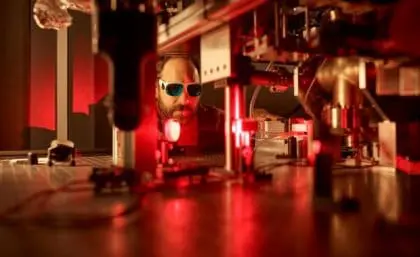
The University of Queensland has secured $29 million in funding to lead the development of quantum technologies, with a focus on tackling some of the world’s biggest challenges. The funding, provided through the Queensland Quantum and Advanced Technologies Strategy, will support 10 new projects at the university, including initiatives to help decarbonize industries, improve athlete performance, and diagnose concussion. According to UQ Vice-Chancellor and President Professor Deborah Terry, these projects position the university as an international leader in developing quantum knowledge.
One of the key projects is the Queensland Quantum Decarbonisation Alliance, led by Professor Warwick Bowen, which aims to use quantum technologies to reduce carbon emissions. Other projects include the development of a national quantum computing testbed facility, led by Associate Professor Arkady Fedorov, and a quantum-enabled low field magnetic resonance imaging system for high-performance sport, led by Associate Professor Craig Engstrom. The funding also includes 47 scholarships for postgraduate research students, ensuring the next generation of quantum experts are equipped to drive innovation in this field.
Quantum Evolution: University of Queensland Secures $29m Funding for 10 New Projects
The University of Queensland has taken a significant step forward in the development of quantum technologies, securing more than $29 million in funding through the Queensland Quantum and Advanced Technologies Strategy. This investment will support 10 new projects that aim to harness the power of quantum technology to address some of the world’s most pressing challenges.
One of the primary goals of these projects is to utilize quantum technologies to help with decarbonization, a critical step towards mitigating climate change. The Queensland Quantum Decarbonisation Alliance, led by Professor Warwick Bowen, will bring together partner organizations to find ways to reduce carbon emissions. This alliance aims to develop more sustainable energy and technologies, such as designing more efficient and stronger batteries, making green hydrogen more economically viable, and identifying critical minerals more easily.
In addition to decarbonization, the funded projects also focus on other areas, including computing, athlete performance, diagnosing concussion, and athlete drug tests. For instance, the National Quantum Computing Testbed Facility, led by Associate Professor Arkady Fedorov, will explore the potential of quantum computing to solve complex problems in various fields. The Queensland Photon Detector Characterisation Facility, led by Associate Professor Ebinazar Namdas, will develop advanced photon detectors that can be used in a range of applications, from medical imaging to environmental monitoring.
The University of Queensland’s Vice-Chancellor and President, Professor Deborah Terry AC, emphasized the significance of this funding, stating that it would ensure the university continues to be an international leader in developing quantum knowledge. “These projects put us in a strong position to develop technologies to have real impacts on the world’s biggest challenges in areas like health, pharmaceuticals, resources, and decarbonization,” Professor Terry said.
Quantum Technology: A Powerful Tool for Addressing Global Challenges
Quantum technology has the potential to add trillions of dollars to the global economy, according to Professor Warwick Bowen, Director of the ARC Centre of Excellence in Quantum Biotechnology. This technology uses the principles of quantum physics to achieve capabilities far exceeding what is otherwise possible. By harnessing the power of quantum technology, researchers can develop innovative solutions to some of the world’s most pressing challenges.
One area where quantum technology is expected to have a significant impact is in the development of more sustainable energy and technologies. For example, quantum computing and quantum sensing can be used to design more efficient and stronger batteries, making green hydrogen more economically viable. Additionally, quantum technology can be used to identify critical minerals more easily, which is essential for the production of renewable energy technologies.
Quantum technology also has the potential to revolutionize various fields, including medicine, sports, and environmental monitoring. For instance, the Quantum-Enabled Low Field Magnetic Resonance Imaging for High-Performance Sport project, led by Associate Professor Craig Engstrom, aims to develop a new imaging technique that can more accurately monitor athlete performance and diagnose concussion.
Developing the Next Generation of Quantum Experts
The funding also includes 47 scholarships for postgraduate research students under the Queensland Government’s Quantum and Advanced Technologies Talent Building Program. These scholarships will support the development of the next generation of quantum experts, who will be critical in driving the growth of this industry.
The scholarships include the Quantum and Advanced Technologies PhD Top-up Award, the Quantum and Advanced Technologies Global Talent Attraction PhD Scholarship, and the Quantum and Advanced Technologies Postgraduate Pipeline Scholarship. These awards will provide financial support to students pursuing research in quantum technology and related fields, enabling them to focus on their studies and contribute to the growth of this industry.
The Future of Quantum Technology: Opportunities and Challenges
The development of quantum technology is still in its early stages, but it can potentially transform various industries and address some of the world’s most pressing challenges. However, there are also challenges that need to be addressed, including the need for further research and development, as well as the requirement for highly specialized expertise.
Despite these challenges, the future of quantum technology looks promising. With continued investment in research and development and the growth of a skilled workforce, quantum technology is likely to play an increasingly important role in addressing global challenges. The University of Queensland’s funding announcement is a significant step forward in this journey, and it is expected to have a lasting impact on the development of quantum technology in Australia and beyond.
External Link: Click Here For More