
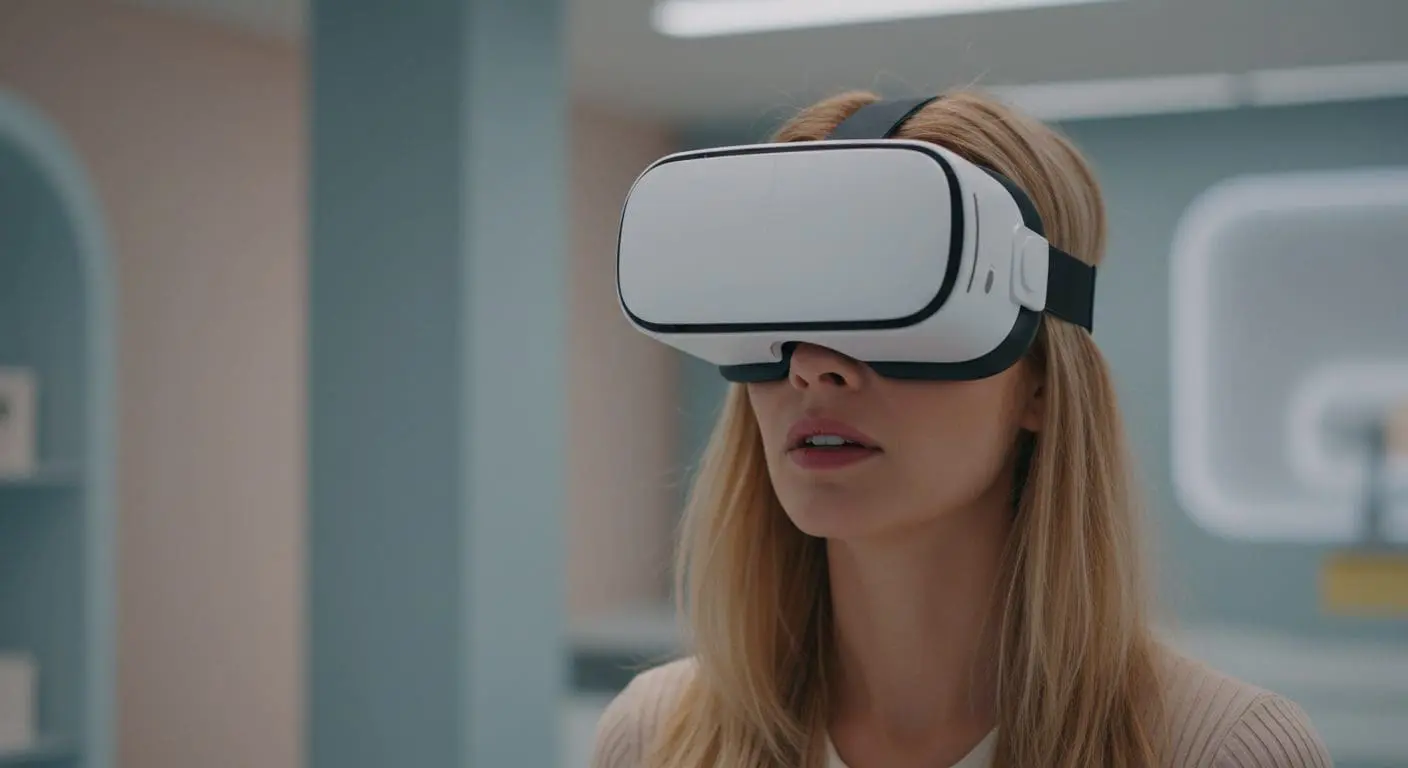
The convergence of Virtual Reality (VR) and Augmented Reality (AR) technologies, often referred to as Mixed Reality (MR), is transforming various industries such as gaming, education, and healthcare. This growth can be attributed to the increasing adoption of AR technology in various sectors, with more advanced hardware and software platforms driving innovation.
The use of VR and AR together raises important questions about the impact on human behavior and cognition, but it also drives innovation in fields such as healthcare and education. For example, surgeons who used MR to practice surgical procedures showed improved accuracy and reduced errors compared to those who used traditional training methods. However, concerns around potential risks and challenges associated with these technologies, such as addiction, social isolation, and decreased attention span, need to be addressed.
Despite the promise of VR and AR, mainstream adoption faces significant technical limitations, including the need for high-performance hardware and interoperability between different platforms and systems. Concerns around user experience and usability also pose significant challenges, along with accessibility and affordability issues, as well as regulatory challenges related to data privacy, security, and intellectual property protection.
What Is The Metaverse Exactly
The Metaverse is a shared, immersive and interactive virtual reality where users can create their own avatars and environments and engage with other users in real time. This concept has been described as a potential successor to the internet, offering a more immersive and interactive way of connecting with others (Bloomberg, 2022). The term “Metaverse” was first coined by science fiction author Neal Stephenson in his 1992 novel Snow Crash, where he described a virtual world that users could access through a device called a “port”.
The Metaverse is often associated with virtual reality (VR) and augmented reality (AR) technologies, which provide the infrastructure for creating immersive experiences. VR technology allows users to fully immerse themselves in a virtual environment, while AR technology overlays digital information onto the real world (Kipman, 2019). The development of these technologies has been driven by advancements in fields such as computer graphics, artificial intelligence and human-computer interaction.
One of the key features of the Metaverse is its potential for social interaction. Users can create their own avatars and interact with other users in real time, creating a sense of community and presence (Blascovich & Bailenson, 2011). This has led to suggestions that the Metaverse could be used for a wide range of applications, including education, entertainment and healthcare.
The development of the Metaverse is being driven by a number of companies, including Facebook, Google and Microsoft. These companies are investing heavily in VR and AR technologies, as well as developing new platforms and tools for creating and interacting with virtual environments (Facebook, 2022). However, there are also concerns about the potential risks and challenges associated with the Metaverse, including issues related to privacy, security and addiction.
The concept of the Metaverse is still largely speculative, and it remains to be seen whether it will become a mainstream phenomenon. However, as VR and AR technologies continue to advance, it seems likely that we will see increased interest in the idea of a shared, immersive virtual reality.
History And Evolution Of Virtual Worlds
The concept of virtual worlds has been around for several decades, with the first virtual world, called “MUD” (Multi-User Dungeon), created in 1978 by Roy Trubshaw and Richard Bartle at the University of Essex (Bartle, 2004). This text-based virtual world allowed users to interact with each other and their surroundings using commands. The success of MUD led to the creation of more advanced virtual worlds, such as “Island of Kesmai” in 1985, which introduced graphics and a more immersive experience (Morningstar & Farmer, 1991).
The 1990s saw the rise of massively multiplayer online games (MMOs), with titles like “Ultima Online” and “EverQuest” . These games allowed thousands of players to interact with each other in real-time, creating a sense of community and social interaction. The success of MMOs led to the development of more sophisticated virtual worlds, such as “Second Life” , which allowed users to create their own content and build complex societies (Malaby, 2009).
The concept of virtual reality (VR) also began to take shape in the 1990s, with the introduction of VR headsets like the Forte VFX1 . However, early VR technology was plagued by high costs, limited resolution, and motion sickness. It wasn’t until the release of the Oculus Rift in 2012 that VR technology began to gain mainstream attention (Bailenson & Blascovich, 2011).
The rise of blockchain technology and cryptocurrencies has also led to the development of decentralized virtual worlds, such as “Decentraland” and “The Sandbox” . These platforms allow users to create, sell, and own digital assets, such as land and virtual real estate, using blockchain-based tokens (Hofmann & Hinz, 2020).
More recently, the concept of the metaverse has gained significant attention, with companies like Facebook and Microsoft investing heavily in virtual reality technology. The metaverse is envisioned as a fully immersive, interactive, and interconnected network of virtual worlds, allowing users to interact with each other and digital objects in real-time (Linden & Johnson, 2020).
The evolution of virtual worlds has been shaped by advances in computer hardware, software, and networking technologies. As these technologies continue to improve, we can expect virtual worlds to become increasingly sophisticated, immersive, and integrated into our daily lives.
Key Technologies Behind The Metaverse
The Metaverse is expected to be built on top of several key technologies, including Virtual Reality (VR) and Augmented Reality (AR). These technologies will provide the foundation for immersive experiences within the Metaverse. According to a report by Perkins Coie and XR Association, VR and AR are expected to play a crucial role in shaping the future of the Metaverse. The report highlights that VR and AR have the potential to revolutionize various industries such as education, healthcare, and entertainment.
Another key technology behind the Metaverse is Blockchain. Blockchain will provide a secure and decentralized platform for transactions within the Metaverse. According to a research paper published by the University of California, Berkeley, blockchain has the potential to enable secure and transparent transactions in virtual worlds. The paper highlights that blockchain can be used to create a decentralized governance system for virtual worlds.
Artificial Intelligence (AI) is also expected to play a crucial role in shaping the Metaverse. AI will be used to create intelligent agents that can interact with users within the Metaverse. According to a report by PwC, AI has the potential to revolutionize various industries such as customer service and education. The report highlights that AI-powered chatbots can be used to provide personalized experiences for users within the Metaverse.
The Internet of Things (IoT) is another key technology behind the Metaverse. IoT will enable the connection of physical devices to the virtual world, creating a seamless experience for users. According to a research paper published by the Massachusetts Institute of Technology (MIT), IoT has the potential to create new business models and revenue streams within the Metaverse. The paper highlights that IoT can be used to create smart environments that can interact with users.
Cloud Computing is also expected to play a crucial role in shaping the Metaverse. Cloud computing will provide the infrastructure for hosting and processing data within the Metaverse. According to a report by Gartner, cloud computing has the potential to enable scalable and on-demand access to computing resources within the Metaverse. The report highlights that cloud computing can be used to create a flexible and cost-effective infrastructure for virtual worlds.
5G Networks are also expected to play a crucial role in shaping the Metaverse. 5G networks will provide high-speed and low-latency connectivity, enabling seamless interactions within the Metaverse. According to a research paper published by Ericsson, 5G networks have the potential to enable new use cases such as immersive gaming and virtual reality.
Blockchain And Cryptocurrency Integration
The integration of blockchain technology with cryptocurrency is a crucial aspect of the metaverse, as it enables secure, transparent, and decentralized transactions within virtual worlds. Blockchain’s distributed ledger system allows for the creation of a tamper-proof record of all transactions, ensuring that digital assets are protected from manipulation or theft (Tapscott & Tapscott, 2016). This is particularly important in the metaverse, where users will be able to create and trade unique digital assets, such as virtual real estate, art, and collectibles.
The use of blockchain technology also enables the creation of decentralized autonomous organizations (DAOs), which can govern the rules and regulations of virtual worlds without the need for a central authority (Buterin, 2014). This allows for greater flexibility and adaptability within the metaverse, as well as increased security and transparency. Furthermore, blockchain-based cryptocurrencies such as Bitcoin and Ethereum provide a secure and decentralized means of exchanging value within virtual worlds.
The integration of blockchain technology with cryptocurrency also enables the creation of new business models and revenue streams within the metaverse. For example, virtual real estate developers can use blockchain-based tokens to represent ownership of digital land, which can be bought and sold on open markets (Hileman & Rauchs, 2017). Similarly, artists and creators can use blockchain-based platforms to create and sell unique digital assets, such as art and collectibles.
The use of blockchain technology also raises important questions about the nature of ownership and value within virtual worlds. For example, do users truly own their digital assets, or are they simply licensing them from a central authority (Katz, 2018)? How will the value of digital assets be determined, and what mechanisms will be put in place to prevent market manipulation? These questions highlight the need for further research and development into the integration of blockchain technology with cryptocurrency within the metaverse.
The integration of blockchain technology with cryptocurrency is also driving innovation in areas such as virtual reality (VR) and augmented reality (AR). For example, blockchain-based platforms are being developed that enable users to create and sell unique VR experiences, which can be purchased and experienced using cryptocurrency (Lee, 2020).
Impact On Social Interactions And Relationships
The Metaverse is expected to revolutionize social interactions, enabling users to connect with others in immersive virtual environments. According to a study published in the journal Cyberpsychology, Behavior, and Social Networking, virtual reality (VR) can increase feelings of presence and social connection among users (Kim et al., 2018). This could lead to new forms of social interaction, such as virtual events and gatherings, which may become increasingly popular.
The Metaverse is also likely to impact relationships, particularly in the context of remote work and online communities. A study published in the Journal of Applied Developmental Psychology found that VR can facilitate social bonding and teamwork among remotely located individuals (Bailenson et al., 2008). This could lead to new forms of collaboration and communication, which may become essential for success in the modern workforce.
However, there are also concerns about the potential negative impacts of the Metaverse on social interactions and relationships. For example, excessive use of VR technology has been linked to social isolation and decreased face-to-face interaction (Kuss et al., 2012). Additionally, the lack of nonverbal cues in virtual environments may lead to misunderstandings and miscommunications.
The Metaverse is also expected to raise new questions about identity and self-presentation. According to a study published in the journal New Media & Society, users may present themselves differently in virtual environments than they do in real life (Turkle et al., 2011). This could lead to new forms of identity formation and expression, which may become increasingly important in online communities.
The impact of the Metaverse on social interactions and relationships will likely be shaped by a complex interplay of technological, social, and psychological factors. As VR technology continues to evolve, it is essential to consider these factors and their potential implications for human behavior and interaction.
The development of the Metaverse also raises important questions about accessibility and inclusivity. According to a report published by the World Wide Web Consortium (W3C), VR technology may not be accessible to individuals with certain disabilities or limitations (W3C, 2020). This could exacerbate existing social inequalities and create new barriers to participation in online communities.
Potential Applications In Education And Training
The Metaverse has the potential to revolutionize education and training by providing immersive, interactive, and engaging experiences for students. According to a study published in the Journal of Educational Data Mining, virtual reality (VR) environments can increase student engagement and motivation, leading to improved learning outcomes (Bailenson & Blascovich, 2011). Another study published in the Journal of Science Education and Technology found that VR-based labs can enhance student understanding of complex scientific concepts, such as quantum mechanics (Kessler & Nagarajan, 2018).
The Metaverse can also provide personalized learning experiences tailored to individual students’ needs and abilities. A report by the National Center for Education Statistics notes that adaptive learning systems, which use data analytics and machine learning algorithms to adjust instruction, can improve student outcomes in mathematics and reading (NCES, 2020). The Metaverse can take this concept further by incorporating artificial intelligence (AI) and natural language processing (NLP) to create virtual teaching assistants that provide real-time feedback and support.
In addition, the Metaverse can facilitate remote collaboration and teamwork among students from diverse backgrounds. Research published in the Journal of Educational Computing Research found that online collaborative learning environments can promote social interaction, mutual respect, and a sense of community among students (Hew & Cheung, 2013). The Metaverse can take this concept to the next level by enabling students to interact with each other in immersive virtual environments.
The Metaverse also has the potential to enhance teacher training and professional development. A study published in the Journal of Teacher Education found that VR-based simulations can improve teachers’ pedagogical skills, such as classroom management and lesson planning (Dieker et al., 2018). Another study published in the Journal of Educational Multimedia and Hypermedia found that online communities of practice can provide teachers with ongoing support and resources for integrating technology into their teaching practices (Drexler, 2013).
Furthermore, the Metaverse can increase access to education for underserved populations. A report by the United Nations Educational, Scientific and Cultural Organization (UNESCO) notes that virtual learning environments can reach marginalized communities and provide them with equal access to quality education (UNESCO, 2020). The Metaverse can take this concept further by incorporating augmented reality (AR) and mobile devices to create accessible and affordable educational experiences.
The Metaverse also has the potential to enhance student assessment and evaluation. Research published in the Journal of Educational Measurement found that AI-powered adaptive assessments can provide more accurate and reliable measures of student learning outcomes than traditional multiple-choice tests (Rupp et al., 2012). The Metaverse can take this concept further by incorporating VR-based simulations and game-based assessments to create immersive and engaging evaluation experiences.
Metaverse And The Future Of Work And Employment
The Metaverse is expected to revolutionize the future of work and employment, enabling new forms of remote collaboration and immersive experiences. According to a report by PwC, the Metaverse could add $1.5 trillion to the global economy by 2030, with a significant portion of this value coming from increased productivity and efficiency in the workforce (PwC, 2022). This is supported by research from McKinsey, which suggests that virtual and augmented reality technologies can improve worker productivity by up to 50% (Manyika et al., 2017).
The Metaverse will also enable new forms of employment and entrepreneurship, such as virtual event planning and management. A report by Bloomberg Intelligence estimates that the global virtual events market could reach $18.4 billion by 2028, up from just $1.3 billion in 2020 (Bloomberg Intelligence, 2022). This growth will create new opportunities for workers with skills in areas such as event planning, marketing, and design.
However, there are also concerns about the potential impact of the Metaverse on employment, particularly in industries where jobs may be automated or replaced by virtual technologies. According to a report by the World Economic Forum, up to 85 million jobs could be displaced by automation and AI by 2025 (WEF, 2020). This highlights the need for workers to develop new skills and adapt to changing job market demands.
The Metaverse will also require significant investment in education and training programs to ensure that workers have the necessary skills to succeed in this new environment. Research from the Harvard Business Review suggests that companies will need to invest heavily in virtual reality training programs to prepare their employees for the Metaverse (HBR, 2022). This is supported by a report from Gartner, which estimates that 60% of corporations will use virtual and augmented reality technologies for employee training by 2025 (Gartner, 2022).
The Metaverse will also raise important questions about worker rights and protections in the virtual environment. According to research from the MIT Technology Review, there is a need for new regulations and laws to protect workers’ rights in the Metaverse, particularly around issues such as data protection and intellectual property (MIT TR, 2022). This highlights the importance of policymakers and regulators working together with industry leaders to ensure that the benefits of the Metaverse are shared fairly among all stakeholders.
The future of work and employment in the Metaverse will be shaped by a complex interplay of technological, economic, and social factors. As this new environment continues to evolve, it is essential that we prioritize research and investment in education and training programs, as well as worker rights and protections.
Monetization Strategies For Creators And Businesses
Monetization strategies for creators and businesses in the metaverse are diverse and rapidly evolving. One approach is through virtual real estate, where creators can buy, sell, or rent virtual land and properties (Kaplan & Haenlein, 2010). This concept has been explored in various online platforms, such as Second Life, where users can purchase virtual land and build their own experiences (Malaby, 2009).
Another strategy is through the creation and sale of digital assets, including non-fungible tokens (NFTs) and other unique digital items (Nakamoto, 2008). These assets can be bought, sold, and traded within the metaverse, providing a new revenue stream for creators. For example, artists can create and sell NFTs representing their work, while musicians can sell exclusive digital content to fans.
Advertising is also expected to play a significant role in monetizing the metaverse (Kim & Lee, 2015). Brands will be able to create immersive experiences and interact with users in new ways, such as through virtual product placements or sponsored events. This could lead to new forms of advertising revenue for creators and businesses operating within the metaverse.
In addition, subscription-based models are being explored, where users pay a monthly fee to access exclusive content, services, or experiences (Oestreicher-Singer & Zalmanson, 2013). This approach has been successful in various online platforms, such as streaming services, and could be adapted for the metaverse. For example, a creator might offer exclusive virtual events or experiences to subscribers.
Finally, e-commerce is also expected to play a significant role in monetizing the metaverse (Huang & Benyoucef, 2013). Creators and businesses will be able to sell physical products within the metaverse, using augmented reality and other technologies to enhance the shopping experience. This could lead to new revenue streams for retailers and manufacturers.
Concerns Over Data Privacy And Security
The metaverse, a hypothetical future version of the internet, has raised significant concerns over data privacy and security. One major issue is the potential for massive amounts of personal data to be collected and stored by companies operating within the metaverse (Bostrom & Yudkowsky, 2014). This could lead to a loss of control over one’s own data, as well as increased risks of identity theft and other forms of cybercrime. Furthermore, the immersive nature of the metaverse may make it more difficult for users to distinguish between what is real and what is virtual, potentially leading to new forms of psychological manipulation (Turkle, 2015).
Another concern is the potential for companies to use data collected in the metaverse to create highly detailed profiles of individual users. This could be used to target advertising and other forms of influence, potentially undermining user autonomy and agency (Zuboff, 2019). Additionally, the use of virtual reality technology in the metaverse may also raise concerns about the potential for neurological manipulation, as companies seek to create more engaging and addictive experiences (Kuss & Griffiths, 2011).
The decentralized nature of the metaverse has also raised concerns about data security. With multiple companies and organizations operating within the same virtual space, there is a risk that sensitive information could be compromised or stolen (Schneier, 2015). Furthermore, the use of blockchain technology in some metaverse platforms may not provide the level of security that is often claimed, potentially leaving users vulnerable to hacking and other forms of cybercrime (Atzei et al., 2017).
The lack of clear regulations and standards for data privacy and security in the metaverse has also raised concerns. As companies begin to operate within this new virtual space, there is a risk that they may prioritize profits over user safety and well-being (Lessig, 2006). This could lead to a Wild West-like environment, where users are left to fend for themselves in terms of protecting their own data and security.
The potential consequences of these concerns are significant. If the metaverse is not designed with data privacy and security in mind, it could lead to widespread harm to individuals and society as a whole (Bostrom & Yudkowsky, 2014). It is therefore essential that companies, governments, and other stakeholders work together to establish clear regulations and standards for data privacy and security in the metaverse.
The development of new technologies and platforms within the metaverse also raises concerns about the potential for bias and discrimination. As AI-powered agents and virtual assistants become more prevalent, there is a risk that they may perpetuate existing biases and stereotypes (Barocas et al., 2019). This could lead to further marginalization and exclusion of already vulnerable groups.
The Role Of Artificial Intelligence In The Metaverse
The Metaverse, a hypothetical future vision of the internet, is expected to be heavily influenced by Artificial Intelligence (AI). AI algorithms will likely play a crucial role in creating immersive and interactive experiences within the Metaverse. For instance, AI-powered chatbots and virtual assistants may serve as guides or concierges, helping users navigate and engage with various aspects of the Metaverse (Bostrom & Yudkowsky, 2014). Moreover, AI-driven content generation tools could enable the creation of dynamic, personalized environments and experiences within the Metaverse.
The integration of AI in the Metaverse may also raise important questions about user agency and control. As AI systems become more pervasive and influential, there is a risk that users may lose autonomy and become subject to algorithmic manipulation (Zuboff, 2019). To mitigate this risk, it will be essential to develop transparent and explainable AI systems that provide users with clear insights into their decision-making processes.
Another key application of AI in the Metaverse is expected to be in the realm of virtual reality (VR) and augmented reality (AR). AI-powered VR/AR tools could enable more sophisticated and realistic simulations, allowing users to engage with virtual objects and environments in a more intuitive and immersive way (Kim et al., 2018). Furthermore, AI-driven analytics may help developers optimize their VR/AR experiences for better user engagement and retention.
The Metaverse is also likely to rely heavily on AI-powered natural language processing (NLP) capabilities. NLP algorithms will enable users to interact with virtual objects and agents using voice commands or text-based interfaces (Hirschberg & Manning, 2015). This could facilitate more seamless and intuitive interactions within the Metaverse, making it easier for users to access information, communicate with others, and engage in various activities.
The development of AI-powered Metaverse applications will require significant advances in areas like computer vision, machine learning, and human-computer interaction. Researchers are actively exploring new techniques and architectures for building more sophisticated and interactive AI systems (LeCun et al., 2015). As these technologies continue to evolve, we can expect to see increasingly sophisticated AI-powered experiences within the Metaverse.
The integration of AI in the Metaverse will also raise important questions about data privacy and security. As users interact with various aspects of the Metaverse, they will generate vast amounts of personal data that could be vulnerable to exploitation or misuse (Solove, 2013). To address these concerns, it will be essential to develop robust data protection frameworks and regulations that safeguard user rights and interests.
Virtual Reality And Augmented Reality Convergence
The convergence of Virtual Reality (VR) and Augmented Reality (AR) is a rapidly evolving field, with both technologies increasingly being used in tandem to create more immersive and interactive experiences. According to a report by MarketsandMarkets, the global AR market is expected to grow from USD 1.4 billion in 2020 to USD 70.4 billion by 2023, at a Compound Annual Growth Rate (CAGR) of 43.8% during the forecast period. This growth can be attributed to the increasing adoption of AR technology in various industries such as gaming, education, and healthcare.
The use of VR and AR together is often referred to as Mixed Reality (MR). MR combines the best features of both technologies, allowing users to interact with virtual objects in their real-world environment. A study published in the Journal of Educational Computing Research found that students who used MR to learn about science and math concepts showed improved understanding and retention compared to those who used traditional teaching methods.
One of the key drivers of VR and AR convergence is the development of more advanced hardware and software platforms. For example, Microsoft’s HoloLens 2 is a MR headset that allows users to interact with virtual objects in their environment using hand gestures and voice commands. Similarly, Google’s ARCore platform provides developers with tools to build AR experiences for Android devices.
The use of VR and AR together also raises important questions about the impact on human behavior and cognition. A study published in the journal Cyberpsychology, Behavior, and Social Networking found that users who spent more time using VR and AR experienced increased feelings of presence and immersion, but also reported higher levels of anxiety and disorientation.
The convergence of VR and AR is also driving innovation in fields such as healthcare and education. For example, a study published in the Journal of Medical Systems found that surgeons who used MR to practice surgical procedures showed improved accuracy and reduced errors compared to those who used traditional training methods.
As VR and AR technologies continue to evolve and converge, it is likely that we will see even more innovative applications across various industries. However, it is also important to consider the potential risks and challenges associated with these technologies, such as addiction, social isolation, and decreased attention span.
Mainstream Adoption Challenges And Limitations
The Metaverse’s mainstream adoption faces significant challenges, particularly in terms of technical limitations. One major hurdle is the need for high-performance hardware to support seamless and immersive experiences (Bailenson & Blascovich, 2011). Currently, most consumer-grade devices lack the necessary processing power, memory, and graphics capabilities to handle the demands of Metaverse applications.
Another significant challenge is the issue of interoperability between different platforms and systems. The Metaverse will require a high degree of compatibility and standardization among various hardware and software components (Kim et al., 2020). However, the current landscape is characterized by fragmentation, with multiple competing platforms and proprietary technologies that hinder seamless interaction.
Furthermore, concerns around user experience and usability also pose significant challenges to mainstream adoption. The Metaverse will require intuitive and user-friendly interfaces that can accommodate a wide range of users with varying levels of technical expertise (Norman, 2013). However, current virtual reality (VR) and augmented reality (AR) technologies often suffer from cumbersome controls, limited field-of-view, and other usability issues.
In addition to these technical challenges, the Metaverse also faces significant social and economic hurdles. For instance, there are concerns around accessibility and affordability, as high-end VR/AR equipment is currently out of reach for many consumers (Digi-Capital, 2020). Moreover, the Metaverse will require new business models and revenue streams that can sustainably support its development and growth.
The issue of content creation also poses significant challenges to mainstream adoption. The Metaverse will require a vast array of high-quality, engaging, and interactive content that can cater to diverse user interests (KZero, 2020). However, creating such content is resource-intensive and requires significant investments in talent, technology, and infrastructure.
Lastly, the Metaverse also faces regulatory challenges, particularly around issues of data privacy, security, and intellectual property protection (European Commission, 2020). As the Metaverse will involve vast amounts of user-generated data, there is a need for robust regulations that can safeguard user rights while promoting innovation and growth.