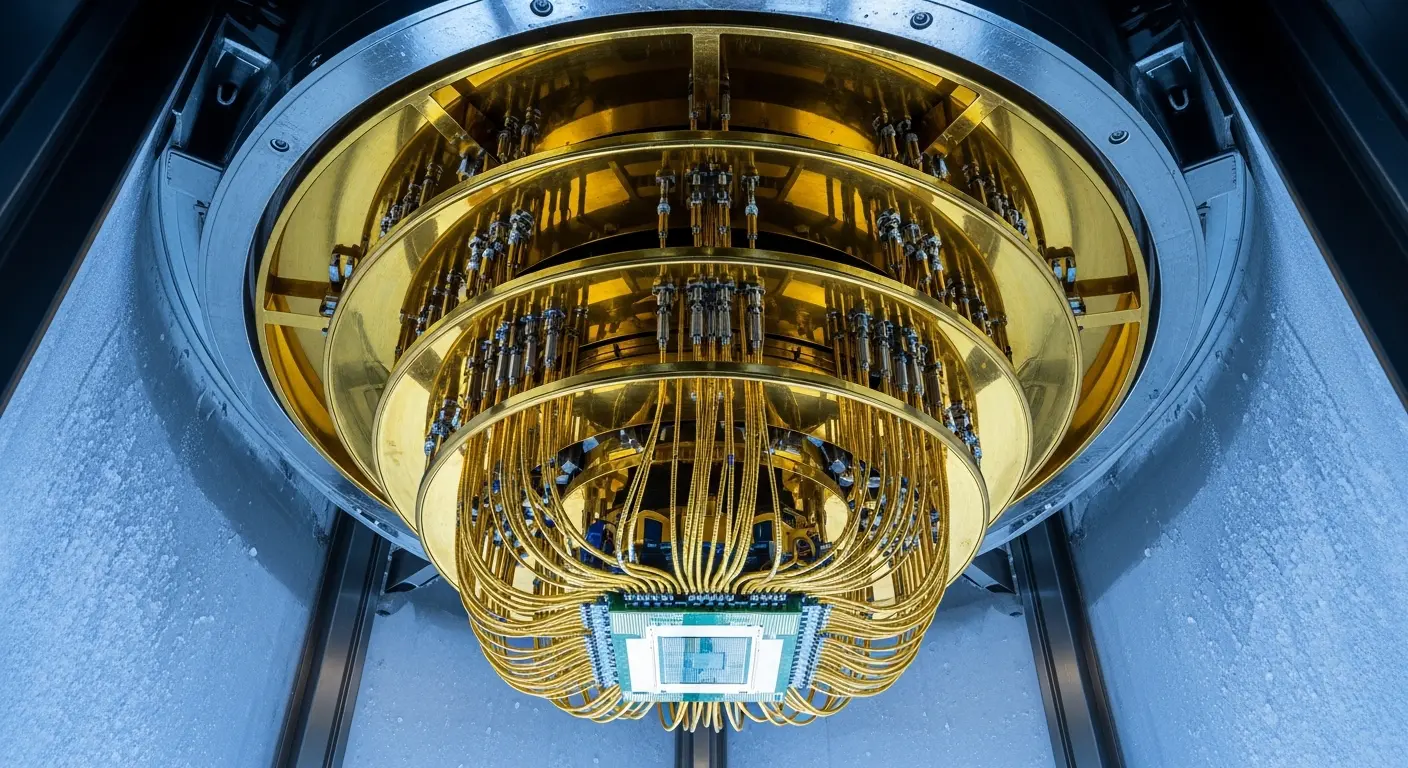
Shenzhen-based quantum computing company SpinQ has secured nearly 1 billion yuan in funding over the last three months, completing a Series C+ round of 600 million yuan combined with the Series C round completed three months prior. This substantial investment signals a significant step toward the industrialization of quantum computing, as SpinQ distinguishes itself by achieving profitability while many competitors remain in the research and development phase. Founded in 2018, the high-tech enterprise boasts full-stack research capabilities, spanning quantum chip design to algorithm application, with over 70% of its personnel dedicated to research and development. SpinQ has already deployed its nuclear magnetic resonance quantum computer product line in over 200 universities and research institutions globally and recently delivered its first superconducting quantum computer to overseas markets, demonstrating its “whole-machine engineering capabilities.”
SpinQ Secures 1 Billion Yuan in Series C+ Funding
This influx of capital positions SpinQ as a leading commercial entity in a field still largely dominated by research institutions and signals growing investor confidence in the potential for near-term quantum applications. The financing round attracted investment from Cornerstone Capital, Guotai Junan Innovation Investment, Zhejiang Caitong Capital, Sichuan Zhenxing Group, Chengdu Tianchuang Investment, Yida Capital, and Huaqiang Capital, demonstrating broad market interest in the company’s trajectory. SpinQ’s order volume increased by 80% in the first quarter of this year, and performance is expected to double for the whole year, with superconducting-related business increasing from about 60% to 65% of revenue.
CEO Xiang Jingen projects that economic benefits from quantum computing are within reach, stating, “I think we should be able to see it within three years.” He anticipates initial applications in areas like drug molecule screening, new material research, and catalyst design, where quantum computers excel at solving quantum mechanical equations. When asked about the choice of superconducting technology, Jingen explained, “Overall, the superconducting route still leads in terms of performance,” citing the successes of Google and IBM and its compatibility with existing semiconductor manufacturing processes.
Full-Stack R&D: Chip Design to Algorithm Application
SpinQ distinguishes itself within the rapidly evolving quantum computing sector through a deliberate strategy of vertically integrated research and development, encompassing every stage from foundational chip design to practical algorithm application. Unlike many competitors still focused on fundamental research, SpinQ has prioritized translating laboratory advancements into commercially viable products, a focus reflected in its recent Series C+ financing round which raised 600 million yuan, combined with the Series C round completed three months prior, totaling nearly 1 billion yuan. This financial backing underscores a shift toward tangible outcomes within a field often characterized by long development timelines and uncertain returns. The company’s full-stack approach is anchored by a core team drawn from leading institutions including Tsinghua University, Peking University, and Harvard University, with research and development personnel comprising over 70% of its workforce.
This internal expertise allows SpinQ to maintain control over the entire production process, from initial chip design and tape-out to final packaging and testing; the company has established “its own quantum chip laboratory and has the full-chain capabilities,” according to company statements. This is particularly evident in its choice to pursue the superconducting route, which, as CEO Xiang Jingen explains, “is highly compatible with the traditional semiconductor industrial system, allowing us to make full use of the existing industrial system and avoid reinventing the wheel.” SpinQ currently supports two distinct product lines: compact nuclear magnetic resonance quantum computers for educational purposes deployed in over 200 universities and research institutions globally, and more advanced superconducting systems targeting cutting-edge research and industrial applications. The company expects the number of quantum bits in its systems to double annually, fueled by ongoing investment in chip processing and testing equipment.
I think we should be able to see it within three years. In terms of application scenarios, the industry generally agrees that it is related to computational problems in the microscopic world, such as drug molecule screening, new material R & D, and catalyst design.
NMR & Superconducting Quantum Computer Product Lines
This influx of capital supports the company’s dual-track approach to quantum computing, centered around both nuclear magnetic resonance (NMR) and superconducting technologies, allowing it to address distinct segments of the emerging market. The company’s NMR quantum computer product line serves universities and research institutions, providing a compact, accessible platform for quantum computing education and foundational studies, and has been deployed in over 200 institutions globally, forming a stable revenue base. Founder and CEO Xiang Jingen said, “We have always maintained an iterative rhythm of doubling performance for the whole year, and this goal remains unchanged,” outlining plans to invest the new funding in upgrading chip processing and testing equipment.
Superconducting Route Prioritized for Industrial Compatibility
SpinQ’s rapid ascent in the quantum computing arena is increasingly anchored by a deliberate focus on superconducting technology, a strategy that prioritizes near-term industrial application over purely theoretical advancements. This commitment isn’t simply a matter of technological preference; it’s a calculated move to leverage existing infrastructure and accelerate commercial viability. This focus on practical engineering is already yielding results, as the proportion of SpinQ’s business related to superconducting technology has increased from about 60% to 65%, becoming a primary driver of growth.