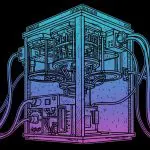
SEEQC has demonstrated the first quantum computer with fully integrated, on-chip qubit control operating at millikelvin temperatures, a development validated by a peer-reviewed study published in Nature Electronics. This achievement addresses a critical challenge in scaling superconducting quantum computing by integrating digital control circuits directly with the quantum chip itself, moving beyond the limitations of connecting ultra-cold qubits to room-temperature electronics. The company’s architecture utilizes digital multiplexing to control multiple qubits through shared pathways, reducing wiring complexity and thermal load. “Quantum computing progress has largely focused on improving individual qubits,” said Dr. Shu-Jen Han, Chief Technology Officer of SEEQC and corresponding author of the study; “Our results show that digital qubit control logic can operate at millikelvin temperatures alongside the qubits themselves.” This integration establishes a path toward building quantum systems with the manufacturability and density of modern integrated circuits.
Integrated Digital Control Validated at Millikelvin Temperatures
This achievement tackles a fundamental challenge in superconducting quantum computing: the immense complexity of connecting room-temperature control electronics to qubits requiring near-absolute zero operation. Current systems rely on thousands of individual control lines, creating substantial wiring density, thermal load, and engineering hurdles. SEEQC’s approach, utilizing chip-to-chip bonding, integrates superconducting digital control circuits directly alongside the qubits, dramatically reducing the need for extensive wiring. Researchers constructed and tested a five-qubit processor alongside a control chip within a dilution refrigerator at 10 millikelvin, generating control signals locally using Single Flux Quantum (SFQ) digital pulses. Standard quantum benchmarking experiments confirmed that the digital control electronics did not degrade qubit performance, demonstrating gate fidelity and low power dissipation. “This publication validates digital charge control at millikelvin temperatures, which is a foundational step,” added Shu-Jen Han, PhD. By moving control functions into the cryogenic environment, SEEQC aims to engineer quantum systems with the integration density and scalability characteristic of modern integrated circuits.
Five-Qubit Processor Demonstrates Single Flux Quantum Logic
The pursuit of scalable quantum computing has largely centered on refining the qubits themselves, but a fundamental challenge remains: controlling those qubits as system complexity increases. Superconducting quantum computers currently rely on extensive room-temperature electronics connected to qubits via thousands of individual control lines, a configuration that introduces significant thermal and engineering hurdles. SEEQC has taken a different approach, recently demonstrating the first full-stack quantum computing system with digital superconducting logic for qubit control operating reliably at millikelvin temperatures, the same frigid environment as the qubits. This architecture utilizes digital multiplexing, allowing multiple qubits to be managed through shared pathways, drastically reducing the need for dedicated control lines. The system, tested at 10 millikelvin, demonstrated gate fidelity, low signal crosstalk, and minimal power dissipation. SEEQC’s work establishes a pathway for building quantum computers with the integration density and manufacturability characteristic of classical semiconductor technology, bringing the field closer to practical, scalable quantum infrastructure.
Our next milestones include integrating digital flux control and digital qubit readout directly on die, enabling a more fully integrated and scalable quantum system architecture.
Shu-Jen Han, PhD.
Scalable Architecture Reduces Wiring & Thermal Load
SEEQC is addressing a fundamental bottleneck in quantum computing: the sheer complexity of connecting control systems to qubits. The current paradigm of connecting qubits via extensive wiring creates significant challenges as systems scale, increasing thermal load and engineering complexity. SEEQC’s approach utilizes chip-to-chip bonding to integrate superconducting digital control directly onto the quantum chip, operating within the same cryogenic environment. This allows for digital multiplexing, controlling multiple qubits through shared pathways and dramatically reducing the need for a dedicated control line for each qubit. Standard quantum benchmarking experiments confirmed performance comparable to existing systems, while significantly reducing heat and complexity. The implications extend beyond simply shrinking the physical footprint; it’s a crucial step toward manufacturable, scalable quantum computing infrastructure.
The implementation of Single Flux Quantum (SFQ) logic is crucial to this architectural leap. SFQ circuits operate by manipulating discrete quanta of magnetic flux, naturally generating robust, low-power pulses suited for the millikelvin environment. Unlike traditional room-temperature digital electronics that rely on continuous voltage swings, SFQ pulse generation minimizes parasitic capacitance and electromagnetic interference, ensuring that the control signals themselves do not introduce decoherence channels that could degrade the fragile quantum states of the qubits.
Furthermore, the adoption of digital multiplexing vastly improves system density beyond simply reducing wiring count. By routing multiple control signals through shared, low-bandwidth superconducting lines, the system fundamentally changes the wiring topology from a point-to-point connection to a highly integrated bus structure. This design allows for the systematic addressing of large arrays of qubits without requiring an exponential increase in physical control wiring, thereby circumventing the geometric limits imposed by current cryogenic cabling.
A key technical consideration for scaling this architecture is mitigating inter-qubit crosstalk. As the density of control circuitry increases, adjacent superconducting elements can electromagnetically interfere with neighboring qubits or control lines. SEEQC’s localized integration aims to manage this by carefully designing the coupling and filtering elements within the control chip, allowing the readout and control functions to coexist on the same substrate while maintaining sufficient isolation to preserve high gate fidelity.
By integrating superconducting digital control with the quantum processor, we establish a path toward quantum systems engineered and scaled more like modern integrated circuits.
Dr. Shu-Jen Han, Chief Technology Officer of SEEQC