Reconciling the seemingly disparate worlds of classical and quantum physics remains a central challenge in modern science, and a growing body of work suggests classical mechanics emerges as an effective theory from the quantum realm. Gabriel H. S. Aguiar and George E. A. Matsas, both from Universidade Estadual Paulista, recently challenged this assumption, proposing that quantum mechanics should not be considered reliable when describing the centre of mass of systems significantly more massive than the Planck mass. Building on this work, they now demonstrate that their model, which accounts for gravitational self-decoherence and the classical behaviour of massive objects, does not preclude macroscopic systems from exhibiting internal quantum vibrations, a phenomenon confirmed by laboratory observations. This achievement establishes a crucial link between the quantum and classical worlds, revealing how quantum behaviour can persist within macroscopic objects despite their classical centre of mass, and offers new insights into the foundations of physics.
Effective theory arises from quantum mechanics. Recent research challenges the conventional view, arguing that quantum mechanics may not fully describe the centre of mass of systems with masses significantly larger than the Planck mass. Scientists proposed a gravitational self-decoherence model, explaining how the centre of mass of quantum systems transitions to classical behaviour for masses approaching the Planck mass. This work demonstrates that the model allows macroscopic systems, possessing classical centres of mass, to maintain quantum coherence in their internal vibrations, consistent with laboratory observations. Reconciling quantum and classical descriptions of the micro and macro realms remains a central challenge in physics.
Massive Object Superpositions Test Quantum Gravity
Scientists are actively testing the boundaries between quantum mechanics and gravity by creating quantum superpositions of increasingly massive objects. This research explores gravitational decoherence, the idea that gravity itself can cause quantum systems to lose their superposition and behave classically. By observing how quickly gravity induces decoherence, researchers aim to test theories of quantum gravity. Experimental physicists are pushing the limits of what’s possible, employing techniques such as levitating nanoparticles using electromagnetic traps, cooling these particles to minimize external disturbances, and creating superpositions using sophisticated interferometry.
A central focus is increasing the mass of the objects used, driving towards larger and larger systems to amplify the subtle effects of gravitational decoherence. Recent experimental breakthroughs demonstrate remarkable progress in this field. The field is advancing rapidly, with multiple experimental approaches increasing the likelihood of success. Significant technical challenges remain, including isolating nanoparticles from environmental noise and maintaining stable superpositions long enough for precise measurements. However, successful experiments could provide the first direct evidence of quantum gravity effects, revolutionizing our understanding of the universe.
Quantum Coherence in Macroscopic Vibrational Modes
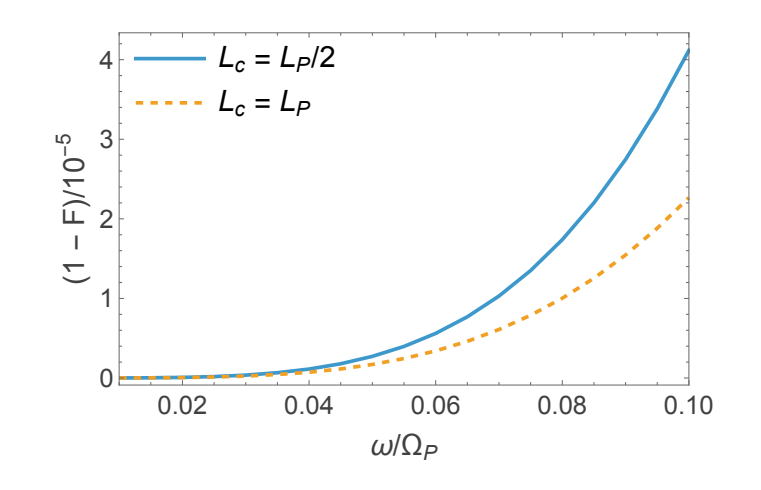
Researchers have demonstrated that macroscopic systems, even with classical centres of mass, can sustain quantum coherence in their internal vibrations, aligning with all current experimental observations. Scientists explored a gravitational self-decoherence model, predicting how the centre of mass of systems transitions to classical behaviour for masses exceeding the Planck mass. Experiments revealed that internal vibration modes with frequencies much smaller than the Planck frequency effectively behave according to quantum mechanics, regardless of the system’s mass, even exceeding the Planck mass. The team measured the fidelity between a normal mode and its ground state, finding minimal deviations from unity for these frequencies.
The data confirms high fidelity, indicating sustained quantum coherence even in macroscopic systems. These findings validate previous conclusions and align with recent experiments preparing superpositions of coherent states with frequencies much smaller than the Planck frequency in systems with masses comparable to the Planck mass. The research confirms that the model does not prevent macroscopic systems from exhibiting quantum behaviour in their internal vibrations, a crucial step in understanding the boundary between the quantum and classical realms. Future research aims to demonstrate that the centre of mass of isolated systems with masses greater than or equal to the Planck mass cannot be placed in spatial superposition, a significant experimental challenge that advancements in quantum technologies may soon address.
Gravitational Decoherence Permits Macroscopic Quantum Vibrations
This research successfully demonstrates the compatibility of a gravitational self-decoherence model with experimental observations of macroscopic systems exhibiting quantum coherence in their internal vibrations. The current study verifies that this model does not preclude the observed quantum behaviour of internal vibrations within macroscopic objects, aligning with existing experimental results. The team’s findings support the idea that while our current description of spacetime may require modification at the Planck scale, it does not invalidate the quantum mechanical behaviour of systems we observe in the laboratory. Specifically, the research confirms that even large objects can maintain quantum coherence in their internal vibrations, even as their centre of mass undergoes classical behaviour. The authors acknowledge that a crucial test of their proposal involves demonstrating the inability to place isolated systems larger than the Planck mass into spatial superposition, a significant experimental challenge. However, they express optimism that advancements in quantum technologies may soon make this test feasible.
🗞 Quantum internal vibrations in macroscopic systems with classical centers of mass
🧠 ArXiv: https://arxiv.org/abs/2509.22429