
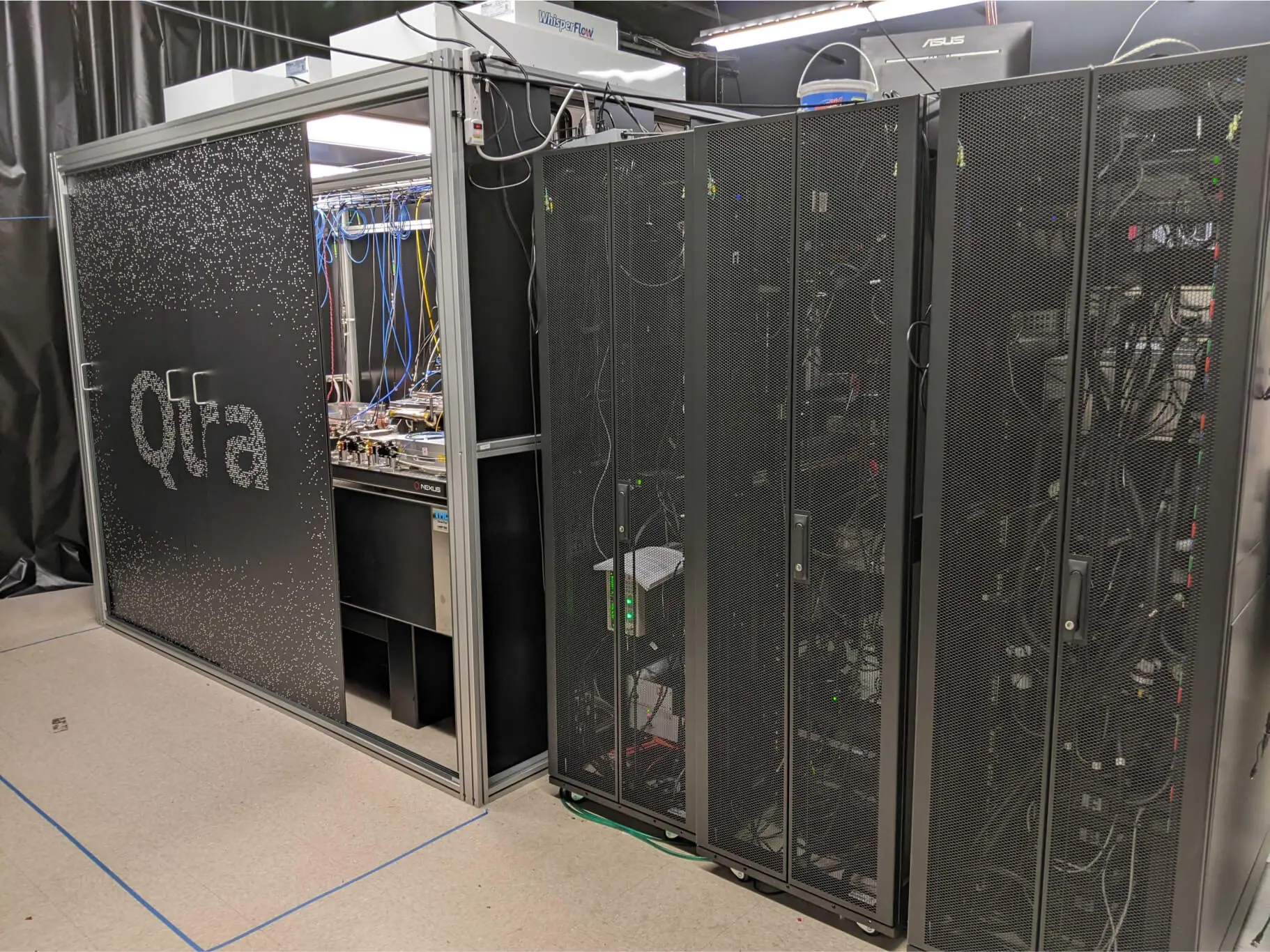
Quantum Machines and QuEra Computing have won a grant from the Israel-U.S. Binational Industrial Research and Development (BIRD) Foundation. The award will fund joint development of a photonic control unit (PCU) to boost the computational power of quantum computers. QuEra, known for its neutral atom computing platform, and Quantum Machines, which provides advanced quantum control solutions, will integrate the PCU into their quantum computers. The PCU could also be used in quantum sensors and communications devices. Alex Keesling, CEO of QuEra, and Itamar Sivan, CEO of Quantum Machines, both expressed excitement about the collaboration and its potential to advance quantum computing.
Quantum Machines and QuEra Computing Receive BIRD Foundation Award
Quantum Machines, a company that provides quantum control solutions, and QuEra Computing, a company specialising in neutral-atom quantum computing, have been awarded an innovation grant from the Israel-U.S. Binational Industrial Research and Development (BIRD) Foundation. The grant is for the joint development of a photonic control unit (PCU) aimed at significantly enhancing the computational power of quantum computers.
QuEra’s Aquila-class Quantum Computers
QuEra Computing launched a neutral atom computing platform for public use on a large public cloud service in November 2022. The company’s Aquila-class quantum computers are 256-qubit devices. They are built around a highly flexible programmable geometry approach that features a unique combination of system size, coherence, and an innovative analog quantum processing mode. This combination provides new ways to solve machine learning, optimisation, and simulation problems.
Quantum Machines’ Advanced Quantum Controller
Quantum Machines offers the OPX1000, an advanced quantum controller that excels in key performance metrics, including feedback capabilities, runtime, analog performance, and channel density. The OPX1000 incorporates a unique Pulse Processor Unit (PPU) that integrates classical processing and control flow at the heart of a quantum control system. This allows the implementation of complex quantum error corrections and error mitigation in real-time. The solution supports the need for managing increasing qubit counts in a way that is both economical and efficient.
Joint Development of the Photonic Control Unit (PCU)
The joint development of the PCU is based on QuEra’s advanced photonic microchips with co-designed optical peripherals driven by high-speed analog controllers from Quantum Machines. The PCU will be integrated into QuEra’s quantum computers and in Quantum Machines testing facilities and product lines. The PCU could also address ions, NV centers, and optically addressable spin qubits, allowing for scaling up optically driven systems. It will provide significant value to other quantum market segments utilising lasers, including quantum computer manufacturers, quantum sensors, and communications devices.
About the BIRD Foundation
The BIRD (Binational Industrial Research and Development) Foundation encourages and facilitates cooperation between U.S. and Israeli companies in a wide range of technology sectors and offers funding to selected projects. The Foundation supports projects without receiving any equity or intellectual property rights from the participating companies or the projects themselves. BIRD funding is repaid as royalties from sales of products that were commercialised because of BIRD support. The Foundation provides funding of up to 50% of a project’s budget, beginning with R&D and ending with the initial stages of sales and marketing. The Foundation shares the risk and does not require repayment if the project fails to reach the sales stage.
“We are honored to receive the BIRD Foundation grant with Quantum Machines,” “This collaboration represents an important opportunity to address another key hurdle to scaling quantum computers. By combining QuEra’s expertise in neutral atom qubits with Quantum Machines’ prowess in quantum control solutions, we expect to deliver groundbreaking innovation to the market.”
Alex Keesling, CEO of QuEra.
“Innovation is the driving force behind the quantum revolution, and we are excited to collaborate with QuEra Computing in pushing the boundaries of what’s possible in quantum computing,” said Itamar Sivan, co-founder and CEO of Quantum Machines. “This award from the BIRD Foundation underscores our commitment to advancing the field and accelerating the realization of practical quantum computers.”
Summary
Quantum Machines and QuEra Computing have been awarded a grant from the Israel-U.S. Binational Industrial Research and Development (BIRD) Foundation to jointly develop a photonic control unit (PCU) to enhance the computational power of quantum computers. The PCU, based on QuEra’s advanced photonic microchips and Quantum Machines’ high-speed analog controllers, will be integrated into QuEra’s quantum computers and Quantum Machines’ testing facilities, potentially benefiting other quantum market segments utilising lasers.
- Quantum Machines and QuEra Computing have won an innovation grant from the Israel-U.S. Binational Industrial Research and Development (BIRD) Foundation.
- The grant will fund the joint development of a Photonic Control Unit (PCU) to enhance the computational power of quantum computers.
- QuEra Computing, a leader in neutral-atom quantum computing, launched a neutral atom computing platform for public use in 2022. Their Aquila-class quantum computers are 256-qubit devices with a unique approach to solving machine learning, optimisation, and simulation problems.
- Quantum Machines offers the OPX1000, an advanced quantum controller that integrates classical processing and control flow at the heart of a quantum control system. This allows for complex quantum error corrections and error mitigation in real-time.
- The PCU will be integrated into QuEra’s quantum computers and Quantum Machines’ testing facilities and product lines. It could also be used in quantum sensors and communications devices.
- Alex Keesling, CEO of QuEra, and Itamar Sivan, CEO of Quantum Machines, both expressed excitement about the collaboration and the potential for groundbreaking innovation in the field of quantum computing.