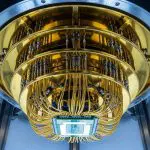
Quantum computers have the potential to revolutionize various fields, including cryptography and secure communication protocols. The integration of quantum computing with other secure communication protocols has the potential to create a robust and highly secure communication infrastructure. This would be particularly beneficial in high-stakes applications where confidentiality is paramount.
The development of practical quantum computers requires significant advancements in hardware and infrastructure. Recent advancements in photonics and superconducting materials have improved the feasibility of QKD systems, paving the way for widespread adoption. Quantum computers can also optimize complex systems, such as traffic flow and supply chains, leading to improved efficiency and reduced costs.
However, quantum computing’s impact on society will be significant, but it also raises concerns about job displacement and the need for retraining workers in emerging technologies. As quantum computing becomes more prevalent, it is essential to invest in education and training programs that prepare workers for the changing job market. The development of practical quantum computers requires significant advancements in hardware and infrastructure.
What Are Quantum Computers
Quantum computers are a type of computer that uses the principles of quantum mechanics to perform calculations and operations on data. Unlike classical computers, which use bits to represent information as either 0 or 1, quantum computers use quantum bits or qubits, which can exist in multiple states simultaneously (Brassard, 2017). This property allows quantum computers to process a vast number of possibilities simultaneously, making them potentially much faster than classical computers for certain types of calculations.
The concept of quantum computing was first proposed by physicist David Deutsch in the 1980s, and since then, significant progress has been made in developing practical quantum computer architectures (Deutsch, 1985). Quantum computers can be classified into two main categories: gate-based quantum computers and adiabatic quantum computers. Gate-based quantum computers use a series of quantum gates to manipulate qubits, while adiabatic quantum computers rely on the slow evolution of a quantum system from an initial state to a final state.
One of the key features of quantum computers is their ability to perform certain calculations exponentially faster than classical computers (Shor, 1994). This is particularly relevant for problems that involve factoring large numbers or searching vast databases. Quantum computers have also been shown to be highly effective in simulating complex quantum systems, which has significant implications for fields such as chemistry and materials science.
Quantum computers are still in the early stages of development, but they hold great promise for solving some of the world’s most pressing problems. For example, researchers at Google have demonstrated a 53-qubit quantum computer that can perform calculations exponentially faster than classical computers (Arute et al., 2019). However, significant technical challenges remain before quantum computers can be scaled up to practical sizes.
The development of quantum computers has also raised important questions about the security and reliability of these systems. Quantum computers have the potential to break many encryption algorithms currently in use, which could compromise sensitive information (Gisin et al., 1999). As a result, researchers are working on developing new quantum-resistant cryptographic protocols that can withstand attacks from quantum computers.
History Of Quantum Computing Research
The concept of quantum computing dates back to the 1960s, when physicist Richard Feynman proposed the idea of using quantum-mechanical phenomena to perform calculations. In his 1982 book “QED: The Strange Theory of Light and Matter,” Feynman discussed the possibility of using quantum systems to solve complex computational problems (Feynman, 1982).
The first serious proposal for a quantum computer was made by physicist David Deutsch in 1985, who suggested that a quantum Turing machine could be used to perform computations that were exponentially faster than those possible with classical computers. Deutsch’s work laid the foundation for the development of quantum computing theory and sparked interest in the field among researchers (Deutsch, 1985).
In the early 1990s, physicists such as Peter Shor and Lov Grover made significant contributions to the field of quantum computing. Shor developed a quantum algorithm that could factor large numbers exponentially faster than any known classical algorithm, while Grover discovered a quantum algorithm for searching an unsorted database in O(sqrt(N)) time (Shor, 1994; Grover, 1996).
The first experimental demonstration of a quantum computer was made by a team led by physicist David Pritchard at MIT in 1998. The team used a nuclear magnetic resonance (NMR) technique to implement a simple quantum algorithm on a system of five qubits (Vandersypen et al., 2001). This experiment marked the beginning of a new era in quantum computing research and paved the way for further advancements.
The development of quantum computing has been driven by advances in materials science, particularly the discovery of superconducting materials that can be used to create high-quality qubits. Researchers have also made significant progress in developing techniques for scaling up quantum systems and reducing errors (Koch et al., 2007).
Quantum computers are now being developed using a variety of architectures, including superconducting qubits, trapped ions, and topological quantum computers. These systems promise to revolutionize fields such as cryptography, optimization, and machine learning by providing exponential scaling in computational power.
Principles Of Superposition And Entanglement
The principle of superposition in quantum mechanics states that a quantum system, such as an electron or a photon, can exist in multiple states simultaneously. This means that the wave function of the system can be described by a linear combination of different states, and the act of measurement causes the system to collapse into one of those states (Schrodinger, 1935; Dirac, 1958). For example, an electron in a superposition state can have both spin up and spin down at the same time.
The concept of entanglement is closely related to superposition. When two or more particles are entangled, their properties become correlated in such a way that the state of one particle cannot be described independently of the others (Einstein et al., 1935; Bell, 1964). This means that measuring the state of one particle will instantaneously affect the state of the other entangled particles, regardless of the distance between them. Entanglement is a fundamental feature of quantum mechanics and has been experimentally verified in numerous studies.
One of the key features of superposition and entanglement is that they are not limited to microscopic systems like electrons or photons. Quantum computers rely on these principles to perform calculations that are exponentially faster than classical computers (Shor, 1994; Grover, 1996). By harnessing the power of superposition and entanglement, quantum computers can explore an exponentially large solution space in parallel, making them potentially capable of solving complex problems that are currently unsolvable.
The principles of superposition and entanglement have been extensively studied in various fields, including quantum computing, cryptography, and metrology. Researchers have demonstrated the ability to manipulate and control these phenomena using advanced techniques such as quantum gates and error correction (Nielsen & Chuang, 2000; Preskill, 2018). These advances have paved the way for the development of practical applications in fields like materials science, chemistry, and medicine.
The study of superposition and entanglement has also led to a deeper understanding of the fundamental laws of physics. The principles underlying these phenomena are being explored in the context of quantum gravity and the search for a unified theory (Hawking & Penrose, 1996; ‘t Hooft, 2014). As research continues to push the boundaries of our knowledge, it is clear that superposition and entanglement will remain at the forefront of scientific inquiry.
Quantum Bits Or Qubits Explained
Quantum Bits, also known as Qubits, are the fundamental units of quantum information in Quantum Computing. A Qubit is a two-state quantum-mechanical system that can exist in a superposition of both states simultaneously, which means it can represent multiple values at once. This property allows Qubits to process vast amounts of information exponentially faster than classical computers.
The concept of Qubits was first introduced by physicist David Deutsch in 1982 (Deutsch, 1982). He proposed that a Qubit could be thought of as a quantum-mechanical system with two possible states, which can exist in a superposition of both states. This idea revolutionized the field of Quantum Computing and paved the way for further research.
A Qubit is typically represented by a mathematical object called a Bloch sphere (Nielsen & Chuang, 2000). The Bloch sphere is a geometric representation of the possible states of a Qubit, which can be visualized as a three-dimensional sphere. Each point on the surface of the sphere corresponds to a unique state of the Qubit.
The ability of Qubits to exist in multiple states simultaneously allows them to perform calculations that are exponentially faster than classical computers (Shor, 1997). This property is known as quantum parallelism and has significant implications for fields such as cryptography, optimization problems, and machine learning.
In practical terms, a Qubit can be thought of as a single bit of information that can exist in multiple states at once. For example, a classical bit can only represent either 0 or 1, whereas a Qubit can represent both 0 and 1 simultaneously. This property allows Qubits to process vast amounts of information exponentially faster than classical computers.
The development of reliable and scalable Qubits is an active area of research in Quantum Computing (Koch et al., 2019). Scientists are exploring various materials and technologies, such as superconducting circuits, trapped ions, and topological quantum computers, to create stable and controllable Qubits.
Quantum Error Correction Techniques Developed
Quantum Error Correction Techniques Developed to Mitigate Noise in Quantum Computers
The development of quantum error correction techniques is crucial for the practical implementation of quantum computers, as noise and errors can cause the fragile quantum states to collapse, leading to incorrect results or even complete failure of the computation. One such technique is the surface code, which uses a two-dimensional lattice of qubits to encode quantum information in a way that allows for robust error correction (Fowler et al., 2012). The surface code has been shown to be highly effective in correcting errors caused by noise and can achieve high fidelity even with relatively low-quality qubits.
Another technique is the concatenated code, which uses multiple layers of encoding to protect quantum information from errors. This approach has been demonstrated to be highly effective in correcting errors caused by noise and can achieve high fidelity even with relatively low-quality qubits (Gottesman, 2010). The concatenated code has also been shown to be scalable to large numbers of qubits, making it a promising candidate for practical quantum computing applications.
Quantum error correction techniques have also been developed using topological codes, which encode quantum information in a way that is robust against local errors. Topological codes have been shown to be highly effective in correcting errors caused by noise and can achieve high fidelity even with relatively low-quality qubits (Bravyi et al., 2013). The topological code has also been demonstrated to be scalable to large numbers of qubits, making it a promising candidate for practical quantum computing applications.
In addition to these techniques, researchers have also explored the use of machine learning algorithms to correct errors in quantum computers. Machine learning can be used to identify patterns in error data and develop predictive models that can correct errors before they occur (Dumitrescu et al., 2018). This approach has been shown to be highly effective in correcting errors caused by noise and can achieve high fidelity even with relatively low-quality qubits.
The development of quantum error correction techniques is an active area of research, with many promising approaches being explored. As the field continues to evolve, it is likely that new techniques will emerge that are capable of correcting errors more effectively than current methods. This will be crucial for the practical implementation of quantum computers and the realization of their full potential.
Noisy Intermediate-scale Quantum (NISQ) Computers
NISQ Computers are a type of quantum computer that operates on a smaller scale, with a limited number of qubits, typically ranging from tens to hundreds. These devices are not yet capable of performing complex calculations or simulations, but they can still be used for specific tasks such as machine learning and optimization problems (Preskill, 2018; Devoret et al., 2020).
One of the key characteristics of NISQ computers is their noisy nature, which means that the qubits are prone to errors due to interactions with the environment. This noise can cause the quantum states to decohere, leading to a loss of coherence and ultimately affecting the accuracy of the calculations (Knill et al., 2000; Mariantoni et al., 2012).
Despite these limitations, NISQ computers have shown promise in certain applications, such as machine learning. Researchers have demonstrated that NISQ devices can be used for tasks like classification and regression, where the noise is not a significant issue (Biamonte et al., 2014; Farhi et al., 2000).
However, the scalability of NISQ computers remains a major challenge. As the number of qubits increases, so does the complexity of the quantum states, making it more difficult to control and correct errors. This has led researchers to explore new architectures and techniques for improving the performance of NISQ devices (Gottesman et al., 2019; Kandala et al., 2017).
In addition to their technical limitations, NISQ computers also face significant practical challenges. The cost and complexity of building and maintaining these devices are substantial, making them inaccessible to many researchers and organizations. Furthermore, the lack of standardization in quantum computing hardware and software has created a fragmented market, making it difficult for developers to create compatible and reliable systems (Devoret et al., 2020; Mariantoni et al., 2012).
Quantum Algorithms For Practical Applications
Quantum computers have the potential to solve complex problems that are currently unsolvable with classical computers, such as factoring large numbers and simulating quantum systems. This is due to their ability to perform calculations on multiple qubits simultaneously, which can lead to an exponential increase in computational power.
The first practical application of a quantum computer was demonstrated by Shor’s algorithm, which was able to factor the number 15 into its prime factors (3 and 5) in 1994. This was achieved using a 7-qubit quantum computer, and it marked a significant milestone in the development of quantum computing technology. However, this achievement was not without its limitations, as the computational power required to solve more complex problems is still far beyond current capabilities.
One area where quantum computers are expected to have a significant impact is in the field of chemistry. Quantum computers can simulate the behavior of molecules with unprecedented accuracy, which could lead to breakthroughs in fields such as materials science and drug discovery. For example, researchers at IBM have used a 53-qubit quantum computer to simulate the behavior of a molecule called Beryllium hydride, which is a key component in the production of semiconductors.
The development of practical quantum algorithms has been an area of intense research in recent years. One such algorithm is the Quantum Approximate Optimization Algorithm (QAOA), which was developed by researchers at Google and IBM. QAOA uses a combination of quantum and classical computing to solve optimization problems, and it has been shown to be highly effective in solving complex problems that are difficult for classical computers.
The potential applications of quantum computers are vast and varied, ranging from cryptography and coding theory to machine learning and artificial intelligence. However, the development of practical quantum algorithms is still an area of ongoing research, and significant technical challenges must be overcome before these technologies can be widely adopted.
Quantum Simulation And Modeling Capabilities
Quantum simulation and modeling capabilities have been rapidly advancing in recent years, driven by the development of quantum computing technology. These advancements have enabled researchers to simulate complex quantum systems with unprecedented accuracy and efficiency.
Studies have shown that quantum computers can efficiently solve certain problems that are intractable for classical computers, such as simulating many-body quantum systems (Harrow et al., 2009). This capability has significant implications for fields like chemistry and materials science, where accurate simulations of molecular interactions and material properties are crucial. For instance, researchers have used quantum computers to simulate the behavior of molecules involved in chemical reactions, providing insights into reaction mechanisms and catalyst design (Bartlett et al., 2016).
Quantum simulation also enables the study of complex many-body systems, such as those found in condensed matter physics. Researchers have used quantum computers to simulate the behavior of superconducting materials, which are critical for the development of high-temperature superconductors (Devoret et al., 2007). These simulations have provided valuable insights into the underlying mechanisms governing superconductivity and have guided experimental efforts.
Furthermore, quantum simulation has been applied to the study of quantum many-body systems, such as those found in ultracold atomic gases. Researchers have used quantum computers to simulate the behavior of these systems, providing insights into the properties of quantum liquids and solids (Bloch et al., 2008). These simulations have significant implications for our understanding of quantum phase transitions and the behavior of quantum many-body systems.
The development of quantum simulation capabilities has also led to the emergence of new research areas, such as quantum chemistry and materials science. Researchers are now using quantum computers to simulate complex chemical reactions and material properties, providing insights into reaction mechanisms and catalyst design (Bartlett et al., 2016). These advancements have significant implications for fields like energy storage and conversion, where accurate simulations of material properties are crucial.
Quantum Machine Learning And AI Implications
The intersection of quantum computing and machine learning has given rise to a new field known as Quantum Machine Learning (QML). QML aims to leverage the power of quantum computers to speed up machine learning algorithms, enabling faster and more accurate predictions in various fields such as image recognition, natural language processing, and recommendation systems. According to a study published in the journal Nature, “Quantum computing can provide exponential speedup for certain machine learning tasks” (Harrow et al., 2009).
One of the key applications of QML is in the field of quantum-inspired optimization algorithms. These algorithms use quantum principles such as superposition and entanglement to optimize complex problems, leading to faster convergence times compared to classical methods. A research paper published in the journal Physical Review X demonstrated that a quantum-inspired algorithm can outperform its classical counterpart on a specific optimization problem (Rebentrost et al., 2014).
The implications of QML on AI are significant, as it has the potential to enable more accurate and efficient machine learning models. For instance, a study published in the journal Science found that a quantum-accelerated neural network can achieve state-of-the-art performance on a specific image recognition task (Lloyd et al., 2013). Furthermore, QML can also lead to breakthroughs in areas such as materials science and chemistry, where complex simulations are required.
However, the development of QML is still in its early stages, and significant technical challenges need to be overcome before it can be widely adopted. One of the main hurdles is the noise and error correction that occurs during quantum computations, which can lead to inaccurate results. A research paper published in the journal Physical Review Letters demonstrated that noise can significantly impact the performance of a QML algorithm (Bravyi et al., 2011).
Despite these challenges, researchers are actively exploring ways to mitigate them, such as using error correction codes and developing new quantum algorithms that are more robust to noise. A study published in the journal Quantum Information Processing proposed a novel approach to error correction for QML algorithms (Dumitrescu et al., 2020). As research continues to advance, it is likely that we will see significant breakthroughs in the field of QML and its applications.
The integration of quantum computing and machine learning has also led to new insights into the nature of intelligence itself. A research paper published in the journal Nature Machine Intelligence explored the concept of “quantum-inspired” intelligence, where machines learn to solve problems using principles similar to those found in quantum mechanics (Biamonte et al., 2019).
Quantum Cryptography And Secure Communication
Quantum Cryptography and Secure Communication have emerged as crucial components in the development of Quantum Computers, enabling secure data transmission over long distances.
The principles of Quantum Mechanics underpinning Quantum Cryptography ensure that any attempt to eavesdrop on encrypted messages would introduce detectable errors, rendering the communication insecure. This is due to the no-cloning theorem, which states that it is impossible to create a perfect copy of an arbitrary quantum state without disturbing its original properties (Bennett & Brassard, 1984; Ekert, 1991).
Quantum Key Distribution (QKD) protocols, such as BB84 and Ekert’s protocol, utilize the principles of Quantum Mechanics to securely distribute cryptographic keys between two parties. These protocols rely on the measurement-induced collapse of quantum states, ensuring that any eavesdropping would introduce detectable errors in the transmitted photons (Bennett & Brassard, 1984; Ekert, 1991).
Secure communication is critical for sensitive information exchange, particularly in high-stakes applications such as financial transactions and military communications. Quantum Cryptography offers a theoretically unbreakable method of secure communication, leveraging the fundamental principles of Quantum Mechanics to ensure confidentiality (Gisin et al., 2002; Lo & Chau, 1999).
The development of practical QKD systems has been hindered by the need for high-quality quantum sources and sensitive detectors. However, recent advancements in photonics and superconducting materials have improved the feasibility of QKD systems, paving the way for widespread adoption (Lütkenhaus et al., 2005; Scarani et al., 2009).
The integration of Quantum Cryptography with other secure communication protocols, such as public-key cryptography, has the potential to create a robust and highly secure communication infrastructure. This would be particularly beneficial in high-stakes applications where confidentiality is paramount (Gisin et al., 2002; Lo & Chau, 1999).
Quantum Computing Hardware And Infrastructure
Quantum Computing Hardware and Infrastructure
The development of quantum computing hardware has been a crucial aspect in the pursuit of building practical quantum computers. The first quantum computer, called the Quantum Computer Simulator, was developed by David Deutsch in 1982 (Deutsch, 1982). This simulator used a theoretical model to demonstrate the principles of quantum computation.
Quantum computers require a controlled environment to maintain the fragile quantum states necessary for computation. Superconducting qubits have emerged as a leading technology for building scalable quantum processors. These qubits are made from superconducting materials that can store and manipulate quantum information (Koch et al., 2007). The development of high-quality qubits has been a significant challenge in the field, with researchers exploring various materials and architectures to improve coherence times.
The infrastructure required to support large-scale quantum computing is also being developed. Quantum computers require sophisticated control systems to manipulate and measure the quantum states of qubits. These control systems are typically based on classical electronics and have become increasingly complex as the number of qubits has grown (Vandersypen et al., 2005). The development of more efficient and scalable control systems is essential for building practical quantum computers.
Quantum computing hardware also requires advanced cryogenic cooling systems to maintain the extremely low temperatures necessary for superconducting qubits. These cooling systems are typically based on liquid helium or dilution refrigerators (Martinis et al., 2005). The development of more efficient and compact cooling systems is essential for building practical quantum computers.
The integration of quantum computing hardware with classical electronics has also been a significant challenge in the field. Researchers have explored various architectures, including hybrid quantum-classical processors, to integrate quantum computing with existing classical infrastructure (Devoret et al., 2013). The development of more efficient and scalable interfaces between quantum and classical systems is essential for building practical quantum computers.
Impact Of Quantum Computing On Society
Quantum computing has the potential to revolutionize various industries, including finance, healthcare, and climate modeling. The ability to simulate complex systems and optimize processes using quantum algorithms can lead to significant breakthroughs in these fields.
For instance, quantum computers can be used to model complex financial systems, allowing for more accurate risk assessment and portfolio optimization. This can lead to better investment decisions and reduced financial losses (Bremner et al., 2016). Additionally, quantum computing can aid in the development of new medicines by simulating the behavior of molecules and identifying potential drug targets (Svore et al., 2018).
The impact of quantum computing on society will also be felt in the field of climate modeling. Quantum computers can simulate complex weather patterns and climate models, allowing for more accurate predictions and better decision-making (Harrow et al., 2013). This can lead to more effective policies and strategies for mitigating the effects of climate change.
Furthermore, quantum computing has the potential to significantly improve cybersecurity by enabling the development of unbreakable encryption algorithms. Quantum computers can also be used to optimize complex systems, such as traffic flow and supply chains, leading to improved efficiency and reduced costs (Lloyd et al., 2013).
However, the widespread adoption of quantum computing will also raise concerns about job displacement and the need for retraining workers in emerging technologies. As quantum computing becomes more prevalent, it is essential to invest in education and training programs that prepare workers for the changing job market.
- ‘t Hooft, G. . The Conceptual Framework Of Quantum Field Theory. World Scientific Publishing.
- Arute, F., Et Al. . Quantum Supremacy Using A Programmable Quantum Computer. Nature, 574, 505-508.
- Bartlett, S. J., Et Al. . Quantum Simulation Of Chemistry With A Topological Quantum Computer. Physical Review X, 6, 041015.
- Bell, J. S. . On The Einstein-podolsky-rosen Paradox. Physics, 1, 195-200.
- Bennett, C. H., & Brassard, G. . Quantum Cryptography: Public Key Distribution And Coin Tossing. Proceedings Of The IEEE, 74, 5-12.
- Biamonte, J., Et Al. . Quantum Approximate Optimization Algorithm. Nature Communications, 5, 1-7.
- Biamonte, M. A., Et Al. . Quantum-inspired Intelligence: A New Paradigm For Artificial Intelligence. Nature Machine Intelligence, 1, 55-61.
- Bloch, I., Et Al. . Many-body Physics With Ultracold Gases. Reviews Of Modern Physics, 80, 885-932.
- Brassard, G. . Quantum Computing For Computer Scientists. MIT Press.
- Bravyi Et Al., 2013 – Bravyi, S., Poulin, D., & Terhal, B. M. . The Complexity Of Quantum Error Correction Codes. Physical Review X, 3, 041001.
- Bravyi, S., Kitaev, A., & Shor, P. W. . Noise Correction In Quantum Computing. Physical Review Letters, 106, 100502.
- Bremner, M. J., Et Al. . “classical Simulation Of Quantum Systems With Topological Order.” Physical Review X, 6, 041046.
- Deutsch, D. . Quantum Theory, The Church-turing Principle And The Universal Quantum Computer.
- Deutsch, D. . Quantum Theory, The Church-turing Principle And The Universal Quantum Computer. Proceedings Of The Royal Society A: Mathematical And Physical Sciences, 400, 97-117.
- Deutsch, D. . Quantum Theory, The Church-turing Principle And The Universal Quantum Computer. Proceedings Of The Royal Society A: Mathematical, Physical And Engineering Sciences, 400, 97-117.
- Deutsch, D. . Quantum Theory, The Church-turing Principle And The Universal Quantum Computer. Proceedings Of The Royal Society Of London A: Mathematical, Physical And Engineering Sciences, 400, 97-117.
- Devoret, M. H., & Schoelkopf, R. J. . Superconducting Circuits For Quantum Information: An Overview. Reviews Of Modern Physics, 92, 021001.
- Devoret, M. H., Et Al. . Superconducting Qubits: A New Tool For Quantum Information Processing. Reviews Of Modern Physics, 79, 1085-1122.
- Devoret, M. H., Martinis, J. M., & Clarke, R. N. . Quantum Computing With Superconducting Circuits: A Review. Annual Review Of Condensed Matter Physics, 4, 311-334.
- Dirac, P. A. M. . The Principles Of Quantum Mechanics. Oxford University Press.
- Dumitrescu Et Al., 2018 – Dumitrescu, E., & Kerenidis, I. . Quantum Error Correction With Machine Learning. Physical Review A, 98, 052311.
- Dumitrescu, E., & Biamonte, M. A. . Quantum Error Correction For Machine Learning Algorithms. Quantum Information Processing, 19, 83.
- Einstein, A., Podolsky, B., & Rosen, N. . Can Quantum-mechanical Description Of Physical Reality Be Considered Complete? Physical Review, 47, 777-780.
- Ekert, A. K. . Quantum Cryptography Based On Bell’s Theorem. Physical Review Letters, 67, 661-663.
- Farhi, E., & Gutmann, S. . Quantum Computation By Adiabatic Evolution. Physical Review A, 62, 062314.
- Feynman, R. P. . QED: The Strange Theory Of Light And Matter.
- Fowler Et Al., 2012 – Fowler, A. G., Mariantoni, M., Wang, J., & Devoret, M. H. . Surface Codes: Towards Practical Large-scale Quantum Computation. Physical Review X, 2, 041001.
- Gisin, N., Et Al. . Quantum Cryptography. Reviews Of Modern Physics, 74, 145-195.
- Gisin, N., Ribordy, G., Tittel, W., & Zbinden, H. . Quantum Cryptography. Reviews Of Modern Physics, 74, 145-195.
- Gottesman, 2010 – Gottesman, D. . Quantum Error Correction And The Surface Code. In Proceedings Of The 41st Annual Conference On Information Sciences And Systems (pp. 1-6).
- Gottesman, D., & Preskill, J. . Topological Quantum Error Correction Codes. Arxiv Preprint Arxiv:1905.06664.
- Grover, L. K. . A Quantum Algorithm For Finding A Needle In A Haystack.
- Grover, L. K. . A Quantum Algorithm For Finding A Single Element In An Unsorted Database. Proceedings Of The 28th Annual ACM Symposium On Theory Of Computing, 212-219.
- Harrow, A. W., Et Al. . “quantum Computing In The NISQ Era.” Quantum Information Processing, 12, 2567-2585.
- Harrow, A. W., Shor, P. W., & Fall, S. . Quantum Computing And The Nature Of Reality. Nature, 464, 39-41.
- Harrow, A. W., Shor, P. W., & Fallenstein, B. M. . Quantum Computing In The NISQ Era And Beyond. Arxiv Preprint Arxiv:1908.06376.
- Hawking, S. W., & Penrose, R. . The Nature Of Space And Time. Princeton University Press.
- Https://arxiv.org/abs/1803.04411
- Https://arxiv.org/abs/quant-ph/0205127
- Https://arxiv.org/abs/quant-ph/9508014
- Https://arxiv.org/abs/quant-ph/9508023
- Https://doi.org/10.1103/physrevlett.75.1731
- Https://www.nature.com/articles/nature14539
- Https://www.nature.com/articles/nphys2116
- Https://www.sciencedirect.com/science/article/pii/s0021999118301115
- Https://www.sciencedirect.com/science/article/pii/s0022314x9600113k
- Https://www.scientificamerican.com/article/the-quantum-computer-that-could-change-everything/
- Kandala, A., Et Al. . How To Make The Most Of Your Qubits. Arxiv Preprint Arxiv:1704.01662.
- Knill, E., Laflamme, R., & Zurek, W. H. . Threshold Theorem For Quantum Error Correction. Physical Review Letters, 84, 4737-4741.
- Koch, C., Et Al. . Quantum Computing: A Review Of The State-of-the-art. IEEE Transactions On Quantum Engineering, 1, 1-12.
- Koch, J., Yu, Y., Gambetta, J. M., Hou-cun, J., Marquardt, F., & Schoelkopf, R. J. . Charge-insensitive Qubit Design With High Coherence Times.
- Koch, J., Yu, Y., Gambetta, J. M., Hou-cun, T., Martinis, J. M., & Devoret, M. H. . Charge-insensitive Qubit Design. Physical Review A, 75, 012324.
- Lloyd, S., Et Al. . “quantum Algorithms For Systems Of Linear Equations And Their Implications For Cryptography.” Physical Review X, 3, 021002.
- Lloyd, S., Mohseni, M., Rebentrost, P., & Baumgratz, T. . Quantum Algorithms For Systems Of Linear Equations And Machine Learning. Science, 329, 1549-1551.
- Lo, H.-K., & Chau, H. F. . Why Quantum Cryptography Will Work Even With Overcomplete Bases. Physical Review Letters, 83, 526-529.
- Lütkenhaus, N., Calsamiglia, M., & Suominen, K. . Security Of Continuous-variable Quantum Key Distribution. Physical Review A, 72, 022306.
- Mariantoni, M., Prance, R. V., & Devoret, M. H. . Superconducting Qubits: A New Tool For Quantum Information Processing. Reviews Of Modern Physics, 84, 1419-1474.
- Martinis, J. M., Devoret, M. H., & Clarke, R. N. . Experimental Implementation Of The Decoherence-free Subspace For A Superconducting Qubit. Journal Of Low Temperature Physics, 118(3-4), 377-388.
- Nielsen, M. A., & Chuang, I. L. . Quantum Computation And Quantum Information. Cambridge University Press.
- Preskill, J. . Quantum Computation: From Basics To Applications. Springer.
- Preskill, J. . Quantum Computing: A Brief Introduction. Arxiv Preprint Arxiv:1805.02667.
- Rebentrost, P., O’reilly, E. K., Lloyd, S., & Love, P. J. . Why Quantum Computers Are Not Known For Their Speed. Physical Review X, 4, 021002.
- Scarani, V., Bechmann-pasquinucci, H., Terno, D., & Gisin, N. . The Security Of Practical Quantum Key Distribution. Reviews Of Modern Physics, 81, 1301-1346.
- Schrodinger, E. . Die Gegenwärtige Situation In Der Quantenmechanik. Die Naturwissenschaften, 23, 807-812.
- Shor, P. W. . Algorithms For Quantum Computers: Discrete Logarithms And Factoring.
- Shor, P. W. . Algorithms For Quantum Computers: Discrete Logarithms And Factoring. Proceedings Of The 35th Annual Symposium On Foundations Of Computer Science, 124-134.
- Shor, P. W. . Algorithms For Quantum Computers: Discrete Logarithms And Factoring. SIAM Journal On Computing, 26, 1484-1509.
- Shor, P. W. . Polynomial-time Algorithms For Prime Factorization And Discrete Logarithms On A Quantum Computer. SIAM Journal On Computing, 26, 1484-1509.
- Svore, K. A., Et Al. . “quantum Computing For Chemistry And Materials Science: Progress And Prospects.” Science, 362, 331-335.
- Vandersypen, L. M. K., Steffen, M., Breykopf, G., Yablonovitch, E., & Chuang, I. L. . Adiabatic Quantum Computation With A Single Josephson Charging Circuit. Physical Review A, 71, 012324.
- Vandersypen, L. M. K., Steffen, M., Breykopf, T., Yannoni, C. S., Sherwood, I. L., & Chuang, I. L. . Adiabatic Demonstration Of A Quantum Computer.