

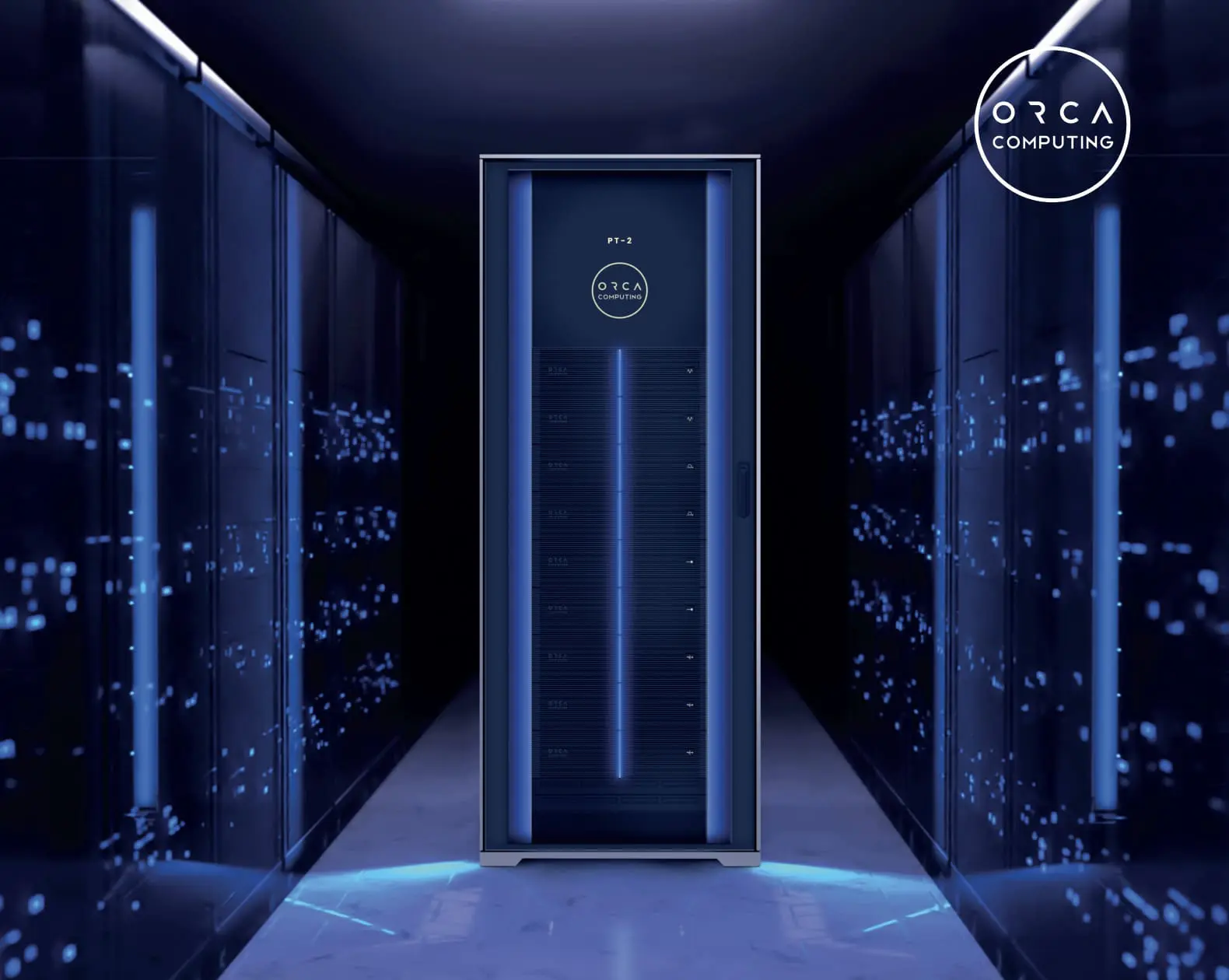
ORCA Computing, a leader in quantum computing, has unveiled its latest advancement in photonic quantum systems, the PT-2. Building on the success of the PT-1, which has deployed seven on-premises systems, the PT-2 represents a significant leap forward in practical quantum computing. This commercially viable solution offers seamless integration with high-performance computing infrastructures and features quantum-enhanced machine learning capabilities integrated with NVIDIA’s CUDA-Q development platform.
According to Bob Sorensen, Senior Vice President of Research and Chief Analyst for Quantum Computing at Hyperion Research, the PT-2 addresses critical challenges in generative AI such as power consumption, model cost, and quality. Organizations are already leveraging ORCA’s cutting-edge photonic technology to solve complex computational problems in industries like manufacturing, energy, and pharmaceuticals. Richard Murray, Co-founder and CEO of ORCA Computing, emphasized that the PT-2 opens the door to future innovations and allows users to adopt quantum technology without major additional investments.
Advancements in Photonic Quantum Systems: The PT-2 Unveiled
ORCA Computing, a pioneer in photonic quantum computing, has announced the launch of the PT-2, a significant advancement in its PT Series of photonic quantum systems. Building on the success of the PT-1, which has deployed seven on-premises systems, the PT-2 represents a substantial leap forward in practical quantum computing.
The PT-2 continues ORCA’s strategy to redefine quantum computing by offering a commercially viable solution that seamlessly integrates with high-performance computing (HPC) infrastructures. This approach marks a radical departure from the limitations of other quantum approaches, empowering organizations to effectively embed quantum computing into generative AI and optimization workflows. The PT-2’s quantum-enhanced machine learning capabilities are integrated with the NVIDIA CUDA-Q development platform, providing a path to industrial-scale quantum AI.
Redefining Quantum Computing: A Commercially Viable Solution
The PT-2 is designed to overcome the limitations of traditional quantum computing approaches by offering a commercially viable solution that can be easily integrated into existing HPC infrastructures. This approach enables organizations to harness the power of quantum computing without requiring significant additional investments. ORCA’s modular optical fiber-based architecture, along with proprietary methods for manipulating the time, frequency, and switching of single photons, paves the way for quantum computing using significantly fewer components.
The PT-2’s integration with NVIDIA CUDA-Q development platform enables the development of hybrid quantum-classical neural networks, which can be used to accelerate machine learning applications. This approach has the potential to transform industries such as manufacturing, energy, and pharmaceuticals by enabling the solution of complex computational problems that are currently unsolvable using traditional methods.
Unlocking New Applications: Industry Transformation
Organizations in various industries are already leveraging ORCA’s cutting-edge photonic technology to solve complex computational problems. In chemical formulation, ORCA’s collaborators are generating new molecules using machine learning, while in vaccine development, the PT-2 is unlocking peptide design through quantum-enhanced generative AI, outperforming traditional methods.
The PT-2 has the potential to unlock new applications and drive industry transformation by enabling the solution of complex computational problems that are currently unsolvable using traditional methods. ORCA’s roadmap ensures that customers can upgrade their systems and continuously benefit from the latest quantum technologies, driving innovation and growth in various industries.
Pioneering Quantum Computing Testbed: UK National Quantum Computing Centre
ORCA will be deploying a pioneering quantum computing testbed for the UK National Quantum Computing Centre (NQCC) that will include integrated GPU processing to explore a wide range of quantum approaches and use cases. This industry-first testbed accelerates the development and testing of photonic quantum architectures, focusing on machine learning with hybrid quantum/classical neural networks and photonic quantum processors.
The testbed has the potential to accelerate the development of new quantum applications and drive innovation in various industries. By providing a platform for researchers and developers to explore new quantum approaches and use cases, the testbed can help unlock the full potential of quantum computing and drive industry transformation.
External Link: Click Here For More


