

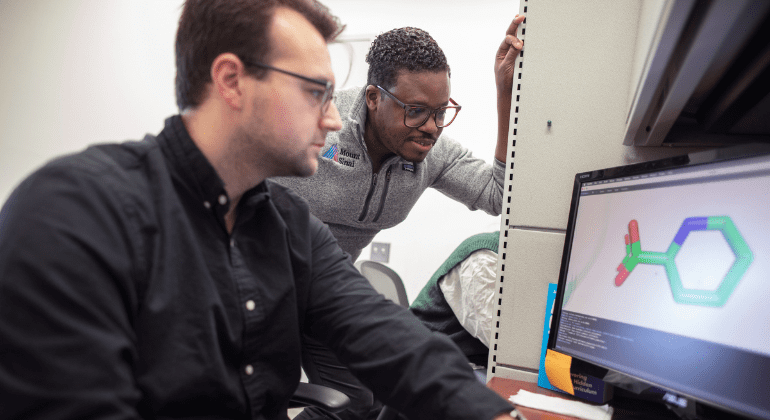
Mount Sinai’s Icahn School of Medicine has launched an innovative AI-driven drug discovery centre in New York City to revolutionise pharmaceutical development through advanced technology. This initiative seeks to accelerate and enhance the efficiency of drug creation by leveraging cutting-edge artificial intelligence. The centre plans to establish robust infrastructure and collaborate with Mount Sinai Innovation Partners (MSIP) to translate research into practical applications, ultimately striving to develop new treatments swiftly and effectively.
The AI Small Molecule Drug Discovery Center at the Icahn School of Medicine at Mount Sinai has been established to advance drug discovery through artificial intelligence. The centre aims to leverage computational chemistry, AI, and biomedical research to enhance efficiency and precision in developing new therapies. By integrating these technologies, researchers seek to address complex biological challenges and accelerate the creation of targeted treatments.
The center is led by a team of experts including Dr. Eric J. Nestler, who emphasizes the commitment to innovation and improving patient outcomes through advanced drug discovery methods. The initiative builds on Mount Sinai’s existing strengths in translational research and therapeutics, with plans to develop cutting-edge AI infrastructure and initiate key projects over the next two years.
The center’s focus includes building advanced computational tools and initiating drug discovery projects that target complex human diseases. By combining AI with traditional research methodologies, the team aims to create more efficient and effective approaches to drug development, ultimately bringing new treatments to patients in need.
The initiative is led by a team of experts, including Dr. Eric J. Nestler, who emphasizes Mount Sinai’s commitment to innovation and improving patient outcomes through advanced drug discovery methods. The center builds on the institution’s existing strengths in translational research and therapeutics.
The AI Small Molecule Drug Discovery Center plans to develop cutting-edge AI infrastructure and initiate key projects over the next two years. By combining AI with traditional research methodologies, the team aims to create more efficient and effective approaches to drug development, ultimately bringing new treatments to patients in need.
The AI Small Molecule Drug Discovery Center reflects Mount Sinai’s commitment to innovation in healthcare. The center integrates artificial intelligence, computational chemistry, and biomedical research to develop new therapies with enhanced efficiency and precision. By addressing complex biological challenges, the center aims to accelerate the creation of targeted treatments for human diseases.
Led by a team of experts, including Dr. Eric J. Nestler, the initiative builds on Mount Sinai’s strengths in translational research and therapeutics. The focus includes building advanced computational tools and initiating projects that address challenging biological problems, ultimately bringing new treatments to patients in need.
More information
External Link: Click Here For More


