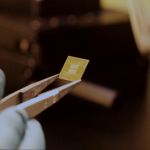

Researchers at the Karlsruhe Institute of Technology (KIT) have achieved an advance in quantum control, demonstrating optical initialization and readout of nuclear spin states within a europium-based molecular crystal. This represents the first time such control has been achieved optically, opening new avenues for stable quantum information storage and processing. Nuclear spins, due to their limited interaction with the surrounding environment, offer particularly long coherence times. The team successfully maintained quantum coherence for up to two milliseconds, a duration crucial for reliable quantum operations. “The results show that molecular materials can be a promising platform for future quantum components,” said Professor David Hunger of the Physikalisches Institut at KIT, noting the advantage of addressing nuclear spins without interference from electron spins, potentially leading to stable and dense qubit registers. This work, published in Nature Materials, suggests tailored molecules could enable the creation of atomically precise qubit registers for scalable quantum computers.
Europium-Based Molecular Crystals Enable Optical Nuclear Spin Control
Unlike electron spins, nuclear spins exhibit minimal interaction with surrounding environments, making them exceptionally stable carriers of quantum information. This inherent stability addresses a major challenge in building practical quantum computers. The team’s work, detailed in Nature Materials, centers on a molecular crystal containing europium ions, chosen for their uniquely narrow optical transitions that facilitate direct manipulation of nuclear spin states. Using laser light, the researchers were able to set the nuclear spins to defined states and subsequently measure those states, a process augmented by high-frequency fields that both control the spins and shield them from external disturbances. Professor Mario Ruben’s group at KIT’s Institute for Quantum Materials and Technologies synthesized the crystals and assessed their suitability for quantum platforms, demonstrating the potential for optically networked quantum processing systems and a new generation of quantum technologies.
Two-Millisecond Quantum Coherence Achieved via High-Frequency Fields
This duration, representing the time a quantum system retains a defined state, is crucial because environmental interactions typically disrupt these states rapidly, limiting computational potential. The team focused on europium-based molecular crystals, exploiting the narrow optical transitions of the ions within to directly address and manipulate nuclear spin states using both laser light and radio-frequency fields. This dual approach allowed for both the initialization of spins into defined states and the subsequent, non-destructive readout of their quantum information. Beyond simply observing coherence, the KIT group actively protected the nuclear spins from external disturbances with high-frequency fields, a technique vital for extending coherence times and improving the reliability of quantum operations. The research builds upon established nuclear magnetic resonance (NMR) techniques, but introduces optical control as a means of bypassing limitations inherent in traditional methods. The ability to chemically customize these molecular systems offers a pathway toward atomically precise qubit registers, a level of control currently difficult to achieve with other quantum computing platforms.
“A special advantage is that we can address the nuclear spins without interference from electron spins, making it possible to implement especially stable and dense qubit registers in the future.”