MIT and University of Maryland spinout Diffraqtion announced a pre-seed funding round to build satellite constellations powered by a novel quantum camera. Their technology achieves image processing 1,000 times faster than conventional systems, and delivers up to 20 times higher resolution. This enables ultra-high-resolution imaging at a fraction of current costs.
$4.2 Million Pre-Seed Funding Led by QDNL Participations
Diffraqtion secured $4.2 million in funding, combining both dilutive investment and a non-dilutive DARPA contract. Leading the pre-seed round was QDNL Participations, joined by milemark•capital, Aether VC, ADIN, and Offline Ventures. This financial backing supports the development of satellite constellations utilizing Diffraqtion’s innovative quantum camera technology for applications like space situational awareness. Beyond funding, Diffraqtion also received notable recognition including first place at SLUSH 100, earning a $1.1 million equity prize, and a $100,000 award from TechConnect. The company is currently participating in the U.S. Space Force’s Apollo Accelerator, actively demonstrating its quantum imaging with government partners. QDNL Participations highlighted Diffraqtion’s team’s expertise as key to translating quantum imaging into practical applications.
Diffraqtion’s Quantum Camera Achieves 20x Resolution, 1000x Speed
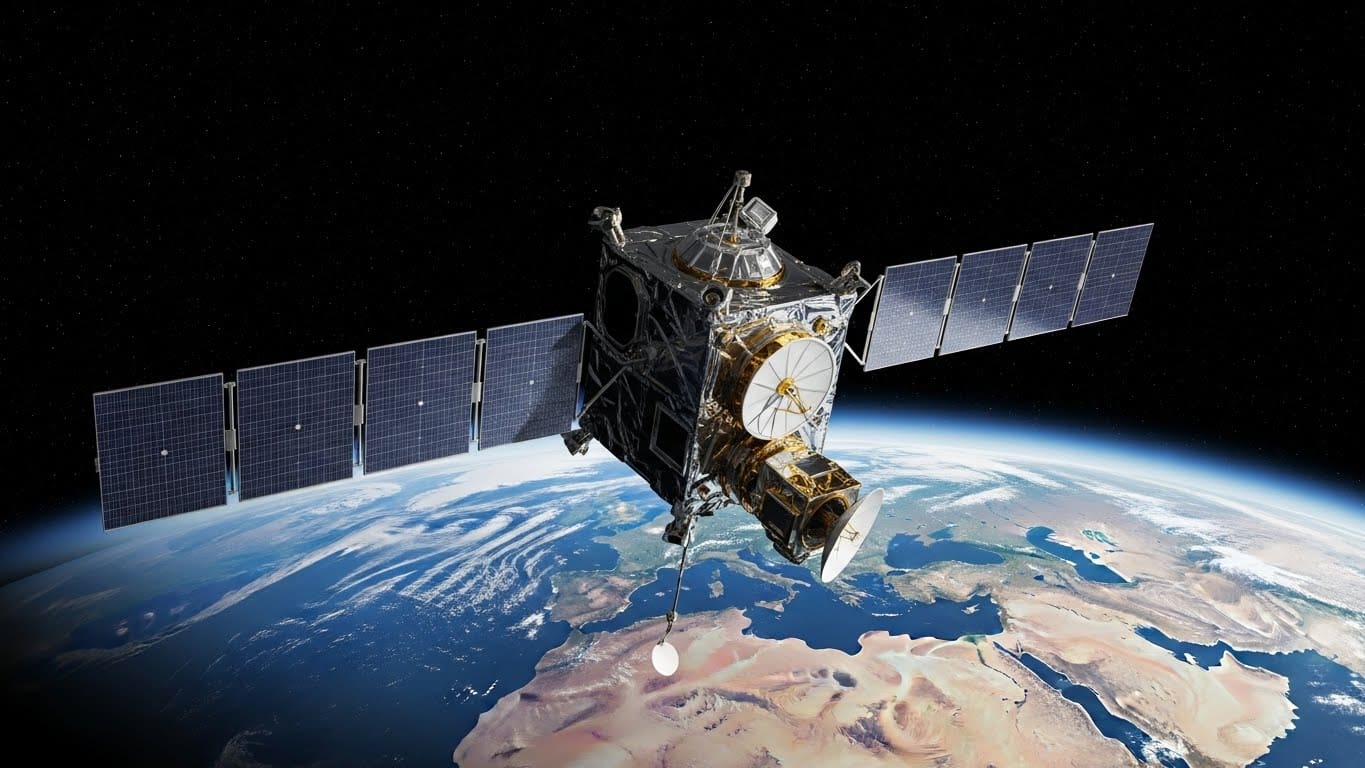
Diffraqtion’s quantum camera technology offers a significant leap in imaging capabilities, achieving up to 20 times greater resolution compared to conventional systems. This advancement is paired with processing speeds 1,000 times faster, enabling the capture and analysis of visual information with unprecedented efficiency. The core of this technology stems from research led by Professor Saikat Guha, utilizing patented quantum imaging intellectual property to dramatically improve image clarity and data handling. This novel approach allows for the potential deployment of numerous, low-cost satellites equipped with high-precision imaging, focused on applications like space domain awareness and Earth observation.
These satellite constellations can support crucial areas, including enhanced orbital safety, intelligence gathering, and monitoring of agriculture and disaster zones. Ultimately, Diffraqtion aims to provide clearer, more continuous observation of both space and Earth, addressing a critical gap in current infrastructure.
Space-based infrastructure powers our communications, navigation, and defense, and through Earth Imaging, it supports everything from agriculture to disaster response.
Galatsanos, Wang, and Guha: MIT/Maryland Quantum Sensing Expertise
Diffraqtion’s core team brings significant expertise in quantum sensing and related fields, stemming from MIT and the University of Maryland. Johannes Galatsanos, CEO and Co-Founder, combines 15 years of experience in AI and quantum tech with prior roles at MIT, Oxford, and Novartis; his background focuses on building data and AI product teams. Alongside him, Christine Wang, Co-Founder and CTO, provides over 20 years designing photonics and optics devices, previously leading optics divisions at Riverside Research and Draper Labs. Central to Diffraqtion’s technology is the work of Co-Founder and Chief Science Advisor, Professor Saikat Guha.
A Distinguished Chair Professor at the University of Maryland and adjunct faculty at MIT, Guha is a renowned quantum sensing scholar with over 100 patents and 10,000 citations to his name—he is the inventor of the company’s patented quantum imaging intellectual property. This foundational research, initially developed with NASA and DARPA support, delivers up to 20x higher resolution and 1,000x faster processing speeds.