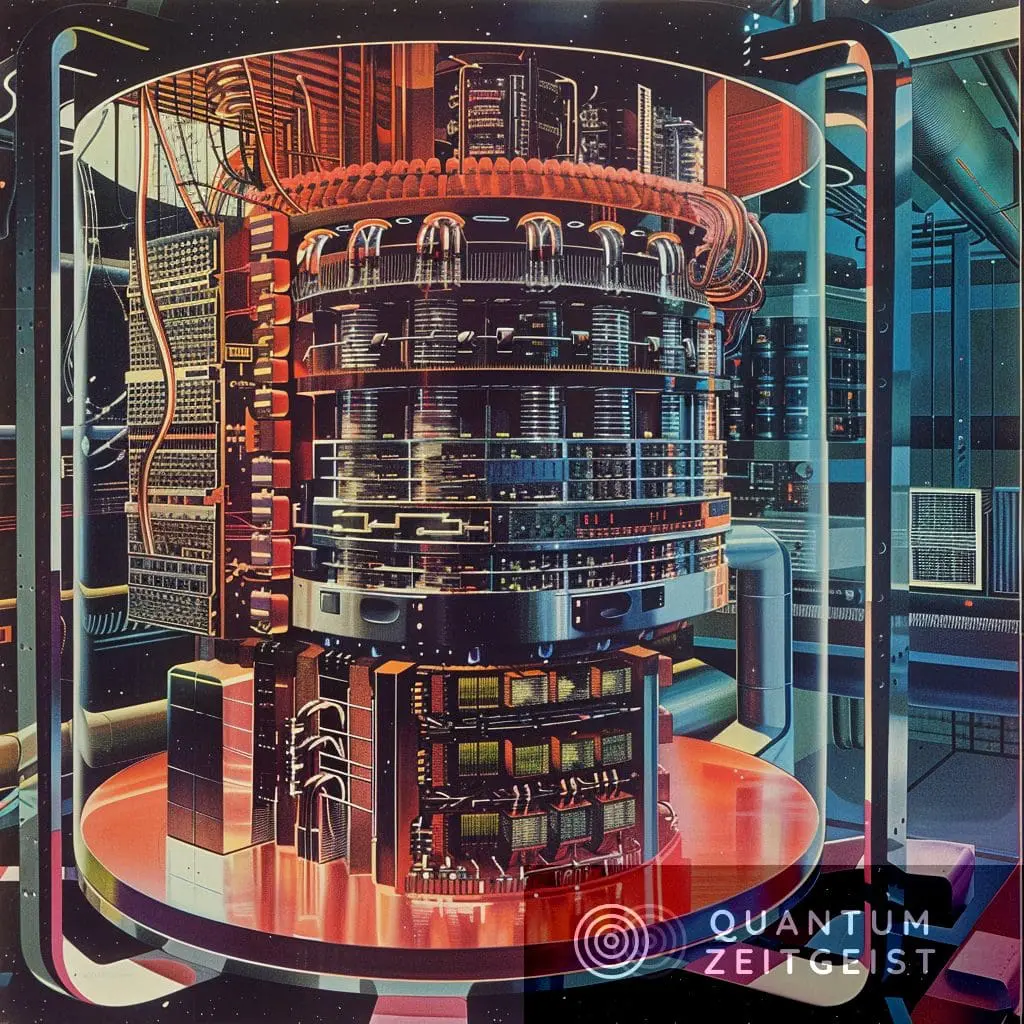
Quantum Computers aren’t science fiction. You can buy a Quantum Computer. They exist, and thousands upon thousands of researchers around the globe are making quantum computers smarter and better. That improvement usually transpires into an increase in qubit count, but it’s not all about qubit counts; the quality of those qubits, too, is crucial.
However, it is possible for those who want to buy a quantum computer. D-Wave offered the first commercially available quantum computer and sold it to large corporations such as Defence and technology megacaps such as Google, its quantum annealers, a particular type of quantum computer.
Now, there are multiple quantum computer vendors who all offer a variety of products and services in what is still a very highly specialized area, which is yet to hit the mainstream big time. However, several publicly listed quantum computer companies already support the growing quantum industry with a range of products, let alone the myriad of quantum computing start-ups (see our Mega List of Quantum Companies).
Buy A Quantum Computer – A Guide for the Perplexed
What is a Quantum Computer?
Qubits, the fundaments of a quantum computer
Firstly, let’s start with the basics. A quantum computer is a type of computational machine that uses the principles of quantum mechanics to process information. Unlike classical computers that use bits, quantum computers use quantum bits or qubits. While a classical bit can represent a 0 or a 1, a qubit can represent a state representing 0, 1, or any quantum superposition of these states. The process of interference and superposition is used to effectively compute some quantum algorithms faster than a classical machine.
Qubits, or quantum bits, form the foundational units of quantum computation and come in various types, each with unique physical implementation and properties. Superconducting qubits harness Josephson junctions to create and manipulate quantum states, while trapped ions utilize individual ions held in electromagnetic traps.
Photonic qubits leverage the quantum properties of photons, and topological qubits are based on anyons—quasi-particles that exist in two-dimensional systems—whose braiding operations can serve as quantum gates. Spin qubits employ the spin state of an electron in a quantum dot as the computational unit. Each qubit type has its advantages, challenges, and specific application areas.
There are currently plenty of competing qubit types. Which one potentially wins out is yet another open question. Could we see specialized devices segmented by application or use case?
What can a Quantum Computer do?
Quantum computers can potentially improve our understanding of chemical reactions, enabling the discovery of new materials and drugs. For instance, Google’s Sycamore processor was used to simulate a chemical reaction, providing insights that would be nearly impossible using classical machines alone. Like the D-Wave system, Quantum annealers are designed to solve complex optimization problems. These can range from logistics (finding the most efficient route for delivery trucks) to finance (portfolio optimization).
Shor’s algorithm on a sufficiently powerful quantum computer could potentially break many of today’s cryptographic systems. This has spurred interest in post-quantum cryptography, which seeks to develop cryptographic methods that remain secure even in the presence of a quantum computer.
Quantum computers might provide faster ways to train machine learning models, especially as datasets become more complex. In conclusion, while quantum computing is still in its infancy and faces many technical challenges, the potential applications are vast. They can impact multiple fields, from medicine to finance to artificial intelligence.
Quantum Computers don’t need to get cheaper; they get more usable.
Quantum Cloud or QCaaS
As the computer industry seems to target the same price point but provides ever better and faster machines, don’t expect the quantum sector to be any different. The quantum cloud makes it possible to efficiently run quantum circuits remotely without inspecting the hardware.
But that neglects that price isn’t a key consideration at the moment. Moreover, the sheer usefulness of quantum computers needs to be proven first. Naturally, as scaling improves and qubit count increases, we can expect the price per qubit to fall while the machine’s price may initially increase. Eventually, the cost of additional qubits will likely become marginal. Then, just like conventional devices, the entire price of a Quantum Computer can fall, and who knows, maybe they’ll be as ubiquitous as your smartphone with a price tag to match.
Reasons to Buy a Quantum Computer
You might be a James Bond villain planning global domination. However, it is more likely that the reason for buying a quantum computer is security. Buying a quantum computer keeps what you do away from prying eyes. Of course, all quantum cloud providers have security and encryption, but this isn’t enough for the Defence industry and those perhaps with corporate secrets whose lawyers won’t allow any public quantum cloud. Having the machine physically “on-prem,” as it is known, will ensure that no data leaves the physical building.
You might also like the idea of actually tinkering with the physical hardware. This could be for teaching, educational purposes, or just because some retro people like real hardware; they want to see an actual device working. Companies like Rigetti will sell you a research-focused device enabling you to experiment with superconducting qubits in-house.
Buying a Quantum Computer
So, if you’ve read all this and still want to buy a Quantum Computer, we’ll list some of the quantum computer vendors who will happily sell you a device. However, we’d probably question why you’d want to necessarily do this unless you are researching these devices or want a teaching aid.
The majority of developers of quantum devices do not publish the cost of their machines. The key is to reduce the price of quantum computers to as low as possible and make them as ubiquitous as possible.
Some academic literature has delved into the costs and prices of the various parts of the quantum stack, which we won’t go into here as developments and innovations constantly affect the cost.
What Quantum Computer Can You Buy?
Assuming you have the funds, there are a few options for you. However, there aren’t many choices; what you might get depends on your use case.
Education
If you want a quantum computer for education and training.
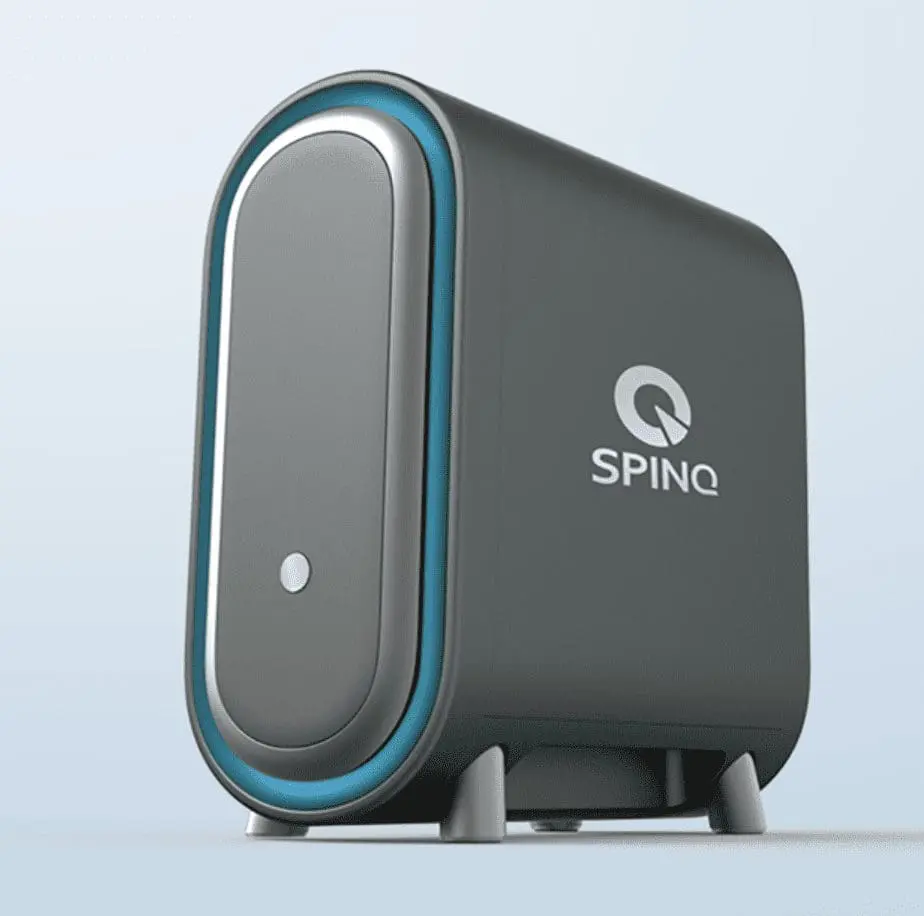
- SpinQ, a Quantum Company from China, will sell you an NMR-based Quantum Computer with three qubits for around $5,000. This is a real device with real qubits.
Research
If you want a quantum computer to experiment with and perform your own research.
- Rigetti develops hardware and software around its superconducting qubits. It is now selling its device directly. The device named Novera is a 9-qubit QPU and can be bought directly. However, it comes with a reasonably hefty price tag.

Optimize
If you want a quantum computer to solve optimization problems.
- D-Wave was the first Quantum Computing company to commercialize, offering its Quantum Annealing Computers to buyers. Now, you don’t need to buy a physical device (quantum cloud from D-Wave named Leap solves that). We estimate the price tag in the tens of millions.

Scaling the Cost of a Quantum Computer
Eventually, the qubit count (analogous to the size of memory in a conventional computer) will increase, and the cost per qubit will decrease. But the price per qubit could likely range at the moment of anywhere between $2500, so for a thousand qubits (not possible with the Spin Q device), we could estimate that a machine with 1,000 qubits would have a lower bound cost of $2,500,000.
However, this simple argument is flawed because not every technology scales similarly. In reality, a more helpful machine from IBM with 433 qubits is likely to cost many times that. But as is the nature of scaling, whatever the price, the price per qubit will fall, and quantum computers will get cheaper.
Buy a Quantum Computer? Really?
Quite frankly, most people who program a quantum computer will never need to own, touch, or pay for one physically. The quantum cloud enables developers to work on quantum devices of various types from just about anywhere. Using one of the many quantum cloud services means no cryogenic fluids, freezing temperatures, or people who understand quantum device electronics and quantum physics.