

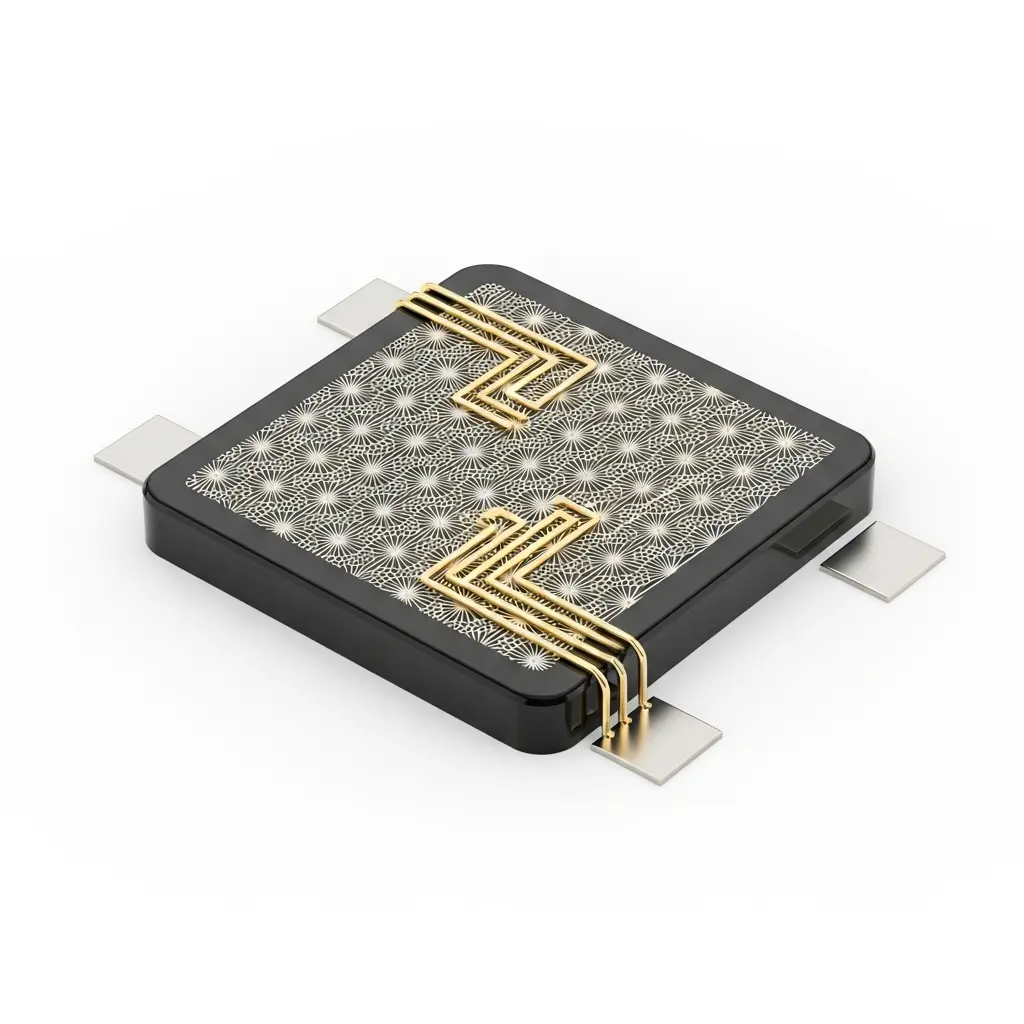
The behaviour of electrons in semiconductor materials forms the basis of modern electronics, yet predicting their interactions in complex systems remains a significant challenge. Filippo Gaggioli, Pierre-Antoine Graham, and Liang Fu, researchers at the Massachusetts Institute of Technology, have now developed a novel approach using artificial intelligence to explore these interactions within semiconductor quantum wells. Their innovative neural network method, starting from fundamental physical principles, uncovers surprising metallic and crystalline phases arising from electron behaviour, and importantly, reveals a previously unknown state of matter, the electronic quasicrystal. This discovery promises to reshape our understanding of electronic phases and potentially unlock new avenues for materials design and advanced electronic devices.
One-Body Reduced Density Matrix Calculations Detailed
This document details the methods and calculations used to investigate the formation of electronic quasicrystals in bilayer electron systems, explaining how the one-body reduced density matrix is calculated using a basis set of plane waves combined with quantum well states. The research team employed a Monte Carlo sampling method to evaluate matrix elements, providing insights into the single-particle density of states and electronic properties. The interlayer Coulomb interaction is calculated within the quasicrystal structure, addressing self-averaging effects through Poisson summation and ensuring accurate energy convergence. Crucially, the team demonstrated that the quasicrystal is stabilized by quantum fluctuations, not as a classical ground state, as classical calculations favored square and honeycomb stackings. The neural network architecture and training procedure used to represent the many-body wavefunction are detailed, including hyperparameters to ensure reproducibility. This thoroughness facilitates replication and further exploration of the findings.,.
Electronic Quasicrystals in Quantum Wells
Researchers have achieved a breakthrough in understanding strongly-correlated electrons within semiconductor quantum wells, employing a neural network-based variational approach to model electron behavior in three dimensions. This innovative method reveals the emergence of both metallic and crystalline phases with electrons distributed in either monolayer or bilayer configurations, remarkably identifying a new phase of matter, the electronic quasicrystal, within the bilayer arrangement. Experiments demonstrate that the system’s behavior is profoundly influenced by well thickness and electron density. In narrow wells, electrons are confined to a single layer, resulting in a metallic state.
As the well width increases, electrons populate higher energy subbands, forming a bilayer configuration with two distinct Fermi surfaces, predicting two different frequencies in quantum oscillation experiments. The phase diagram meticulously mapped by the team shows a clear transition between monolayer and bilayer charge distributions as electron density and well thickness are varied, with bilayer spacing predictably growing with increasing density or thickness. Furthermore, the research reveals a complex interplay between well thickness and crystalline phase formation, with a critical density increasing with well thickness, and the bilayer crystal forming at lower densities for thicker wells. Detailed analysis reveals a triangular lattice in the monolayer regime, consistent with previous understanding of two-dimensional Wigner crystals, while the bilayer regime exhibits various charge orders, including square and honeycomb configurations, arising from minimizing Coulomb repulsion. These findings provide a comprehensive understanding of electron behavior in quantum wells and pave the way for designing novel electronic devices with tailored properties.,.
AI Reveals Electronic Quasicrystal in Quantum Wells
This research presents a groundbreaking application of neural network-based variational Monte Carlo methods to investigate strongly-correlated electrons confined within semiconductor quantum wells. By employing an AI-powered approach, scientists have revealed both metallic and crystalline phases, characterized by monolayer and bilayer charge distributions, and significantly, discovered a novel quantum phase of matter, the electronic quasicrystal, within the bilayer regime. This quasicrystal exhibits a unique, non-classical charge order stabilized by quantum fluctuations, representing one of the first examples of a new quantum phase discovered through artificial intelligence. The findings demonstrate that increasing the thickness of the quantum well enhances correlation effects, promoting the formation of crystalline states. The discovery of the quantum quasicrystal expands the known landscape of quantum phases and offers a new avenue for exploring emergent phenomena in condensed matter physics, while acknowledging limitations inherent in the model, such as the use of effective atomic units and a simplified confining potential. Future research will focus on extending the method to more complex systems and exploring the potential for realizing these predicted phases in experimental semiconductor structures, including quantum wells and van der Waals heterostructures.
👉 More information
🗞 Electronic crystals and quasicrystals in semiconductor quantum wells: an AI-powered discovery
🧠 ArXiv: https://arxiv.org/abs/2512.10909


