Simanshu Kumar and Nandan S Bisht at Kumaun University and SSJ University Campus have developed a differentiable quantum-optical framework that optimises circuits for single-parameter estimation with NOON states, achieving sharp improvements in classical Fisher information. Their implementation in Strawberry Fields shows gains in sensitivity and measurement efficiency as the number of photons increases from two to five, with improvements ranging from +153% to +1775% in classical Fisher information. These results set benchmarks for adaptive quantum sensing and reveal that previously used initialisation methods are suboptimal for photon numbers greater than or equal to three, bringing practical quantum-enhanced sensing closer to reality and reaching 82% of the Heisenberg limit at N=2 and improving to 58% at N=5.
NOON state optimisation yields seventeen-fold increase in quantum sensing precision
Classical Fisher information, a key metric of measurement precision, improved by +1775% when optimising parameters for five-photon NOON states, exceeding the performance of previously used methods. This substantial increase signifies a considerable enhancement in the ability to discern small changes in the parameter being estimated. Initialisation at the point established by Afek et al. (2010) proves important, particularly as photon number increases, because achieving practical quantum-enhanced sensing with three or more photons was previously limited by low measurement success rates. The Afek protocol, utilising hybrid coherent-plus-squeezed light, demonstrated the feasibility of generating NOON states up to N=51, but lacked an optimisation strategy tailored to maximise Fisher information for each specific photon number. The new differentiable quantum-optical framework, implemented in Strawberry Fields, enables experimentally viable quantum sensing at higher photon numbers by maximising the information gleaned from each measurement. Strawberry Fields is a widely used, open-source software platform for photonic quantum computing, allowing for efficient simulation and deployment of quantum circuits. Further analysis revealed CFI improvements of +153% for two-photon states, rising to +834% to +956% for three photons and +829% to +1598% for four photons. Post-selection rates, the probability of detecting the desired photon configuration, increased by +153% to +3269% across these photon numbers, with a notable eight to 133-fold increase in useful measurement events per pulse. This improvement in post-selection is crucial, as it directly translates to a higher signal-to-noise ratio and more reliable measurements.
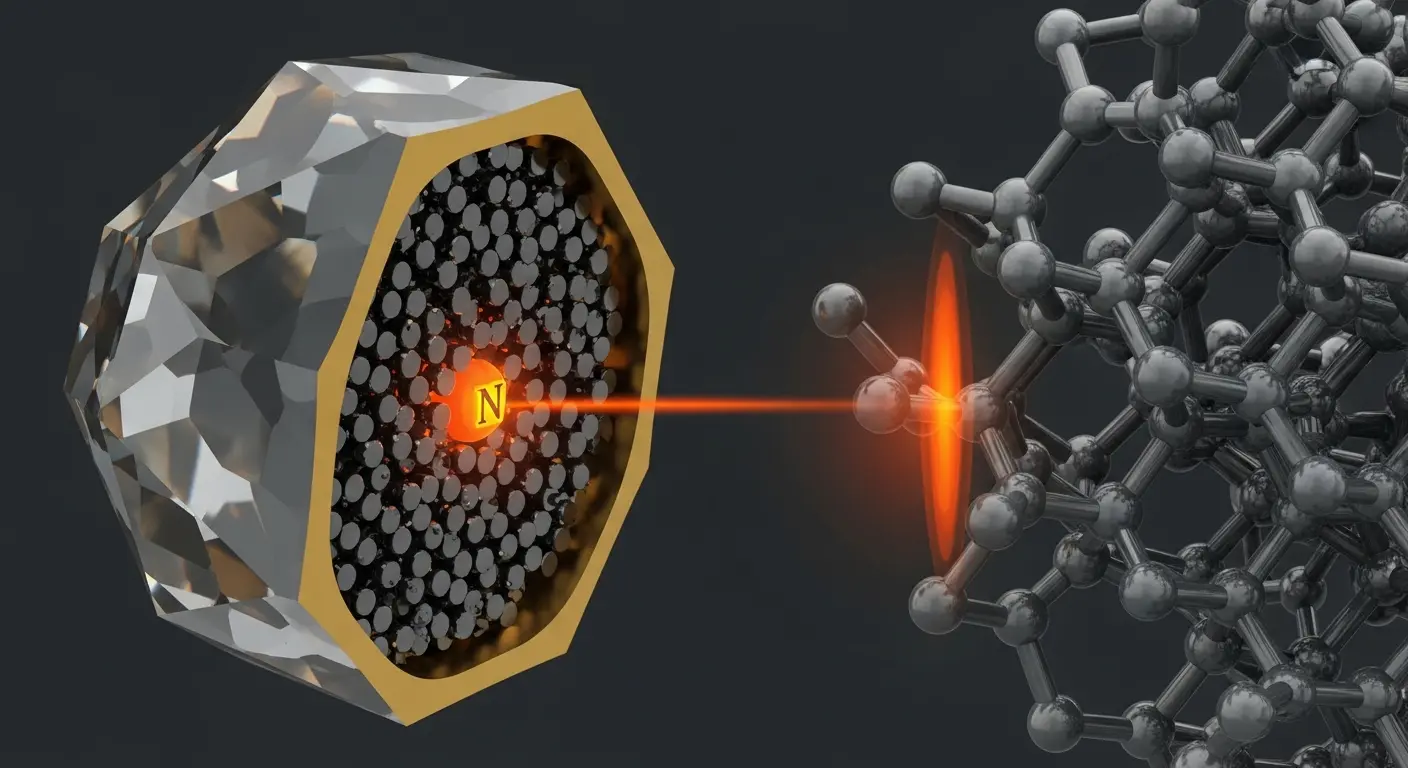
NOON states, defined as maximally path-entangled N-photon superpositions of the form (|N,0⟩ + |0,N⟩)/\sqrt{2}, are a cornerstone of quantum metrology. These states exhibit enhanced sensitivity to phase shifts compared to classical light sources, potentially allowing for measurements that surpass the standard quantum limit (shot-noise limit). The Heisenberg limit, representing the ultimate precision achievable in parameter estimation, scales as 1/N, where N is the number of photons. While achieving the Heisenberg limit is challenging, NOON states offer a pathway towards approaching this theoretical bound. The classical Fisher information quantifies how much information about an unknown parameter is carried by a measurement. Maximising this information is paramount for achieving high-precision sensing. The researchers’ framework leverages automatic differentiation, a technique commonly used in machine learning, to optimise the parameters of the quantum circuit to maximise the classical Fisher information. This allows the system to adapt and improve its performance without requiring manual tuning or exhaustive searches.
Machine learning accelerates performance of entangled photon sensors
Quantum sensors are being refined, devices that exploit the bizarre rules of quantum mechanics to measure physical phenomena with unprecedented accuracy. These sensors rely on entangled photons, linked particles behaving as one, arranged in ‘NOON states’ to push beyond the limits of classical measurement. Entanglement is a uniquely quantum phenomenon where two or more particles become correlated in such a way that their fates are intertwined, regardless of the distance separating them. This correlation is exploited in quantum sensing to enhance precision and sensitivity. Optimising these states is computationally intensive, and while the Afek protocol has been used, it may not be ideal as the number of photons increases. The computational complexity arises from the exponentially growing Hilbert space associated with increasing photon number, making it difficult to explore all possible parameter configurations.
Calculations demonstrate the optimised probe reaches 82% of the Heisenberg limit with two photons, improving to 36-58% with five photons. This indicates a significant step towards realising the full potential of quantum metrology. However, these figures currently represent simulations and do not yet account for imperfections inherent in real-world photonic circuits. Factors such as photon loss, detector inefficiency, and imperfect beam splitters can degrade the performance of the sensor. Addressing these imperfections is a crucial area of ongoing research. Despite these computational challenges, significant gains are apparent even with a relatively small number of photons, suggesting that practical, highly accurate quantum sensors are becoming increasingly viable, even before reaching the theoretical limits of precision. This is particularly important for applications where resource constraints limit the number of photons that can be used.
This progress opens questions regarding optimisation at even higher photon numbers and extending this approach to more complex measurement scenarios. Investigating the scalability of the framework to larger photon numbers and exploring its applicability to multi-parameter estimation are important future directions. A computationally efficient method for optimising quantum sensors based on NOON states now enhances measurement precision. The system, employing a differentiable quantum-optical framework, moved beyond previously used initial configurations, revealing substantial improvements in the information obtained from each measurement by learning optimal settings through maximising classical Fisher information. Consequently, practical quantum-enhanced sensing, in particular with three or more photons, is now more attainable. The ability to optimise quantum circuits using machine learning techniques promises to accelerate the development of a new generation of highly sensitive and accurate sensors with applications in diverse fields such as medical diagnostics, materials science, and environmental monitoring.
The research demonstrated substantial improvements in the precision of quantum sensors using NOON states with up to five photons. By employing a machine learning framework to optimise circuit parameters, the team achieved increases in classical Fisher information ranging from 153% to 1775% across different photon numbers. This optimisation also led to improvements in post-selection rates and the number of useful measurement events. These results suggest that more accurate quantum-enhanced sensing is becoming increasingly feasible, particularly when utilising three or more photons, and provide benchmarks for future work exploring scalability to larger photon numbers and more complex measurements.
👉 More information
🗞 Quantum-Enhanced Single-Parameter Phase Estimation with Adaptive NOON States
🧠 ArXiv: https://arxiv.org/abs/2604.12323


See today’s quantum computing news on Quantum Zeitgeist for the latest breakthroughs in qubits, hardware, algorithms, and industry deals.