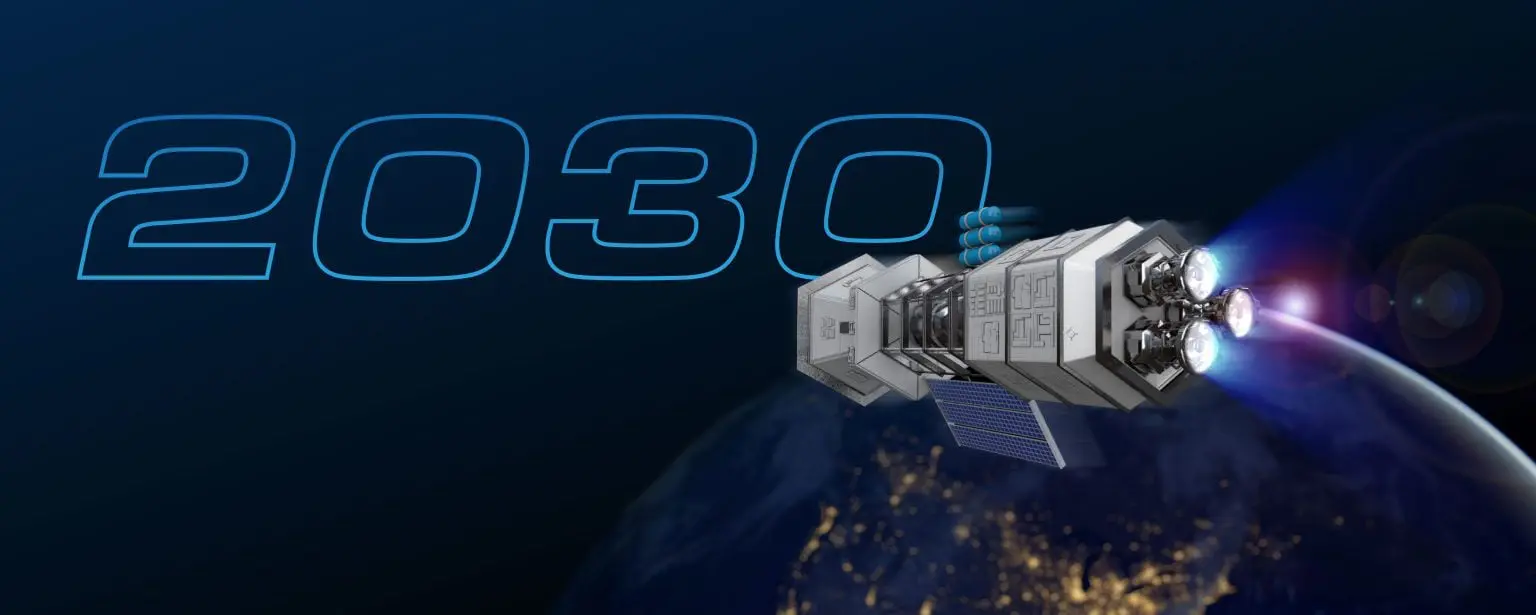
The future of space exploration could be powered by nuclear fission, with the Idaho National Laboratory charting a course for U.S. dominance in space energy by 2030. A new report, Weighing the Future: Strategic Options for U.S. Space Nuclear Leadership, details pathways to deliver dependable power for lunar and Martian missions, building on decades of experience with radioisotope power systems dating back to the Voyager probes. NASA intends to deploy a fission reactor on the Moon in fiscal year 2030, a goal the report suggests is achievable, despite the unique challenges of the space environment. “It might sound like science fiction, but it’s not,” said Sebastian Corbisiero, the Department of Energy Space Reactor Initiative national technical director. “It is very realistic and can significantly boost what humans can do in space because fission reactors provide a step increase in the amount of available power.”
Space Radioisotope Power Systems & Historical Context
Since the 1960s, spacecraft have relied on radioisotope power systems – harnessing the heat from decaying plutonium to generate electricity – a testament to the enduring need for dependable power in the harsh environment of space. This technology has fueled missions like Voyager 1 and 2, and the Mars rovers, but a new era of space exploration demands a significant leap in power capabilities. While no fission-based nuclear reactors currently operate beyond Earth, NASA has outlined plans to deploy one on the Moon by fiscal year 2030, prompting a detailed examination of strategic pathways forward.
Space Nuclear Leadership*, proposes several approaches to achieve this goal. A key challenge lies in adapting terrestrial reactor designs for the rigors of space, where weight, temperature, and component endurance are paramount. “The big differences are mass, temperature and component endurance,” Corbisiero explained, noting that water, a common terrestrial coolant, may prove impractical due to the need for heavy pressure vessels. Furthermore, space reactors are envisioned to operate for a decade without maintenance, unlike their Earth-bound counterparts typically offline for servicing every 18-24 months.
This necessitates exceptionally durable materials and electronics, a focus of NASA’s Fission Surface Power effort, building on nearly 70 years of innovation initiated by the U.S. and the Soviet Union with early reactors like SNAP-10A.
Fission Reactor Challenges for Space Environments
Beyond simply miniaturizing existing designs, adapting fission reactors for space demands overcoming significant engineering hurdles, particularly concerning mass, temperature, and component longevity. Every gram launched into orbit carries a substantial cost, making weight reduction paramount; conventional coolants like water, requiring heavy pressure vessels, may prove impractical. Materials proven effective in terrestrial reactors may falter under the intensified stresses of a space environment. To maximize energy output, space-based fission systems are projected to operate at considerably higher temperatures than their Earthbound counterparts, necessitating novel materials science.
Unlike typical terrestrial reactors undergoing maintenance every 18-24 months, lunar or Martian reactors must function for a decade without refueling or part replacement. This extended operational lifespan demands exceptionally durable electronics and components capable of withstanding the rigors of deep space for prolonged periods. The Idaho National Laboratory is central to these efforts, coordinating research across national laboratories and utilizing facilities like the Transient Reactor Test Facility to rigorously test fuels and reactor technologies. Ultimately, accelerating research and development is crucial to maintaining U.S. leadership in this critical field, as ambitious strategies are essential to meet national space nuclear goals.
NASA’s Three Strategies for Space Nuclear Leadership
Space Nuclear Leadership*, outlining three distinct approaches to achieve this ambitious goal. The most impactful, termed “Go Big or Go Home,” proposes a large 100-500 kilowatts-electric power project spearheaded by NASA or the Department of War, with Department of Energy support. This strategy promises a high return on investment but necessitates “consistent, secure, top-down leadership and funding.” Alternatively, “Chessmaster’s Gambit” suggests two smaller, public-private partnership projects, one lunar-focused led by NASA, the other an in-space system managed by the Department of War, allowing companies flexibility in technology and fuel choices. This approach, according to the report, “reduces risk by allowing private companies to choose the technology and fuel to fulfill deadlines and budget constraints.” A more cautious “Light the Path” strategy focuses on a small, under 1 kilowatt electric, radioisotope power system demonstration to establish regulatory frameworks and pave the way for private sector involvement.
Idaho National Laboratory’s Role in Reactor Development
The demand for dependable power in space is driving innovation in reactor technology, and the Idaho National Laboratory (INL) is central to these advancements. Beyond simply adapting existing designs, INL is actively coordinating efforts across multiple national laboratories to develop the technologies, capabilities, and infrastructure crucial for successful space missions. INL’s role extends beyond testing; the laboratory is positioned as a hub for advancing space reactor technologies, providing essential technical expertise and resources. Space Nuclear Leadership*, proposes three distinct strategies for achieving lunar and Martian power goals, each with varying levels of investment and risk.
Addressing the unique challenges of space power, researchers are focused on minimizing mass and maximizing durability. He emphasized the excitement surrounding this work, stating, “To be a part of an effort like this, that is as exciting as it gets. That’s something you tell your grandkids.”



See today’s quantum computing news on Quantum Zeitgeist for the latest breakthroughs in qubits, hardware, algorithms, and industry deals.