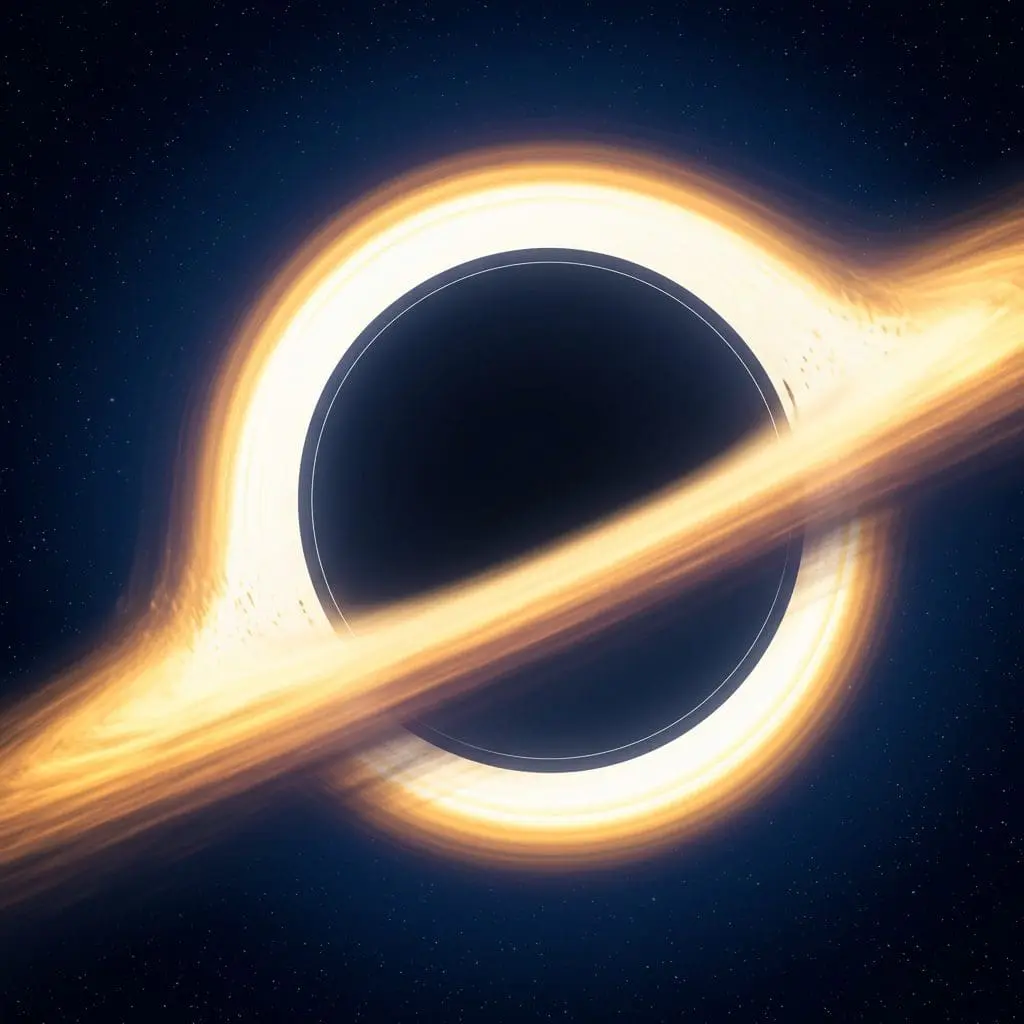
Research demonstrates a minimal length in spacetime alters gravitational wave signals from inspiralling binary black holes. A minimum frequency emerges, impacting tidal heating at 2.5 post-Newtonian order, and constraining the possible length scale of this minimal length to be comparable to, or smaller than, the Planck length.
The fundamental nature of spacetime at its smallest scales remains an open question in physics. Current theories predict singularities – points where physical quantities become infinite – but these are generally considered unphysical. A potential resolution lies in the concept of a minimal length, a fundamental limit to how finely spacetime can be resolved. Recent research explores how the existence of such a minimal length would manifest in the gravitational waves emitted by inspiralling binary black holes. By analysing modifications to the waveform at 2.5 post-Newtonian order – a measure of the accuracy of the calculations – researchers demonstrate that a detectable minimal length significantly impacts the tidal heating term, potentially revealing inconsistencies with established black hole geometries. This work, titled ‘Probing the existence of a minimal length through compact binary inspiral’, is the result of a collaboration between N. V. Krishnendu (Institute for Gravitational Wave Astronomy & School of Physics and Astronomy, University of Birmingham), Aldo Perri (Dipartimento di Fisica e Astronomia, Universitá di Bologna), Sumanta Chakraborty (School of Physical Sciences, Indian Association for the Cultivation of Science), and Alessandro Pesci (INFN Bologna).
Minimal Length Scales and Constraints from Gravitational Wave Signals
Investigations into the fundamental structure of spacetime are increasingly leveraging observations from gravitational wave (GW) astronomy. Recent research focuses on the implications of a hypothesised minimal length scale – a concept arising from several approaches to quantum gravity – on the behaviour of binary black hole (BH) systems and the characteristics of the GWs they emit.
The standard model of spacetime assumes it is infinitely divisible. However, several theories, including string theory and loop quantum gravity, suggest a fundamental limit to the resolution of spacetime, introducing a minimal length. This alters the behaviour of spacetime at extremely small distances. Researchers are now modelling how this minimal length impacts the dynamics of inspiralling BHs – two black holes orbiting each other and gradually drawing closer – and consequently, the GW signals they produce.
The analysis demonstrates that incorporating a minimal length introduces a lower limit to the frequencies present in the emitted GW waveform. This alters the inspiral phase, particularly at low frequencies. Crucially, the presence of a minimal length causes the system to behave as a perfect reflector of GWs at these frequencies, a behaviour not predicted by classical general relativity. This provides a potential observational link between theoretical investigations of quantum gravity and the rapidly developing field of GW astronomy.
The research highlights a significant modification to the ‘tidal heating’ term within the GW waveform at 2.5 post-Newtonian order. Post-Newtonian order refers to the level of approximation used in calculating relativistic effects; higher orders provide more accurate descriptions. This modification offers a potential pathway to observationally constrain the existence and magnitude of a minimal length scale.
Specifically, the detection of highly spinning and highly absorbing compact objects exhibiting inspiral behaviour poses a challenge to geometries incorporating a substantial minimal length. The observed waveform characteristics would be inconsistent with the predicted behaviour if a significant minimal length were present. Researchers have established a constraint on the magnitude of this potential minimal length, suggesting that, to remain consistent with current GW observations, it must be of the same order as, or smaller than, the Planck length.
This work links fundamental considerations of quantum gravity – attempting to reconcile general relativity with quantum mechanics – with the precision measurements now achievable through gravitational wave astronomy, offering a novel avenue for probing the fundamental structure of spacetime.
👉 More information
🗞 Probing the existence of a minimal length through compact binary inspiral
🧠 DOI: https://doi.org/10.48550/arXiv.2505.22877




See today’s quantum computing news on Quantum Zeitgeist for the latest breakthroughs in qubits, hardware, algorithms, and industry deals.