
Hoda Eldardiry, an associate professor at Virginia Tech, has received a $349,360 grant from the National Science Foundation to enhance AI ethics education. Her research aims to develop practical competencies that enable students to translate ethical principles into concrete decision-making in artificial intelligence system design. Eldardiry’s team includes co-principal investigators Qin Zhu and Dayoung Kim, as well as master’s and Ph.D. students.
They are working to improve AI ethics education from the perspective of industry professionals currently working in AI and AI policy. The research focuses on AI ethics issues related to autonomous vehicles, privacy, and bias, with the goal of cultivating translational competencies needed for students to apply ethical principles to real-world problems involving AI systems. Eldardiry’s work has implications for companies like TikTok, which collects vast amounts of user data, and the development of self-driving cars that must prioritize human life.
Enhancing AI Ethics Education: A National Science Foundation Supported Research
The increasing presence of artificial intelligence (AI) in everyday life has raised concerns about its impact on humans and society. To address these concerns, Hoda Eldardiry, an associate professor at Virginia Tech, is researching to improve AI ethics education for students in computer science, computer engineering, and data science majors. Her team’s work, supported by a $349,360 grant from the National Science Foundation’s Engineering Education program, aims to bridge the gap between classroom learning and real-world applications.
Translational Competencies: The Heart of AI Ethics Research
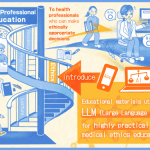
Eldardiry’s research focuses on developing practical competencies that enable students to translate ethical principles into concrete decision-making in AI system design. This approach differs from theoretical AI ethics research, as it involves industry professionals working in AI and AI policy. By engaging with these professionals, the team aims to understand how they apply technical backgrounds to real-world problems involving the ethical use of AI. The skills developed through this research are referred to as “translational competencies,” which are essential for students to cultivate when applying often vague ethical principles to concrete decision-making in AI system development.
Current Curricula: Limitations and Concerns
In reviewing current curricula, Eldardiry’s team has identified limitations and concerns. One significant issue is the privacy of user data, particularly with powerful AI tools and vast amounts of data. The social media platform TikTok serves as a prime example, collecting extensive data about users’ interests and potentially identifying personal information like political ideology or sexual orientation. While privacy is discussed in computer science ethics classes, the conversation often stops at the fundamental ethical principle level, without delving into specific details required to build systems that preserve user privacy.
Real-World Scenarios: Autonomous Vehicles and Beyond
The team’s research also explores real-world scenarios, such as self-driving cars and their programming to prioritize human life. While it is easy to state that the car should avoid harm to humans at all times, there are inevitably situations where this is not possible, and the car must make a split-second decision. This raises questions about how the car should be programmed in such cases, highlighting the need for more nuanced discussions in ethics classes.
A Paradigm Shift in AI Ethics Education
Eldardiry’s research ultimately aims to bring about a paradigm shift in AI ethics education, moving away from a hands-off approach where students are not engaging with course material to a hands-on approach where students are taught and expected to apply ethical principles to their engineering work. The development of translational skills will form a growing part of future AI engineers‘ job expectations as the development of AI programs becomes more automated. By cultivating these competencies, students will be better equipped to navigate the complex ethical landscape of AI system design and development.
External Link: Click Here For More


See today’s quantum computing news on Quantum Zeitgeist for the latest breakthroughs in qubits, hardware, algorithms, and industry deals.