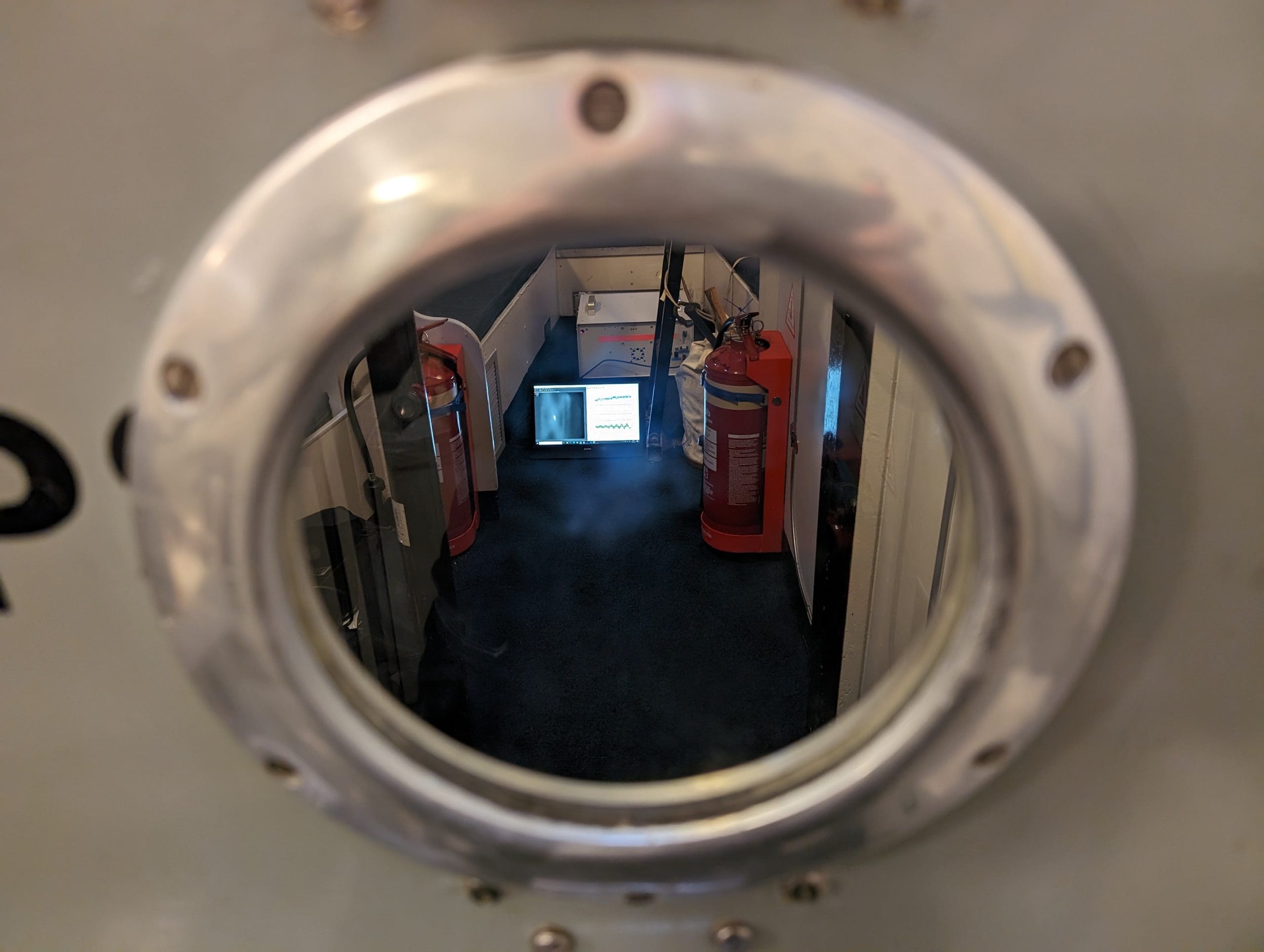
In a significant breakthrough, UK-based Aquark Technologies has successfully tested its quantum sensing technology at sea in partnership with the Royal Navy. The trial, conducted on the HMS Pursuer vessel, demonstrated the robustness of Aquark’s cold atom technology in demanding military conditions. This innovation has far-reaching implications for various sectors, including energy, critical infrastructure, telecommunications, and finance.
Aquark’s unique laser-cooling method, known as super molasses, enables the creation of miniature cold atom systems that are smaller, lighter, and more power-efficient than existing technologies. The company’s Co-Founder and CEO, Andrei Dragomir, hailed the trial as a milestone for the future of quantum technologies in fields such as defense and infrastructure. Commander Matthew Steele, Future Technology Lead for the Royal Navy’s Office of the Chief of Technology Officer, emphasized the potential of quantum technologies to provide an alternative Position, Navigation and Timing capability in GPS-denied environments.
Quantum Sensing at Sea: A Breakthrough for Military and Defence Applications
The successful trial of Aquark Technologies’ cold atom technology on the Royal Navy‘s HMS Pursuer vessel marks a significant step forward in the military and defense’s application of advanced quantum technologies. This achievement demonstrates the robustness of Aquark’s technology for operation in demanding military conditions, unlocking new possibilities in areas such as covert monitoring that require precise signals for accurate positioning, navigation, and timing.
The trial was conducted in partnership with the Office of the Chief of Technology Officer (OCTO) for the Royal Navy, showcasing Aquark’s novel cold atom technology capabilities. The company’s miniature cold atom systems, founded on its unique laser-cooling method known as super molasses, do not require an applied magnetic field, reducing the size, weight, power consumption, and cost of their sensors. This robustness and portability pave the way for applications across not only the military and defense sectors but also energy, critical infrastructure, telecommunications, and finance.
The trial was successful, with cold atoms being captured continuously throughout every test and at all locations onboard HMS Pursuer. The system was tested in several realistic operating states, manoeuvres, and key locations on the vessel, pushing the boat and the system to their limits. While the trial highlighted key areas that require further engineering – specifically magnetic shielding – which will be channelled into Aquark’s prototype atomic clock system (AQlock), the UK’s first commercial cold atom clock.
The Potential of Quantum Sensing in Military Operations
Quantum sensing can power military and defence operations to achieve full performance, even in environments where GPS may be degraded or denied. This is particularly important for covert monitoring, which requires precise signals for accurate positioning, navigation, and timing. By leveraging the capabilities of quantum technologies, military forces can maintain their global operating advantage, even in the face of disrupted GPS signals.
The potential applications of quantum sensing in military operations are vast, ranging from enhanced navigation and communication systems to more accurate targeting and surveillance capabilities. As Commander Matthew Steele, Future Technology Lead for OCTO, noted, “Quantum technologies being developed in the UK will offer an alternative Position, Navigation, and Timing (PNT) capability necessary to operate effectively in GPS denied and degraded environments.”
The Role of Aquark Technologies in Advancing Quantum Sensing
Aquark Technologies is dedicated to closing the gap between laboratory research and real-world applications. The company’s unique laser-cooling method, known as super molasses, enables the development of miniature cold atom systems that are robust, portable, and cost-effective. By demonstrating its technology’s capabilities in realistic military environments, Aquark is driving the development of deployable quantum sensing systems.
The company’s recent seed funding of €5 million, led by the NATO Innovation Fund and supported by MBDA, an alliance between aerospace and defence specialists Airbus, BAE Systems, and Leonardo, will enable further research and development. As Andrei Dragomir, Co-Founder and CEO of Aquark Technologies, stated, “Our goal now is to continue enhancing our technology off the back of these results and with the help of our recent investment to make them ready for real-world use.”
The Future of Quantum Technologies in Defence and Infrastructure
The successful trial of Aquark Technologies’ cold atom technology marks an encouraging milestone for the future of quantum technologies in fields such as defence and infrastructure. As the company continues to develop its technology, it is likely that we will see further advancements in the application of quantum sensing in military operations.
Over the next three years, the Royal Navy seeks to accelerate the development of quantum technologies through funding and sea trials, securing an opportunity to invest in a non-GPS-based PNT capability. This investment has the potential to drive significant innovation in the field, enabling the development of more accurate, reliable, and robust navigation and communication systems.
As quantum technologies continue to advance, we can expect to see further breakthroughs in areas such as energy, critical infrastructure, telecommunications, and finance. The potential applications of these technologies are vast, and it is likely that they will have a profound impact on our daily lives in the years to come.
External Link: Click Here For More




See today’s quantum computing news on Quantum Zeitgeist for the latest breakthroughs in qubits, hardware, algorithms, and industry deals.