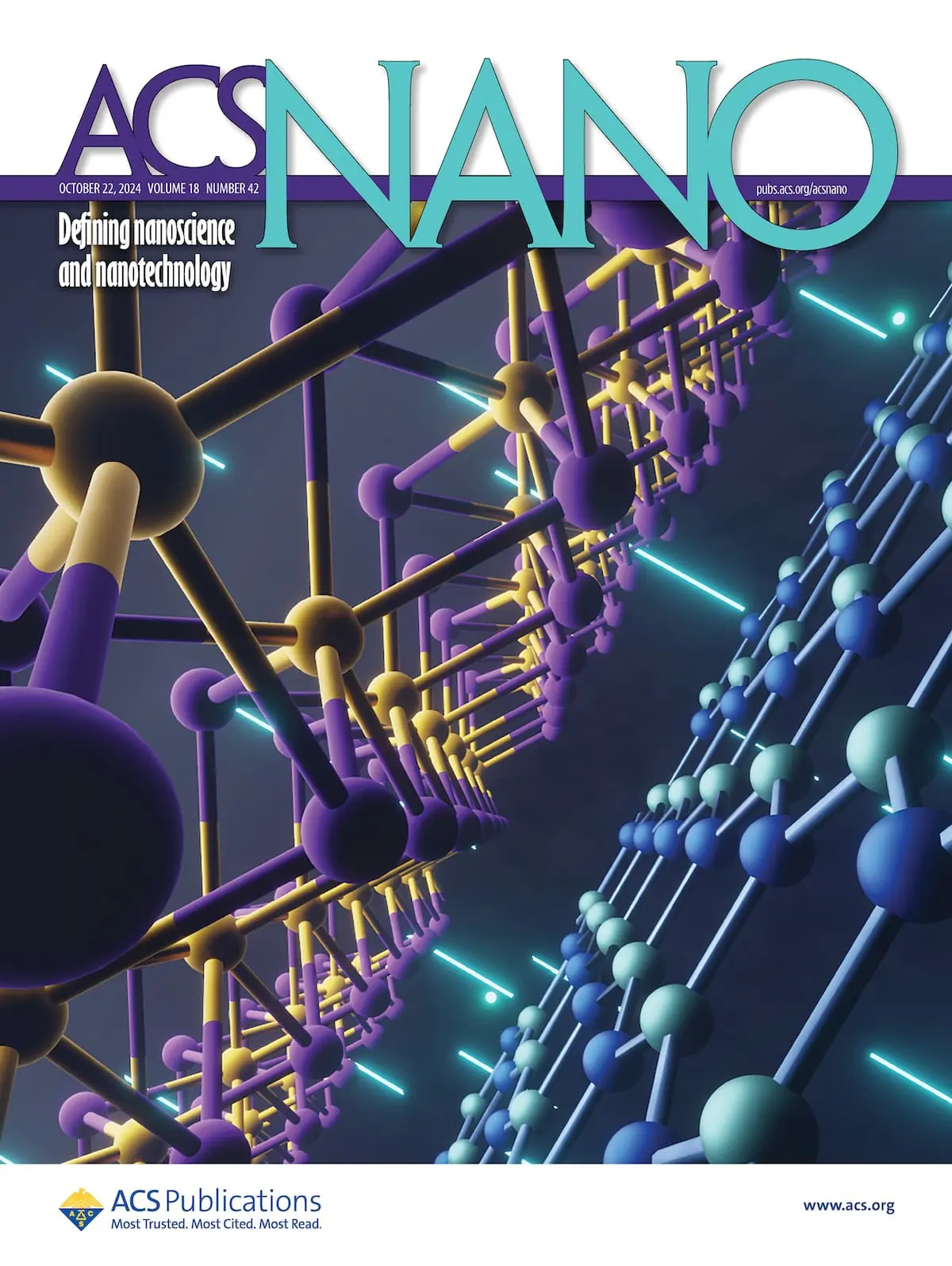
Researchers at NYU Tandon School of Engineering and KAIST have developed a groundbreaking method to identify and characterize atomic-scale defects in hexagonal boron nitride, a two-dimensional material often referred to as “white graphene” due to its remarkable properties. This advance could accelerate the development of next-generation electronics and quantum technologies.
The team, led by Davood Shahrjerdi and Yong-Hoon Kim, detected individual carbon atoms replacing boron atoms in hBN crystals by analyzing electronic “noise” in specially designed transistors. This discovery was made possible by creating a stethoscope-like device that can “hear” the behavior of single atomic defects. The research has significant implications for the future of electronics and quantum technologies, potentially enabling the creation of more perfect quantum material platforms for new physics discoveries or secure communications.
Detecting Atomic-Scale Defects in 2D Materials
Researchers from NYU Tandon School of Engineering and KAIST have developed a novel technique to identify and characterize atomic-scale defects in hexagonal boron nitride (hBN), a two-dimensional material often referred to as “white graphene” due to its remarkable properties. This breakthrough could accelerate the development of next-generation electronics and quantum technologies.
The team successfully detected the presence of individual carbon atoms replacing boron atoms in hBN crystals by analyzing the electronic “noise” in specially designed transistors, similar to hearing a whisper in a quiet room. This achievement was made possible by creating a stethoscope for 2D materials, which allows researchers to “perceive” the behavior of single atomic defects.
The NYU-KAIST partnership, officially launched in September 2022, combines the strengths of both universities to drive advances in research and education. The collaboration involves over 200 faculty members from both institutions and has led to significant breakthroughs in fields such as unconventional electronics and quantum technologies.
Harnessing the Power of hBN
Single-crystal hBN has emerged as a wonder material in scientific circles, promising to transform various fields due to its atomically thin structure and excellent insulating properties. The atomic defects in hBN can degrade its electronic properties, sometimes in ways that could be harnessed for quantum technologies.
The NYU team built a transistor using a few-layer thin molybdenum disulfide (another 2D semiconducting material) sandwiched between layers of hBN. By cooling this device to cryogenic temperatures and applying precise electrical voltages, they were able to observe discrete jumps in the current flowing through the transistor.
These jumps, known as random telegraph signals (RTS), occur when electrons are captured and released by defects in the hBN. By carefully analyzing these signals at different temperatures and voltages, the team was able to determine the energy levels and spatial locations of the defects.
Unveiling the Atomistic Origins of Defects
The KAIST team used advanced computer simulations to clarify the atomistic origins of the experimental observations. Specifically, this combination of experiment and theory revealed that the defects are carbon atoms sitting in places where boron atoms should be in the hBN crystal structure.
Understanding and controlling the defects in 2D materials could have significant implications for the future of electronics and quantum technologies. For example, researchers might be able to create more perfect quantum material platforms for discovering new physics or single-photon emitters for secure communications.
Advancing Quantum Materials and Device Technologies
This work adds to NYU Tandon’s expanding portfolio in quantum materials and device technologies, aligning with the CHIPS and Science Act’s semiconductor innovation goals. Prior research demonstrated nanomanufacturing principles for low-disorder quantum materials and their potential in devices when integrated with superconductors.
The NYU Nanofab, a prototyping facility within the Northeast Regional Defense Technology Hub (NORDTECH), one of eight Microelectronics (ME) Commons hubs in the U.S., further advances the field. The Nanofab specializes in quantum materials and devices integration, serving NYU and regional research communities.
International Collaboration and Funding
The research was supported by multiple grants from the National Science Foundation, the U.S. Department of Energy’s Center for Functional Nanomaterials at Brookhaven National Laboratory, the National Research Foundation of Korea, the BK21 Plus program at KAIST, and computational resources from the KISTI Supercomputing Center. Japanese support was provided by the Japan Society for the Promotion of Science (JSPS) KAKENHI and the World Premier International Research Center Initiative (WPI) of MEXT.
This international collaboration demonstrates the power of joint research efforts in advancing our understanding of 2D materials and their potential applications in quantum technologies.
External Link: Click Here For More




See today’s quantum computing news on Quantum Zeitgeist for the latest breakthroughs in qubits, hardware, algorithms, and industry deals.