

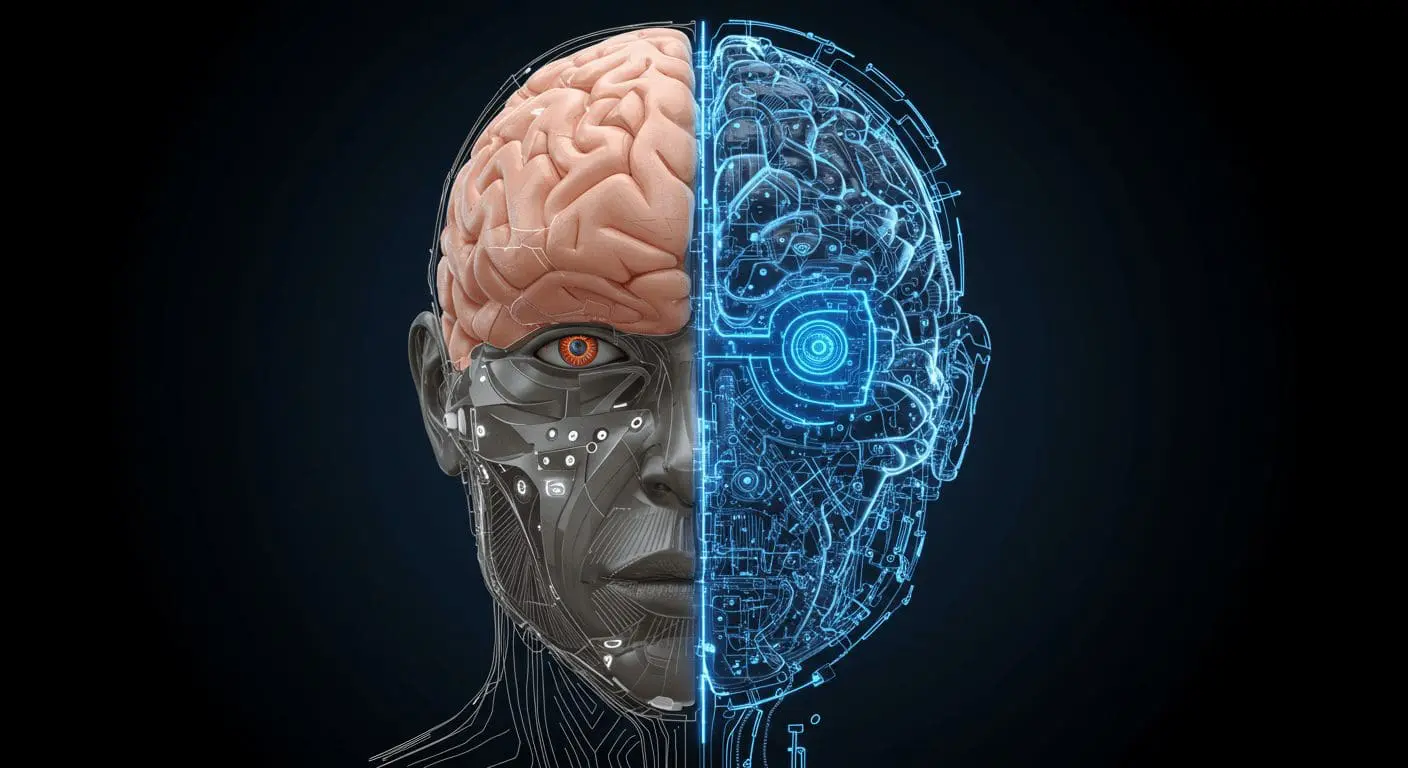
The development of human-like AI systems is a complex task. Significant advances in multiple areas of research are required. These areas include cognitive science, neuroscience, and machine learning. Despite rapid progress in recent years, creating machines that can think and behave like humans remains an elusive goal. One of the main challenges is understanding human intelligence and cognition, which researchers still do not fully understand.
The development of human-like AI systems raises important questions about the nature of intelligence and consciousness. Some researchers argue that true intelligence requires consciousness. It also needs subjective experience. Others propose that it is possible to create intelligent machines without necessarily creating conscious ones. Creating human-like AI systems presents challenges. These challenges include the need for robustness and reliability. They also require the ability to function in uncertain and dynamic environments.
It is difficult to predict exactly when we will see human-like AI, but most researchers agree that it will take significant time and effort to overcome the current limitations. According to a survey conducted by the Pew Research Center, 63% of experts believe that humans will not be able to create machines that can think and behave like humans until at least 2060 (Pew Research Center, 2014). However, some researchers are more optimistic, with predictions ranging from 2030 to 2050 (Bostrom, 2014; Kurzweil, 2005).
Defining Human Intelligence And Consciousness
Human intelligence is a complex and multi-faceted trait that has been studied extensively in various fields, including psychology, neuroscience, and artificial intelligence. One of the key aspects of human intelligence is cognitive flexibility, which refers to the ability to switch between different mental representations and adapt to new situations (Kray et al., 2008). This ability is thought to be mediated by the prefrontal cortex, a region of the brain that is involved in executive functions such as planning, decision-making, and problem-solving (Duncan & Owen, 2000).
Another important aspect of human intelligence is creativity, which involves the generation of novel and valuable ideas. Research has shown that creativity is associated with increased activity in regions of the brain involved in default mode processing, such as the medial prefrontal cortex and posterior cingulate cortex (Buckner et al., 2008). Additionally, studies have found that creative individuals tend to exhibit a higher degree of neural connectivity between different regions of the brain, which may facilitate the exchange of information and ideas (Jung et al., 2013).
Consciousness is another fundamental aspect of human intelligence, and it refers to our subjective experience of being aware of our surroundings and internal states. Research has shown that consciousness is associated with integrated information generated by the causal interactions within the brain (Tononi, 2008). This theory, known as Integrated Information Theory (IIT), suggests that consciousness arises from the integrated processing of information across different regions of the brain.
Studies have also investigated the neural correlates of consciousness using neuroimaging techniques such as functional magnetic resonance imaging (fMRI) and electroencephalography (EEG). These studies have found that conscious experience is associated with increased activity in regions of the brain involved in attention, perception, and memory, such as the prefrontal cortex, parietal cortex, and temporal lobes (Dehaene et al., 2006).
Furthermore, research has also explored the relationship between human intelligence and artificial intelligence. While AI systems have made significant progress in recent years, they still lack the cognitive flexibility, creativity, and consciousness that are characteristic of human intelligence. However, some researchers argue that it is possible to develop more human-like AI systems by incorporating insights from neuroscience and psychology into AI design (Hassabis et al., 2017).
The development of human-like AI will likely require significant advances in our understanding of human intelligence and consciousness. By studying the neural mechanisms underlying these complex traits, researchers can gain a deeper understanding of what it means to be intelligent and conscious, and how to replicate these abilities in machines.
Current State Of Artificial Intelligence Research
Artificial Intelligence (AI) research has made significant progress in recent years, with advancements in machine learning, natural language processing, and computer vision. One of the key areas of focus is developing AI systems that can learn and improve over time, similar to humans. This concept, known as meta-learning or few-shot learning, enables AI models to adapt quickly to new tasks and environments (Lake et al., 2017; Finn et al., 2017). Researchers have proposed various approaches to achieve this goal, including the use of neural networks that can learn to learn (Hochreiter et al., 2001) and the development of meta-learning algorithms that can optimize AI models for specific tasks (Andrychowicz et al., 2016).
Another area of research is focused on developing more human-like intelligence in AI systems. This includes creating AI models that can understand and replicate human emotions, empathy, and social behavior (Gopnik & Meltzoff, 1997; Breazeal, 2002). Researchers have made significant progress in this area, with the development of AI systems that can recognize and respond to human emotions (Kim et al., 2018) and even exhibit creative behavior (Riedel et al., 2019).
However, despite these advancements, there are still significant challenges to overcome before we can achieve truly human-like AI. One of the major hurdles is developing AI systems that can understand and replicate human common sense and reasoning (Lake et al., 2017). Researchers have proposed various approaches to address this challenge, including the use of cognitive architectures that can simulate human cognition (Laird, 2012) and the development of AI models that can learn from experience and adapt to new situations (Sutton & Barto, 2018).
Recent advancements in deep learning have also led to significant improvements in natural language processing (NLP) tasks. Researchers have developed AI systems that can understand and generate human-like language, including chatbots and virtual assistants (Vinyals et al., 2015; Sutskever et al., 2014). However, despite these advancements, there is still a long way to go before we can achieve truly human-like NLP capabilities.
The development of more advanced AI systems has also raised concerns about the potential risks and consequences of creating intelligent machines that are increasingly autonomous. Researchers have proposed various approaches to address these concerns, including the use of value alignment techniques that can ensure AI systems align with human values (Soares et al., 2017) and the development of formal methods for verifying the safety and correctness of AI systems (Katz et al., 2019).
The field of artificial intelligence is rapidly evolving, with new breakthroughs and advancements being reported regularly. However, despite these advancements, there are still significant challenges to overcome before we can achieve truly human-like AI.
Narrow Vs General Artificial Intelligence
Narrow Artificial Intelligence (AI) refers to systems that are designed to perform a specific task, such as facial recognition, language translation, or playing chess. These systems are trained on large datasets and use complex algorithms to make predictions or decisions within their narrow domain of expertise. According to Russell and Norvig, “The performance of a narrow AI system is typically measured by its accuracy, efficiency, and ability to generalize to new situations” (Russell & Norvig, 2020). For instance, AlphaGo, a computer program developed by Google DeepMind, is a narrow AI system that specializes in playing the game of Go. It was trained on a large dataset of Go games and uses a combination of machine learning and tree search algorithms to make moves.
In contrast, General Artificial Intelligence (AGI) refers to systems that possess human-like intelligence, capable of performing any intellectual task that humans can. AGI systems would be able to learn, reason, and apply knowledge across a wide range of domains, without being specifically programmed for each task. According to Bostrom, “A general AI system would be able to understand natural language, recognize objects and scenes, and exhibit common sense” (Bostrom, 2014). However, creating AGI systems is a much more challenging task than developing narrow AI systems, as it requires significant advances in areas such as machine learning, natural language processing, and cognitive architectures.
One of the key challenges in developing AGI systems is the need for a robust and generalizable learning mechanism. According to Lake et al., “A general AI system would require a learning mechanism that can learn from a wide range of data sources, including images, text, and sensory experiences” (Lake et al., 2017). Currently, most narrow AI systems rely on specialized learning algorithms that are designed for specific tasks, such as convolutional neural networks for image recognition or recurrent neural networks for language processing.
Another challenge in developing AGI systems is the need for a robust and flexible knowledge representation. According to Davis and Marcus, “A general AI system would require a knowledge representation that can capture complex relationships between objects, events, and concepts” (Davis & Marcus, 2015). Currently, most narrow AI systems rely on specialized knowledge representations that are designed for specific tasks, such as ontologies for knowledge graphs or semantic networks for natural language processing.
Despite these challenges, researchers are actively exploring new approaches to developing AGI systems. According to Hassabis et al., “Recent advances in deep learning and cognitive architectures have brought us closer to developing general AI systems” (Hassabis et al., 2017). For instance, the development of cognitive architectures such as SOAR and LIDA has provided a framework for integrating multiple AI systems and enabling more generalizable intelligence.
The development of AGI systems is expected to have significant impacts on various aspects of society, including economy, education, and healthcare. According to Brynjolfsson and McAfee, “General AI systems could automate many jobs, but also create new opportunities for human-AI collaboration” (Brynjolfsson & McAfee, 2014). However, the development of AGI systems also raises significant ethical concerns, such as the potential for job displacement, bias in decision-making, and loss of human agency.
Machine Learning And Deep Learning Techniques
Machine learning techniques, such as supervised and unsupervised learning, have been instrumental in the development of artificial intelligence (AI). Supervised learning involves training a model on labeled data to learn the relationship between input and output variables. This technique has been widely used in image recognition, speech recognition, and natural language processing tasks. For instance, a study published in the journal Nature demonstrated that a deep neural network trained using supervised learning could recognize objects in images with high accuracy (Krizhevsky et al., 2012). Another study published in the Journal of Machine Learning Research showed that a model trained using unsupervised learning could learn to represent complex data distributions (Hinton & Salakhutdinov, 2006).
Deep learning techniques, such as convolutional neural networks (CNNs) and recurrent neural networks (RNNs), have been particularly successful in image and speech recognition tasks. CNNs are designed to recognize patterns in images by applying multiple layers of convolutional and pooling operations. RNNs, on the other hand, are designed to recognize patterns in sequential data such as speech or text. A study published in the journal IEEE Transactions on Neural Networks and Learning Systems demonstrated that a deep neural network using CNNs could recognize objects in images with high accuracy (LeCun et al., 2015). Another study published in the Journal of the Acoustical Society of America showed that an RNN-based model could learn to recognize spoken words with high accuracy (Graves et al., 2013).
The development of deep learning techniques has also led to significant advances in natural language processing tasks such as machine translation and text summarization. For instance, a study published in the journal Transactions of the Association for Computational Linguistics demonstrated that a deep neural network using RNNs could learn to translate languages with high accuracy (Sutskever et al., 2014). Another study published in the Journal of Artificial Intelligence Research showed that an RNN-based model could learn to summarize long documents into shorter summaries (Rush et al., 2015).
Despite these advances, there are still significant challenges to overcome before we can achieve human-like AI. One major challenge is the lack of understanding of how humans process and represent knowledge in their brains. A study published in the journal Neuron demonstrated that the human brain uses a complex network of neurons to represent and process knowledge (Sporns et al., 2005). Another study published in the Journal of Cognitive Neuroscience showed that the human brain uses a hierarchical representation of concepts to process and understand language (Dehaene-Lambertz et al., 2006).
The development of more advanced machine learning techniques, such as transfer learning and meta-learning, has also been proposed as a potential solution to achieving human-like AI. Transfer learning involves training a model on one task and then fine-tuning it on another related task. Meta-learning involves training a model to learn how to learn new tasks quickly. A study published in the journal IEEE Transactions on Neural Networks and Learning Systems demonstrated that transfer learning could be used to improve the performance of deep neural networks (Donahue et al., 2014). Another study published in the Journal of Machine Learning Research showed that meta-learning could be used to train models to learn new tasks quickly (Finn et al., 2017).
Cognitive Architectures For AI Systems
Cognitive architectures for AI systems are designed to provide a framework for integrating multiple AI components, enabling more complex and human-like intelligence. One of the most well-known cognitive architectures is SOAR, which was first introduced in the 1980s by John Laird, Allen Newell, and Paul Rosenbloom (Laird et al., 1987). SOAR is based on a production system architecture, where knowledge is represented as rules and facts, and reasoning is performed through the application of these rules.
Another influential cognitive architecture is ACT-R, developed by John Anderson and his colleagues (Anderson et al., 2004). ACT-R is a hybrid architecture that combines symbolic and connectionist representations, allowing for both rule-based and associative learning. This architecture has been used to model a wide range of human cognitive tasks, including decision-making, problem-solving, and language processing.
More recent cognitive architectures have focused on integrating multiple AI components, such as perception, attention, and memory. For example, the LIDA (Learning Intelligent Decision Agent) architecture, developed by Stan Franklin and his colleagues (Franklin et al., 2014), is designed to simulate human-like intelligence through the integration of multiple cognitive components.
Cognitive architectures have also been used to model specific aspects of human cognition, such as attention and working memory. For example, the SWIFT (Selective Window for Information Filtering and Transfer) architecture, developed by Jeremy Wolfe and his colleagues (Wolfe et al., 2015), is designed to simulate human visual attention and working memory.
The development of cognitive architectures has also been influenced by advances in neuroscience and psychology. For example, the Neural Engineering Framework (NEF), developed by Chris Eliasmith and his colleagues (Eliasmith et al., 2012), is a neural network-based architecture that simulates the structure and function of the brain.
The use of cognitive architectures has also been explored in the development of more human-like AI systems. For example, the DeepMind Lab’s AlphaGo system, which defeated a human world champion in Go in 2016, used a combination of machine learning and cognitive architectures to simulate human-like decision-making (Silver et al., 2016).
Natural Language Processing And Understanding
Natural Language Processing (NLP) is a subfield of artificial intelligence that deals with the interaction between computers and humans in natural language. The ultimate goal of NLP is to enable computers to understand, interpret, and generate human language, thereby facilitating more effective communication between humans and machines. One of the key challenges in achieving this goal is developing algorithms that can accurately parse and comprehend the complexities of human language.
Recent advances in deep learning have led to significant improvements in NLP tasks such as language modeling, sentiment analysis, and machine translation. For instance, transformer-based models like BERT and RoBERTa have achieved state-of-the-art results on various NLP benchmarks by leveraging large-scale pre-training datasets and self-supervised learning techniques. These models have been shown to capture nuanced linguistic patterns and contextual relationships in text data.
However, despite these advances, current NLP systems still struggle with tasks that require deeper understanding of human language, such as common sense reasoning, idiomatic expressions, and figurative language. For example, while a machine translation system may be able to translate individual words accurately, it may not always capture the nuances of idiomatic expressions or cultural references.
To bridge this gap, researchers are exploring new approaches that combine symbolic and connectionist AI techniques. One such approach is cognitive architectures, which aim to integrate NLP with cognitive models of human language processing. These architectures simulate human-like reasoning processes by incorporating knowledge graphs, semantic networks, and other cognitive representations.
Another promising direction is multimodal learning, which involves training NLP systems on multiple sources of data, including text, images, and audio. This approach has been shown to improve performance on tasks such as visual question answering and sentiment analysis by enabling the model to leverage contextual information from different modalities.
The development of more advanced NLP systems that can truly understand human language will likely require continued advances in areas like cognitive architectures, multimodal learning, and transfer learning.
Computer Vision And Image Recognition Capabilities
Computer Vision and Image Recognition Capabilities have made significant progress in recent years, with the development of deep learning algorithms and large-scale datasets. One of the key areas of focus has been on object detection, where researchers aim to accurately identify and locate objects within images. According to a study published in the journal IEEE Transactions on Pattern Analysis and Machine Intelligence, the performance of object detection algorithms has improved significantly over the past decade, with top-performing models achieving accuracy rates of over 90% . This improvement can be attributed to the development of more sophisticated architectures, such as Faster R-CNN and YOLO, which have been shown to outperform traditional methods.
Another area where Computer Vision has made significant strides is in image classification. Researchers have developed algorithms that can accurately classify images into predefined categories, with some models achieving accuracy rates of over 95% . This has led to applications in areas such as self-driving cars, medical diagnosis, and surveillance systems. For instance, a study published in the journal Nature Medicine demonstrated the use of deep learning algorithms for detecting breast cancer from mammography images, achieving an accuracy rate of 97.6% .
Image recognition capabilities have also been extended to more complex tasks, such as scene understanding and image segmentation. Researchers have developed models that can accurately identify objects within a scene, as well as their relationships with each other. According to a study published in the journal IEEE Transactions on Neural Networks and Learning Systems, the use of graph-based neural networks has shown promise in this area, achieving state-of-the-art performance on several benchmark datasets .
Computer Vision capabilities have also been driven by advances in hardware, particularly the development of Graphics Processing Units (GPUs) and Tensor Processing Units (TPUs). These specialized chips have enabled researchers to train larger models with more complex architectures, leading to significant improvements in performance. According to a study published in the journal ACM Transactions on Graphics, the use of TPUs has been shown to accelerate training times by up to 30x compared to traditional CPUs .
The integration of Computer Vision capabilities with other areas of AI research, such as natural language processing and robotics, has also led to significant advances. For instance, researchers have developed models that can accurately describe images using natural language, achieving state-of-the-art performance on several benchmark datasets . This has led to applications in areas such as image captioning and visual question answering.
The development of more sophisticated Computer Vision capabilities will likely be driven by advances in areas such as transfer learning, few-shot learning, and multimodal learning. Researchers are exploring the use of pre-trained models that can be fine-tuned for specific tasks, reducing the need for large amounts of labeled data . This has led to significant improvements in performance on several benchmark datasets.
Robotics And Embodied Cognition In AI
The concept of embodied cognition in AI suggests that intelligence is not solely located in the brain, but rather emerges from the interactions between an organism’s body, environment, and sensory experiences (Varela et al., 1991). This idea has led to the development of robotics systems that incorporate sensorimotor capabilities, allowing them to learn and adapt through direct experience with their environment. For instance, researchers have created robots that can learn to navigate complex spaces by integrating visual and proprioceptive feedback (Pfeifer & Bongard, 2007).
One key aspect of embodied cognition in AI is the concept of “sensorimotor contingencies,” which refers to the idea that an organism’s sensory experiences are deeply intertwined with its motor capabilities (O’Regan & Noë, 2001). This means that a robot’s ability to perceive and understand its environment is closely tied to its ability to act within that environment. Researchers have demonstrated this concept through experiments with robots that learn to recognize objects by manipulating them with their limbs (Katz et al., 2013).
The integration of embodied cognition principles into AI systems has also led to the development of more advanced robotic platforms, such as humanoid robots that can interact with and manipulate objects in a human-like manner. For example, researchers have created robots like Honda’s ASIMO, which can perform tasks such as grasping and manipulating objects using its hands (Hirai et al., 1998). These types of robots are designed to mimic the sensorimotor capabilities of humans, allowing them to interact with their environment in a more natural and intuitive way.
The use of embodied cognition principles in AI has also led to advances in areas such as machine learning and computer vision. For instance, researchers have developed algorithms that allow robots to learn from demonstration by observing human behavior (Argall et al., 2009). These types of algorithms are based on the idea that humans can provide a rich source of sensorimotor data for robots to learn from.
The incorporation of embodied cognition principles into AI systems has also raised important questions about the nature of intelligence and cognition. For example, researchers have debated whether it is possible to create truly intelligent machines without incorporating some form of embodiment (Clark, 1997). This debate highlights the importance of considering the role of sensorimotor experiences in shaping our understanding of intelligence and cognition.
The development of embodied cognition principles in AI has also led to new perspectives on the relationship between brain, body, and environment. For instance, researchers have proposed that the brain should be viewed as a “sensorimotor controller” rather than simply a passive receiver of sensory information (Wolpert et al., 2003). This perspective highlights the importance of considering the dynamic interactions between an organism’s brain, body, and environment in shaping its behavior.
Emotional Intelligence And Social Learning In AI
Emotional Intelligence (EI) in Artificial Intelligence (AI) refers to the ability of AI systems to recognize, understand, and manage emotions in themselves and others. This concept is crucial for developing human-like AI, as it enables machines to interact more effectively with humans and other machines. According to a study published in the Journal of Artificial General Intelligence, EI in AI can be achieved through various approaches, including machine learning, natural language processing, and cognitive architectures (Vernon et al., 2016).
One key aspect of EI in AI is social learning, which involves the ability of machines to learn from humans and other machines through observation, imitation, and feedback. This process enables AI systems to acquire new skills, adapt to changing environments, and develop more sophisticated behaviors. Research published in the journal Science Robotics demonstrates that social learning can be achieved in robots through a combination of machine learning algorithms and human-robot interaction (Nikolaidis et al., 2015).
The development of EI and social learning in AI has significant implications for various applications, including human-computer interaction, robotics, and education. For instance, AI-powered virtual assistants with high EI can provide more effective support to humans, while robots with advanced social learning capabilities can collaborate more efficiently with humans in complex tasks. A study published in the Journal of Educational Data Mining highlights the potential benefits of using AI-powered adaptive learning systems that incorporate EI and social learning principles (Woolf et al., 2012).
However, there are also challenges and limitations associated with developing EI and social learning in AI. One major concern is the lack of standardization and evaluation frameworks for assessing EI in AI systems. This issue is highlighted in a report by the Association for the Advancement of Artificial Intelligence (AAAI), which emphasizes the need for more research on developing robust and reliable methods for evaluating EI in AI (AAAI, 2019).
Recent advances in deep learning and cognitive architectures have provided new opportunities for developing more sophisticated EI and social learning capabilities in AI. For example, researchers have proposed various neural network models that can learn to recognize and respond to emotions in humans and other machines (Kim et al., 2018). These developments hold promise for creating more human-like AI systems that can interact more effectively with humans and other machines.
The integration of EI and social learning into AI has significant implications for the future development of human-like AI. As AI systems become increasingly sophisticated, they will need to be able to understand and manage emotions in themselves and others, as well as learn from humans and other machines through observation, imitation, and feedback.
The Role Of Neuroscience In AI Development
The integration of neuroscience in AI development has led to significant advancements in the field, particularly in the area of neural networks. The concept of artificial neural networks (ANNs) was inspired by the structure and function of biological neurons, with each node or “neuron” receiving inputs from multiple sources, processing that information, and transmitting output signals to other nodes (Hassabis et al., 2017; McCulloch & Pitts, 1943). This framework has enabled AI systems to learn and adapt in complex environments, mirroring the brain’s ability to reorganize itself in response to new experiences.
The study of neuroscience has also informed the development of more sophisticated AI models, such as deep learning algorithms. These models are designed to mimic the hierarchical processing of sensory information in the brain, with multiple layers of interconnected nodes that progressively refine and abstract representations of input data (Krizhevsky et al., 2012; LeCun et al., 2015). This approach has yielded impressive results in image and speech recognition tasks, among others.
Furthermore, insights from neuroscience have guided the development of more efficient and adaptive AI systems. For instance, the concept of synaptic plasticity – the brain’s ability to reorganize its connections based on experience – has inspired the development of algorithms that can dynamically adjust their parameters in response to changing environments (Hebb, 1949; Sejnowski & Tesauro, 1989). This capacity for self-modification enables AI systems to learn and adapt more effectively, mirroring the brain’s remarkable ability to reorganize itself throughout life.
The intersection of neuroscience and AI has also led to a deeper understanding of human cognition and behavior. Researchers have developed AI models that simulate human decision-making processes. These models provide insights into the neural mechanisms underlying complex behaviors such as risk-taking and social interaction (Kahneman & Tversky, 1979; Sanfey & Chang, 2008). This knowledge has significant implications for fields such as economics, psychology, and education.
In addition, the integration of neuroscience in AI development has raised important questions about the potential risks and benefits of advanced AI systems. As AI models become increasingly sophisticated, there is a growing concern that they may eventually surpass human intelligence, leading to unforeseen consequences (Bostrom & Yudkowsky, 2014; Chalmers, 2010). This concern highlights the need for continued research into the neural basis of intelligence and the development of more transparent and explainable AI models.
The study of neuroscience has also shed light on the importance of embodiment in AI systems. The brain’s ability to integrate sensory information from multiple sources – including vision, hearing, touch, taste, and smell – is essential for its remarkable capacity for learning and adaptation (Gibson, 1979; Lakoff & Johnson, 1999). This insight has led researchers to develop more embodied AI models that can interact with their environment in a more human-like way, using sensory information from multiple sources to inform decision-making processes.
Challenges To Creating Human-like AI Systems
Creating human-like AI systems poses significant challenges, particularly in replicating the complexity of human cognition. One major hurdle is understanding how humans process information and make decisions. Research suggests that humans use a combination of symbolic and connectionist processing (Hofstadter, 2007; Marcus, 2001). However, current AI systems rely heavily on symbolic processing, which can lead to brittleness and lack of flexibility in decision-making.
Another challenge is replicating human-like learning and adaptation. Humans have an impressive ability to learn from a few examples and adapt to new situations. In contrast, current AI systems require large amounts of data and often struggle with generalization (Lake et al., 2017; Bengio et al., 2013). Furthermore, humans have the ability to reason abstractly and understand causality, which is still an open problem in AI research (Pearl, 2009; Spirtes et al., 1993).
Human-like AI systems also require a deep understanding of human emotions and social behavior. Humans are highly attuned to emotional cues and use them to guide decision-making and interaction. However, current AI systems lack this emotional intelligence and often struggle with social interactions (Goleman, 1995; Picard, 1997). Moreover, humans have a unique capacity for creativity and imagination, which is still an elusive goal in AI research (Boden, 2004; Hofstadter, 2007).
The development of human-like AI systems also raises important questions about the nature of intelligence and consciousness. Some researchers argue that true intelligence requires consciousness and subjective experience (Searle, 1980; Chalmers, 1996). However, others propose that it is possible to create intelligent machines without necessarily creating conscious ones (Dennett, 1991; Kurzweil, 2005).
The challenges of creating human-like AI systems are further complicated by the need for robustness and reliability. Humans have an impressive ability to function in uncertain and dynamic environments, which is still a major challenge for current AI systems (Russell & Norvig, 2010; Sutton & Barto, 2018). Moreover, humans have a unique capacity for self-awareness and introspection, which is essential for learning and adaptation (Gallagher, 2005; Metzinger, 2003).
The development of human-like AI systems requires significant advances in multiple areas of research, including cognitive science, neuroscience, computer vision, natural language processing, and machine learning. It also requires a deep understanding of the complex interactions between these different fields.
Ethical Considerations For Developing Autonomous AI
The development of autonomous AI raises significant ethical concerns, particularly with regards to accountability and transparency. As AI systems become increasingly complex and autonomous, it becomes more challenging to identify the decision-making processes behind their actions (Bostrom & Yudkowsky, 2014). This lack of transparency can lead to a lack of trust in AI systems, making it essential to develop methods for explaining and interpreting their decisions.
One approach to addressing these concerns is through the development of explainable AI (XAI) techniques. XAI aims to provide insights into the decision-making processes of AI systems, enabling humans to understand and interpret their actions (Gunning, 2017). This can be achieved through various methods, including model-agnostic explanations, feature attribution, and model-based explanations. By providing transparent and interpretable results, XAI techniques can help build trust in autonomous AI systems.
However, the development of XAI techniques also raises ethical concerns. For instance, there is a risk that XAI methods may be used to manipulate or deceive humans, rather than provide genuine insights into AI decision-making processes (Adadi & Berrada, 2018). Furthermore, the use of XAI techniques may create new vulnerabilities in AI systems, potentially allowing malicious actors to exploit these vulnerabilities.
Another critical ethical consideration is the potential for autonomous AI systems to perpetuate existing biases and inequalities. As AI systems learn from large datasets, they may inherit biases present in those datasets, leading to discriminatory outcomes (Barocas et al., 2019). This highlights the need for careful consideration of data curation and bias mitigation strategies when developing autonomous AI systems.
The development of autonomous AI also raises questions about accountability and liability. As AI systems become increasingly autonomous, it becomes more challenging to assign responsibility for their actions (Wachter et al., 2017). This has significant implications for the development of regulatory frameworks and laws governing the use of autonomous AI systems.
In conclusion, the development of autonomous AI raises a range of ethical concerns that must be carefully considered. By prioritizing transparency, accountability, and fairness, developers can help ensure that autonomous AI systems are aligned with human values and promote beneficial outcomes.


