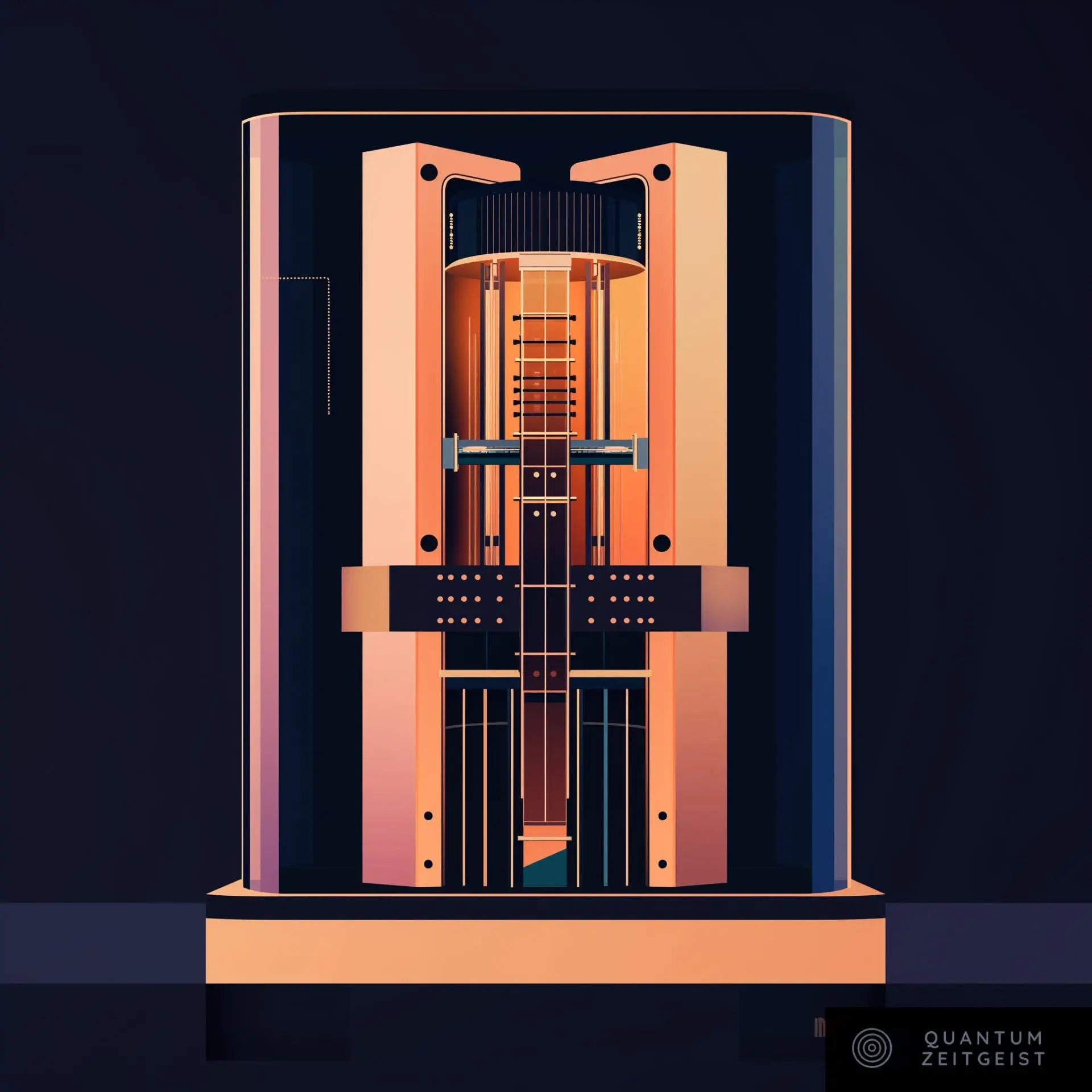
Quantum computing, a rapidly evolving field, uses principles of quantum mechanics to process information. Unlike traditional computers that use bits, quantum computers use quantum bits or qubits. The power of quantum computing lies in the properties of superposition and interference. The potential applications of this technology are vast, including cryptography, drug discovery, quantum simulation, machine learning, and solving optimization problems. The article explores the potential ‘killer application’ or quantum applications for quantum computers, speculating on the future of computing.
Quantum Computing: Unraveling the Enigma and Exploring Its Potential Applications
In this exploration, we delve into the intriguing world of quantum computing, a domain in which traditional physics rules are defied and exponentially amplify computational power. Our central question is: What is the killer application for quantum computers? This is not merely an inquiry into the most impactful use of this revolutionary technology but a speculative journey into the future of computing itself.
Understanding Quantum Computing: A Primer for the Layman
Quantum computing, a recent field that has gained significant traction, is a complex and often misunderstood subject. At its core, quantum computing leverages the principles of quantum mechanics to process information. Unlike classical computers, which use bits as their most minor information units, quantum computers use quantum bits or qubits.
The power of quantum computing lies in the properties of superposition and interference. Superposition allows a qubit to exist in a state that is a combination of 0 and 1, with the probability of each state determined by the qubit’s quantum state. Conversely, interference is a phenomenon that occurs when two or more waves combine to form a resultant wave. In quantum computing, interference is used to manipulate the probabilities of the states of qubits, guiding the computation towards correct answers and away from incorrect ones.
The potential applications of quantum computing are vast and varied. From cryptography to drug discovery, the possibilities are seemingly endless. However, we are still in the early stages of quantum computing development. Companies like IBM and Google are at the forefront of this technological revolution, but the ‘killer application’ for quantum computers remains elusive.
The Quest for the ‘Killer Application’ in Quantum Computing
A ‘killer application’, in the context of computing, refers to a software application that is so useful or desirable that it proves the core value of some larger technology. In the realm of quantum computing, the ‘killer application’ would be a task or problem that quantum computers can solve significantly better or faster than classical computers.
Speculative developments in quantum computing suggest a range of potential ‘killer applications’. One promising area is cryptography. Quantum computers could potentially crack many of the current cryptographic systems, posing significant implications for data security. However, this is a double-edged sword. While quantum computers could break current encryption methods, they could also usher in a new era of quantum cryptography, providing even stronger security measures.
Another potential ‘killer application’ for quantum computers lies in drug discovery. Quantum computers could potentially model complex molecular interactions at an atomic level, which is currently beyond classical computers’ reach. This could revolutionize the pharmaceutical industry, accelerating the discovery of new drugs and treatments.

Quantum Computing and Cryptography: A Potential Killer Application
Cryptography, the practice and study of secure communication in the presence of adversaries, is a cornerstone of modern digital communication and data security. Classical computers, which operate on bits that can be either 0 or 1, have been the backbone of cryptographic systems for decades. However, the advent of quantum computing, with its unique properties of superposition and interference, could potentially disrupt this landscape.
Quantum computers could potentially crack many of the cryptographic systems currently in use, posing significant implications for data security. This is due to the fact that many current cryptographic systems rely on the difficulty of factoring large numbers, a task that quantum computers could perform exponentially faster than classical computers.
Quantum Simulation: Another Possible Killer Application for Quantum Computers
Quantum simulation, the use of a quantum computer to simulate a quantum system’s behavior, could potentially revolutionize fields such as materials science and chemistry. Quantum systems are notoriously difficult to simulate on classical computers due to the exponential growth in complexity with the addition of each quantum particle. Quantum computers, however, are inherently suited to this task due to their ability to manipulate and store information in quantum bits or qubits.
Machine Learning and Quantum Computing: A Match Made in Heaven?
Machine learning, a subset of artificial intelligence, involves the development of algorithms that allow computers to learn from and make decisions based on data. The intersection of machine learning and quantum computing could potentially revolutionize how we process and interpret vast amounts of data.
Quantum computers, with their unique properties of superposition and interference, could potentially enhance machine learning algorithms. This could potentially allow quantum computers to process vast amounts of data in ways that classical computers cannot.
Quantum Computing and Optimization Problems: A Potential Game-Changer
Optimization problems, which involve finding the best solution from a set of possible solutions, are ubiquitous in numerous fields, from logistics and supply chain management to financial portfolio optimization and machine learning. Quantum computers, with their unique properties of superposition and interference, could offer significant advantages in solving complex optimization problems.
The Future of Quantum Computing: What’s Next?
As we look towards the future of quantum computing, it’s clear that we are on the cusp of a new era in information processing. However, the field of quantum computing is still in its infancy and much of its potential remains untapped.
One of the key challenges in quantum computing is scalability. Currently, quantum computers are limited by the number of qubits they can effectively manipulate and control. However, companies like IBM and Google are making significant strides in this area, developing new techniques and technologies to increase the number of qubits in their quantum computers.
Another challenge is quantum error correction. Quantum systems are inherently fragile and susceptible to errors due to environmental noise. Developing effective quantum error correction techniques is crucial for the reliability and robustness of quantum computers.
In conclusion, the future of quantum computing is bright but not without its challenges. As we continue exploring the quantum realm, we may yet uncover applications we can’t even imagine today. The ‘killer application’ for quantum computers remains a topic of ongoing research and debate. Still, one thing is clear: the potential of quantum computing is vast, and we are just beginning to scratch the surface.
References
- Lloyd, S. (1996). Universal quantum simulators. Science, 273(5278), 1073-1078.
- Yanofsky, N. S., & Mannucci, M. A. (2013). Quantum computing for computer scientists. Cambridge University Press.
- Lloyd, S., Mohseni, M., & Rebentrost, P. (2013). Quantum algorithms for supervised and unsupervised machine learning. arXiv preprint arXiv:1307.0411.
- Mermin, N. D. (2007). Quantum computer science: An introduction. Cambridge University Press.
- Output References:
- Biamonte, J., Wittek, P., Pancotti, N., Rebentrost, P., Wiebe, N., & Lloyd, S. (2017). Quantum machine learning. Nature, 549(7671), 195-202.
- Feynman, R. P. (1982). Simulating physics with computers. International Journal of Theoretical Physics, 21(6-7), 467-488.
- Preskill, J. (2018). Quantum Computing in the NISQ era and beyond. Quantum, 2, 79.
- Ladd, T. D., Jelezko, F., Laflamme, R., Nakamura, Y., Monroe, C., & O’Brien, J. L. (2010). Quantum computers. Nature, 464(7285), 45-53.
- Shor, P. W. (1999). Polynomial-Time Algorithms for Prime Factorization and Discrete Logarithms on a Quantum Computer. SIAM Review, 41(2), 303-332.
- Bennett, C. H., & Brassard, G. (2014). Quantum cryptography: Public key distribution and coin tossing. Theoretical Computer Science, 560, 7-11.
- Schuld, M., Sinayskiy, I., & Petruccione, F. (2014). An introduction to quantum machine learning. Contemporary Physics, 56(2), 172-185.
- Bennett, C. H., & DiVincenzo, D. P. (2000). Quantum information and computation. Nature, 404(6775), 247-255.
- Sutor, R. S. (2019). Dancing with qubits: How quantum computing works and how it can change the world. No Starch Press.
- Farhi, E., Goldstone, J., & Gutmann, S. (2014). A Quantum Approximate Optimization Algorithm. arXiv preprint arXiv:1411.4028.
- Georgescu, I. M., Ashhab, S., & Nori, F. (2014). Quantum simulation. Reviews of Modern Physics, 86(1), 153.
- Nielsen, M. A., & Chuang, I. L. (2010). Quantum computation and quantum information: 10th anniversary edition. Cambridge University Press.