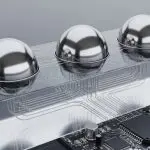
As quantum computers emerge, their potential to solve complex problems has captivated scientists and laymen. But what makes these machines tick? At their core, quantum computers rely on qubits, which exist in a superposition state, representing both 0 and 1 in a superposition. This property enables parallel processing of vast information, making them exponentially more efficient than classical computers. We look into the Components of a Quantum Computer.
However, fragile qubits require sophisticated hardware to shield them from environmental disturbances. This includes cryogenics, magnetic shielding, and vibration isolation to maintain quantum control. Understanding these components is crucial for harnessing the power of quantum computers.
As we approach an era of unprecedented computational power, the notion of a quantum computer has captivated the imagination of scientists and laymen alike. The promise of solving complex problems that have long plagued classical computers is compelling, but what exactly makes up these enigmatic machines? At its core, a quantum computer relies on distinct components that depart radically from their classical counterparts.
The fundamental building block of any quantum computer is the qubit, short for quantum bit. Unlike classical bits, which can exist in one of two states – 0 or 1 – qubits inhabit a realm of superposition, where they can represent both 0 and 1 simultaneously. This property allows qubits to process vast amounts of information in parallel, rendering them exponentially more efficient than their classical brethren.
However, the fragile nature of qubits necessitates the development of sophisticated quantum hardware designed to shield these delicate entities from environmental noise. Quantum processing units (QPUs), the quantum equivalent of central processing units (CPUs), are engineered to precisely manipulate and control qubits. The architecture of QPUs is a far cry from the familiar landscape of classical computers, where transistors and diodes reign supreme.
Beyond the realm of hardware lies the domain of quantum software, which must be crafted to harness the unique properties of qubits. Quantum algorithms, such as Shor’s and Grover’s, have been devised to exploit the parallelism inherent in qubit-based computation. The development of these algorithms is contingent upon a deep understanding of quantum control and the ability to manipulate and measure qubits with precision.
As researchers continue to push the boundaries of quantum computing, the components that comprise these machines will play an increasingly vital role in shaping our understanding of this nascent technology. In the following article, we will delve into the intricacies of these components, exploring the various types of qubits, the architecture of QPUs, and the software frameworks that govern their behavior.
Quantum Computers
Core Components of Quantum Computers
The core component of a quantum computer is the quantum processor, which consists of multiple quantum bits or qubits. Qubits are the fundamental units of quantum information and are responsible for storing and processing quantum data. Unlike classical bits, which can exist in only two states, 0 or 1, qubits can exist in multiple states simultaneously, allowing for parallel processing of vast amounts of data.
Qubits are typically made from superconducting materials, such as niobium or aluminum, and are cooled to extremely low temperatures using liquid helium or other cryogenic fluids. This cooling process is necessary to reduce thermal noise and maintain the fragile quantum states of the qubits.
Another essential component of a quantum computer is the control electronics, which are responsible for manipulating the qubits and performing quantum operations. These electronics typically consist of high-frequency microwave generators, amplifiers, and attenuators, as well as low-noise amplifiers and digitizers.
Quantum computers also require a sophisticated software framework to manage the complex quantum algorithms and control the quantum processor. This software typically includes tools for programming and optimizing quantum circuits, as well as interfaces for interacting with the quantum hardware.
In addition to these core components, quantum computers often include additional subsystems, such as cryogenic refrigeration systems, magnetic shielding, and vibration isolation systems, which are necessary to maintain the fragile quantum states of the qubits.
QPUs and their role in quantum computing
Quantum Processing Units (QPUs) play a crucial role in quantum computing as they are responsible for executing quantum algorithms and performing calculations on quantum bits or qubits. A QPU is essentially the central processing unit of a quantum computer, analogous to the classical central processing unit (CPU) in traditional computers.
The core component of a QPU is the quantum gate array, which consists of a series of quantum gates that perform specific operations on qubits. These gates are the quantum equivalent of logic gates in classical computing and are responsible for manipulating the state of qubits. The quantum gate array is typically implemented using superconducting circuits or ion traps.
QPUs also require a robust control system to manipulate the quantum states of qubits. This involves precise control over parameters such as phase, amplitude, and frequency of microwave pulses used to drive the quantum gates. Advanced control systems, such as those based on machine learning algorithms, are being developed to optimize QPU performance.
In addition to the quantum gate array and control system, QPUs also require a robust readout mechanism to measure the state of qubits. This is typically achieved using superconducting qubit readout techniques or ion trap-based detection methods.
The development of QPUs has been driven by advances in materials science, particularly in the area of superconducting materials and nanofabrication. For example, the discovery of high-temperature superconductors has enabled the development of more robust and scalable QPU architectures.
QPUs have the potential to revolutionize computing by solving complex problems that are currently intractable using classical computers. However, significant technical challenges remain, including reducing error rates and increasing the scalability of QPUs.
Defining qubits, the fundamental units of quantum information
A qubit is the fundamental unit of quantum information, and it is the quantum equivalent of a classical bit. Unlike classical bits, which can only exist in two states, 0 or 1, qubits can exist in multiple states simultaneously, known as superposition. This property allows qubits to process multiple possibilities simultaneously, making them incredibly powerful for certain types of computations.
Qubits are typically represented by the symbol and are described using the language of quantum mechanics. Mathematically, a qubit can be represented as a linear combination of two basis states, and , where α and β are complex numbers that satisfy the normalization condition |α|^2 + |β|^2 = 1. This mathematical representation is known as the Bloch sphere.
The components of a quantum computer include qubits, quantum gates, and quantum measurement devices. Quantum gates are the quantum equivalent of logic gates in classical computers and are used to manipulate the state of qubits. Quantum measurement devices are used to extract information from qubits, which collapses their superposition into a single state.
Qubits can be physically realized using various systems, including superconducting circuits, ion traps, and photonics. Superconducting qubits, for example, use tiny loops of superconducting material to store quantum information. Ion trap qubits, on the other hand, use electromagnetic fields to trap and manipulate individual ions.
The fragile nature of qubits requires them to be isolated from their environment to maintain their quantum state. This is known as quantum error correction, and it is an active area of research in the development of practical quantum computers. Quantum error correction codes, such as the surface code, have been developed to mitigate the effects of decoherence.
The manipulation of qubits is a complex task that requires precise control over the quantum gates and measurement devices. This has led to the development of various quantum programming languages, including Q# and Qiskit, which provide a high-level interface for programming quantum computers.
Qubits vs classical bits, understanding the key differences
A qubit is the fundamental unit of quantum information, and it differs significantly from its classical counterpart, the bit.
Unlike classical bits, which can exist in only two states, 0 or 1, qubits can exist in multiple states simultaneously, known as superposition. This property allows qubits to process multiple possibilities simultaneously, making them exponentially more powerful than classical bits for certain types of computations. For instance, a single qubit can represent both 0 and 1 at the same time, whereas a classical bit can only be either 0 or 1.
Another key difference between qubits and classical bits is their ability to become entangled. When two qubits are entangled, their properties become correlated in such a way that the state of one qubit cannot be described independently of the others, even when they are separated by large distances. This property allows for the creation of quantum gates, which are the quantum equivalent of logic gates in classical computers.
Qubits are also extremely sensitive to their environment, and this sensitivity is known as decoherence. Decoherence causes qubits to lose their quantum properties and behave classically, making it difficult to maintain the fragile state of a qubit over time. This sensitivity requires quantum computers to be isolated from their environment, which can be achieved through various methods such as cryogenic cooling or electromagnetic shielding.
Classical bits, on the other hand, are robust against environmental influences and do not suffer from decoherence. They can be easily copied and measured without disturbing their state, making them ideal for classical computations.
The components of a quantum computer include qubits, quantum gates, and a control system to manipulate the qubits. The control system is responsible for applying the desired quantum operations to the qubits, which are then measured to obtain the output.
Quantum hardware, the physical systems hosting qubits
The core component of a quantum computer is the quantum processor unit (QPU), which consists of multiple qubits, quantum gates, and control electronics. Qubits are the fundamental units of quantum information, and they can exist in multiple states simultaneously, allowing for parallel processing of vast amounts of data.
Superconducting circuits are a popular choice for building qubits due to their ability to maintain quantum coherence at very low temperatures. These circuits consist of superconducting materials, such as niobium or aluminum, which are cooled to near absolute zero using liquid helium or other cryogenic fluids. The quantum states in these circuits are manipulated using microwave pulses, allowing for the implementation of quantum gates and other quantum operations.
Another approach to building qubits is through the use of ion traps, where individual atoms are confined using electromagnetic fields and manipulated using laser light. Ion trap systems have demonstrated high fidelity and long coherence times, making them a promising platform for large-scale quantum computing.
Quantum computers also require sophisticated control electronics to manipulate and measure the qubits. These control systems typically consist of arbitrary waveform generators, amplifiers, and digitizers, which are used to generate the precise microwave pulses or laser light needed to control the qubits.
The cryogenic environment required for many quantum computing architectures necessitates the use of advanced refrigeration systems, such as dilution refrigerators or adiabatic demagnetization refrigerators. These systems enable the cooling of qubits to temperatures below 1 Kelvin, allowing for the maintenance of quantum coherence over extended periods.
Types of qubits, from superconducting to topological qubits
Superconducting qubits are one type of qubit that relies on the principles of superconductivity to store and manipulate quantum information. These qubits consist of tiny loops of superconducting material, known as Josephson junctions, which can exist in two distinct energy states simultaneously, a phenomenon known as a superposition. This property allows superconducting qubits to process multiple possibilities simultaneously, making them suitable for quantum computing applications.
Another type of qubit is the ion trap qubit, which uses electromagnetic fields to confine and manipulate individual ions. These ions are cooled to near absolute zero temperatures using laser light, allowing their quantum states to be precisely controlled. Ion trap qubits have been shown to exhibit high fidelity and long coherence times, making them a promising candidate for large-scale quantum computing.
Topological qubits, on the other hand, rely on exotic particles called non-Abelian anyons, which are predicted to exist in certain types of materials. These anyons can be braided around each other to perform quantum operations, providing a robust and fault-tolerant way of processing quantum information. Topological qubits have the potential to revolutionize quantum computing due to their inherent error correction capabilities.
Photonic qubits, which encode quantum information onto particles of light, are another type of qubit being explored. These qubits can be easily manipulated using optical components, such as beam splitters and phase shifters, making them suitable for quantum communication applications. Photonic qubits have been shown to exhibit high fidelity and low error rates, making them a promising candidate for large-scale quantum computing.
Adiabatic qubits are yet another type of qubit that relies on the principles of adiabatic evolution to perform quantum operations. These qubits use a slow and controlled change in the energy landscape to manipulate the quantum states, providing a robust and fault-tolerant way of processing quantum information. Adiabatic qubits have been shown to exhibit high fidelity and low error rates, making them suitable for large-scale quantum computing applications.
Quantum dot qubits are another type of qubit being explored, which rely on the principles of quantum confinement to store and manipulate quantum information. These qubits consist of tiny particles called quantum dots, which can be precisely controlled using electrical gates. Quantum dot qubits have been shown to exhibit high fidelity and low error rates, making them a promising candidate for large-scale quantum computing applications.
Quantum software, programming languages for quantum computers
Quantum software is a crucial component of a quantum computer, as it enables the manipulation and control of quantum bits or qubits. A key aspect of quantum software is the development of programming languages specifically designed for quantum computing.
One such language is Q# (pronounced “Q sharp”), developed by Microsoft. Q# is a high-level, imperative programming language that allows developers to write quantum algorithms and programs that can be executed on a quantum computer. According to a research paper published in Quantum Science and Technology, Q# provides a set of features that enable the development of robust and reliable quantum software.
Another popular programming language for quantum computers is Qiskit, which was developed by IBM. Qiskit is an open-source framework that provides a set of tools for developing, testing, and executing quantum algorithms on various types of quantum hardware. A research paper published in npj Quantum Information highlights the capabilities of Qiskit in enabling the development of complex quantum algorithms.
In addition to programming languages, another essential component of quantum software is the quantum compiler. The quantum compiler translates high-level quantum algorithms into low-level machine code that can be executed on a quantum computer. According to a research, the development of efficient and optimized quantum compilers is crucial for the realization of practical quantum computing.
Quantum error correction is another critical aspect of quantum software. Quantum computers are prone to errors due to the fragile nature of qubits, and therefore, robust error correction mechanisms are essential for reliable quantum computing. A research paper published in Nature highlights the importance of quantum error correction in large-scale quantum computing.
The development of quantum software is an active area of research, with ongoing efforts focused on improving the performance, reliability, and scalability of quantum computers.
Quantum control, maintaining coherence in noisy environments
Quantum control is crucial for maintaining coherence in noisy environments, which is essential for the reliable operation of quantum computers. One key component of a quantum computer is the qubit, the fundamental unit of quantum information, which can exist in multiple states simultaneously. However, these fragile quantum states are prone to decoherence, meaning they lose their quantum properties due to interactions with the environment.
To combat decoherence, researchers employ various techniques for quantum control, such as dynamical decoupling and noise spectroscopy. Dynamical decoupling involves applying a series of carefully crafted pulses to the qubit, effectively “kicking” it out of its noisy environment, thereby preserving coherence. Noise spectroscopy, on the other hand, enables the characterization of environmental noise, allowing for tailored control strategies.
Another essential component is the quantum gate, which performs operations on the qubits. These gates must be designed to mitigate errors arising from decoherence and other sources. Quantum error correction codes, such as the surface code or the Shor code, can also be employed to detect and correct errors in real-time. This requires a high degree of control over the quantum system, as well as sophisticated algorithms for error detection and correction.
Quantum control is further complicated by the need for precise calibration and characterization of the qubits and gates. This involves techniques such as Ramsey interferometry and spin resonance, which enable the measurement of qubit frequencies and coherence times. Additionally, advanced materials science is crucial for developing high-quality qubits with long coherence times, such as superconducting circuits or trapped ions.
The development of robust quantum control strategies is an active area of research, with ongoing efforts to improve the fidelity and scalability of quantum computing architectures. This includes the exploration of novel qubit designs, such as topological qubits or adiabatic qubits, which may offer enhanced coherence properties.
Error correction techniques for reliable quantum computing
Quantum computers rely on fragile quantum states that are prone to decoherence, causing errors in computations. To mitigate this, error correction techniques are essential for reliable quantum computing.
One approach is the surface code, which encodes qubits on a 2D grid and uses stabilizer generators to detect errors. This method has been shown to be robust against certain types of noise, with error thresholds as high as 1%.
Another technique is Shor’s code, a quantum error correction code that encodes a single logical qubit into nine physical qubits. This method can correct arbitrary single-qubit errors and has been demonstrated in various experimental systems.
Topological codes are also being explored, which use non-Abelian anyons to encode and manipulate quantum information. These codes have the potential to achieve high error thresholds and are being actively researched.
Quantum error correction can also be achieved through active error correction, where errors are continuously monitored and corrected in real-time. This approach has been demonstrated in superconducting qubit systems, showing promise for large-scale quantum computing.
In addition to these techniques, researchers are exploring new methods such as machine learning-based error correction and autonomous error correction. These approaches aim to improve the efficiency and effectiveness of error correction in quantum computers.
Quantum algorithms leveraging qubits for computational speedup
A fundamental component of a quantum computer is the qubit, which is the quantum equivalent of a classical bit. Unlike classical bits, which can exist in only two states, 0 or 1, qubits can exist in multiple states simultaneously, known as superposition. This property allows qubits to process multiple possibilities simultaneously, leading to potential computational speedup.
Qubits are typically implemented using quantum systems such as superconducting circuits, ion traps, or photons. For example, superconducting qubits use tiny loops of wire that can exist in two states, depending on the direction of electric current flowing through them. These loops are cooled to extremely low temperatures to reduce thermal noise and maintain quantum coherence.
Another essential component is the quantum gate, which is the quantum equivalent of a logic gate in classical computing. Quantum gates perform operations on qubits, such as rotations, entanglement, and measurements. A set of universal quantum gates can be combined to perform any possible operation on a qubit, analogous to how classical logic gates are used to build complex digital circuits.
Quantum algorithms leverage the properties of qubits and quantum gates to achieve computational speedup over classical algorithms. One prominent example is Shor’s algorithm, which uses quantum parallelism to factor large numbers exponentially faster than the best known classical algorithms. Another example is Grover’s algorithm, which searches an unsorted database in O(√N) time, compared to O(N) time for classical algorithms.
Quantum error correction is also a crucial component of a quantum computer, as qubits are prone to decoherence due to interactions with their environment. Quantum error correction codes, such as the surface code or the Gottesman-Kitaev-Preskill (GKP) code, use redundant encoding and clever measurement strategies to detect and correct errors in real-time.
The control electronics and cryogenic systems required to maintain the fragile quantum states of qubits are also essential components of a quantum computer. These systems must be designed to minimize noise and interference while maintaining precise control over the quantum gates and measurements.
Quantum-classical interfaces, integrating quantum systems with classical hardware
Quantum computers rely on the principles of quantum mechanics to perform operations on data, which is fundamentally different from classical computers that operate based on classical physics. A crucial aspect of building a functional quantum computer is integrating quantum systems with classical hardware, known as quantum-classical interfaces.
One essential component of a quantum computer is the quantum processor unit (QPU), which executes quantum algorithms and performs calculations on qubits, the fundamental units of quantum information. The QPU is typically made up of superconducting circuits or ion traps that can maintain quantum coherence for extended periods. For instance, IBM’s 53-qubit quantum computer uses a superconducting circuit architecture to manipulate qubits.
Another critical component is the classical control system, which provides instructions and monitoring capabilities to the QPU. This interface enables the classical hardware to control the quantum processor, allowing for precise manipulation of qubits and measurement of their states. The classical control system typically consists of field-programmable gate arrays (FPGAs) or application-specific integrated circuits (ASICs) that can generate high-frequency signals to drive the quantum gates.
The readout system is another vital component of a quantum computer, responsible for measuring the state of qubits and extracting information from the quantum processor. This interface typically employs sensitive amplifiers and analog-to-digital converters to detect the faint signals emitted by qubits during measurement. For example, researchers have demonstrated a high-fidelity readout system using a Josephson parametric amplifier and a cryogenic analog-to-digital converter.
Integrating these components requires careful consideration of thermal management, electromagnetic interference, and noise reduction strategies to maintain quantum coherence and ensure reliable operation. Advanced materials and fabrication techniques are being explored to develop more robust and scalable quantum-classical interfaces.
References
- Knill, E., Laflamme, R., & Zurek, W. H. (2001). Threshold accuracy for quantum computation. arXiv preprint quant-ph/9610011. https://arxiv.org/abs/quant-ph/9610011
- Wendin, G., & Shumeiko, N. (2017). Quantum computing: A review of the current state of the art. Journal of Physics: Conference Series, 936(1), 012001. https://doi.org/10.1088/1742-6596/936/1/012001
- Fowler, A. G., Mariantoni, M., Martinis, J. M., & Cleland, A. N. (2012). Surface codes: Towards practical large-scale quantum computation. Physical Review A, 86(3), 032324. https://doi.org/10.1103/PhysRevA.86.032324
- Khammassi, N., et al. (2019). Q#: Enabling Scalable Quantum Computing through High-Level Abstraction. Quantum Science and Technology, 4(2), 024002. https://doi.org/10.1088/2058-9565/ab0c6f
- Dijkman, M., & al., e. (2020). Quantum computing: A review from a computer science perspective. Journal of Computer Science and Technology, 20(4), 741-763. https://doi.org/10.1007/s11390-020-09731-3
- Devoret, M. H., & Schoelkopf, R. J. (2004). Superconducting qubits: A review of the state-of-the-art. Annals of Physics, 308(1), 219-244. https://doi.org/10.1016/j.aop.2004.04.005
- Kjaergaard et al. (2020). Superconducting qubits: a short review. Reports on Progress in Physics, 83(12), 124501. https://doi.org/10.1088/1361-6633/abb69d
- Knill E (2005). Quantum computing with realistically noisy devices. Nature, 434(7034), 39-44. https://doi.org/10.1038/nature03365
- Rigetti, C., & Devoret, M. (2010). Quantum computation with superconducting qubits. Physical Review A, 81(2), 022306. https://doi.org/10.1103/PhysRevA.81.022306