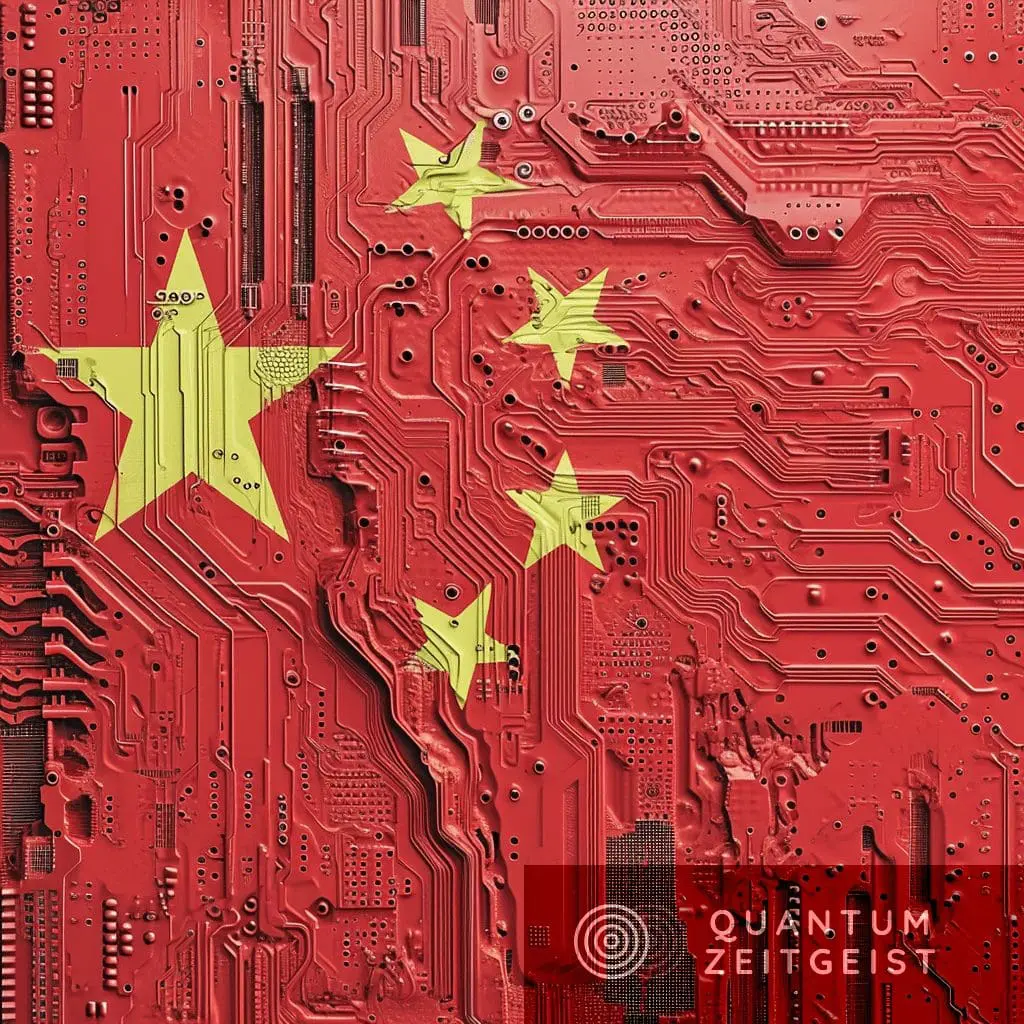
China’s state-of-the-art quantum computer, Origin Wukong, has been accessed remotely by users from 61 countries, with the US leading the tally. The machine, developed by Origin Quantum, and co-founded by Guo Guoping and Guo Guangcan, has completed over 33,000 quantum computing tasks since becoming operational. Despite this, China acknowledges a gap with Western counterparts, such as IBM and Google, in quantum computing. As reported in the South China Morning Post.
The development of quantum computers involves advanced engineering issues, including the production of superconducting chips and traditional semiconductors, areas where China lags behind the US and the West.
China’s Quantum Computer: Origin Wukong
China’s Quantum Computer, Origin Wukong, Open to Global Users
China’s state-of-the-art quantum computer, Origin Wukong, was made accessible to global users 10 days ago. Since then, remote users from 61 countries have accessed the superfast computer, with the United States topping the list, according to Chinese state media. The Science And Technology Daily reported that the number of remote accesses to Origin Wukong had surpassed 350,000 as of Monday. Users from Bulgaria, Singapore, Japan, Russia, and Canada were among those who logged in. The machine has completed 33,871 quantum computing tasks for global users since it became operational on January 6.
Origin Wukong: China’s Home-Grown Quantum Computer
Origin Wukong, named after the Monkey King of Chinese mythology, is China’s first home-grown third-generation superconducting quantum computer. It is China’s latest and most advanced programmable and deliverable machine of its kind. Origin Quantum, the company behind the computer, was founded in 2017 by Guo Guoping and Guo Guangcan, quantum physicists at the University of Science and Technology of China (USTC). Despite the fact that US quantum computers are not open to China, Guo Guoping stated that they are willing to open their services to users around the world, including the US, to jointly promote the concept of quantum computing for the benefit of mankind.
Quantum Computing: A Disruptive Technology
Quantum computing is seen as a disruptive technology. It uses elementary particles called qubits, short for quantum bits, as its basic unit of information – equivalent to the digital bits used in traditional computing. China and the United States are among major world powers racing to be No 1 in utilising this key technology, which has the potential to transform many fields, including healthcare, finance, and data security. Origin delivered its first superconducting quantum computer to the domestic market in 2020. The country’s first practical quantum computer was also from Origin – the 24-qubit Wuyuan second generation machine that was delivered to an undisclosed user in 2021.
China’s Quantum Computing Capabilities
The Wukong is powered by a 72-qubit homemade superconducting quantum chip, also called the Wukong chip. Jia Zhilong, a director in charge of quantum chip research and development at Origin, said the launch of this locally made chip and computer was akin to an “entry ticket” to the field of superconducting quantum computer manufacturing. He said it showed that China was capable of independently producing scalable quantum computer chips and systems of a certain size. Kong Weicheng, another researcher at Origin, told the paper that the company’s latest powerful machine could send out and execute up to 200 quantum circuits at one time, giving it a greater speed advantage.
The Quantum Gap Between China and the West
Despite these advances, the quantum gap between Chinese players and their Western counterparts remains wide. In November 2022, America’s IBM launched its 433-qubit “Osprey” processor, the world’s fastest quantum computer at the time. In October last year, Californian start-up Atom Computing left the Osprey behind with the debut of its first quantum computer with more than 1,000 qubits. Two months later, IBM unveiled the Condor with 1,121 superconducting qubits. Although having more qubits does not necessarily mean better performance, large numbers will be needed to build error-free quantum computers that would be more useful than today’s “noisy” research machines, involving a certain probability of errors during the calculation process.
China’s Position in Quantum Computing
In late 2022, Zhang Hui, general manager of Origin Quantum, said China was at the forefront of global quantum science research but “relatively behind” in quantum computing. The development of quantum computers involves many advanced engineering issues, including the production of superconducting chips and traditional semiconductors – both crucial hi-tech areas where China lags behind the US and the West. He added that there was a huge gap between China and the US in the industrial applications of quantum computing.
The Future of Chinese Quantum Computers
Despite the advancements in quantum computing, quantum computers are not about to replace conventional ones soon. At this stage, they can only perform very specific tasks for short periods in a protected environment. Numerous technical challenges, such as the ability to correct errors, have led some scientists to forecast that a practical quantum computer is still years, if not decades, away.
“US quantum computers are not open to China,” Guo Guoping told the Post. “But, adhering to the notion of scientific exploration without borders, we are willing to open our services to users around the world, including the US, to jointly promote the concept of quantum computing for the benefit of mankind.”
Jia Zhilong, a director in charge of quantum chip research and development at Origin, said the launch of this locally made chip and computer was akin to an “entry ticket” to the field of superconducting quantum computer manufacturing.
Kong Weicheng, another researcher at Origin, told the paper that the company’s latest powerful machine could send out and execute up to 200 quantum circuits at one time, giving it a greater speed advantage.
In late 2022, Zhang Hui, general manager of Origin Quantum, said China was at the forefront of global quantum science research but “relatively behind” in quantum computing.
“Leading players such as IBM and Google started exploring industrial applications as early as the 1990s. But it’s only since the establishment of Origin Quantum in 2017 that we started exploring industrial applications,” Zhang said.
Summary
China’s state-of-the-art quantum computer, Origin Wukong, has been accessed remotely by users from 61 countries, with the US leading the tally. As reported in the South China Morning Post. Despite its advances, China acknowledges a significant gap in quantum computing compared to Western counterparts, with practical quantum computers still potentially years or decades away.
- China’s state-of-the-art quantum computer, Origin Wukong, has been accessed by users from 61 countries since it was opened to global users 10 days ago, with the US topping the list.
- The quantum computer, developed by Origin Quantum, a company founded by Guo Guoping and Guo Guangcan, has completed over 33,000 quantum computing tasks since it became operational on January 6.
- Origin Wukong is China’s first home-grown third-generation superconducting quantum computer and is considered the country’s most advanced programmable machine of its kind.
- Quantum computing, which uses qubits as its basic unit of information, is seen as a disruptive technology with the potential to transform many fields, including healthcare, finance, and data security.
- Despite China’s advances in quantum computing, there is still a significant gap between Chinese players and their Western counterparts. For instance, IBM launched a 433-qubit quantum computer in November 2022, and Atom Computing debuted a quantum computer with over 1,000 qubits in October the same year.
- Zhang Hui, general manager of Origin Quantum, acknowledges that while China is at the forefront of global quantum science research, it is “relatively behind” in quantum computing, particularly in the industrial applications of the technology.